

by Mike Telin
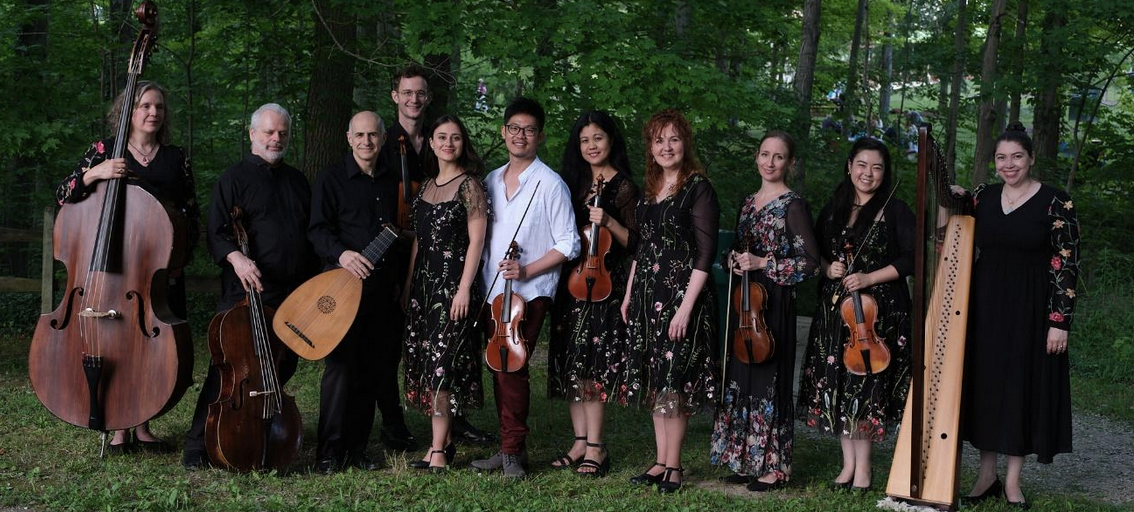 On Wednesday, May 28 at 7:30 pm in Harkness Chapel, Apollo’s Fire will present a send-off concert of their popular program ¡HISPANIA! before traveling to Puerto Rico to perform at the Casals Festival.
When they return, the ensemble will bring a new version of that program to the Holden Arboretum in Kirtland for five performances from June 5–8 and to Avon Lake United Church of Christ for a single performance on June 9. Tickets are available online.
This all-instrumental version of ¡HISPANIA! led by Jeannette Sorrell features the lively dance rhythms of “tangos and fandangos” from Spain and Argentina. An 11-piece ensemble explores the influence of Arab-infused flamenco dance music on Spanish Baroque composers – including Diego Ortiz, Gaspar Sanz, and Santiago de Murcia.
Explosions of virtuosity abound, including a “Tarantella Duel” featuring violinists Alan Choo and Emi Tanabe, a “Fandango Duel” with guitarists Jeremías Garcia and William Simms, and René Schiffer’s Tango Concerto for Two Violas da Gamba, linking gambists René Schiffer and Rebecca Landell.
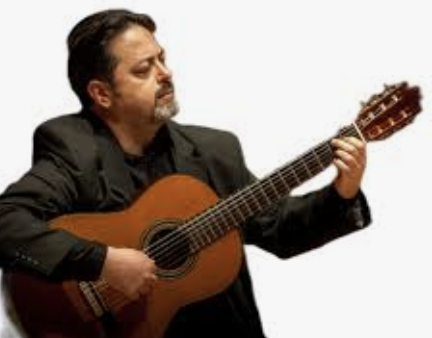 We reached flamenco guitarist Jeremías Garcia on Zoom.
Mike Telin: I understand you had fun giving the pre-concert lectures last summer.
Jeremías Garcia: I had a great time last year, because I did them with Baroque guitarist William Simms, and we started noticing the similarities between early music and flamenco. Not only the influence that early music had on flamenco music, but even down to the techniques — the way that we both approach strumming — and the history of strumming is very interesting. So we had in-depth conversations about the parallels as well as the differences, which I thought was fascinating.
MT: Tell me about the program, it sounds exciting.
JG: All of the music that Jeannette Sorrell chose, and the way she arranged it, makes it such a pleasure to play. And the musicians are all great, so it’s a real privilege to be able to perform with them.
Everyone is so respectful of all the different genres, but they put their own passionate spin on it. That really brings home the energy of this music.
MT: How did you get into flamenco?
JG: I did my master’s degree in classical guitar performance and I teach classical guitar. But I have always been fascinated by the music of Spain. I studied with a gentleman named Robert Guthrie, who was a former student of Andrés Segovia, and also a fan of flamenco.
Flamenco is one of those genres where you think to yourself, “I would love to learn that, but it seems so in-depth.” A lot of times guitarists will scratch the surface and learn techniques that are derived from flamenco. But then you realize it is a culture. It’s a way of life. It’s a style of music that developed in the south of Spain, but it became a world genre and was recognized as such by UNESCO in 2010.
I actually learned flamenco the old-fashioned way, by accompanying dancers and singers. I joined a flamenco studio and for the first six months I just sat and listened while they rehearsed. And then I did a lot of self-exploration: listening to recordings and analyzing what was going on. Of course, with my classical training in Spanish music, I started noticing the similarities. And flamenco began to enhance my interpretations of classical music, especially the Spanish repertoire like Asturias. A lot of Isaac Albeniz’s repertoire is derived from flamenco, and I really wanted to get a full understanding of his music.
MT: It sounds as though you fell in love with flamenco.
JG: I did. And I reimagined Albeniz’s music and Francisco Tarrega’s music as well.
MT: You mentioned dancing, but what role does singing play?
JG: What I think is fascinating is that the center of flamenco is the cante or singing. It’s the melodies that drive the genre. There are all types of genres and subgenres in flamenco, but it’s all centered around the cante. The singer can sing whatever melody they choose, and the guitarist has to pick the right harmony to follow the singer.
When you incorporate the dancer, the guitarist will follow them. But what I think is most important is to understand that all of that is actually a conversation — each person takes a turn. So the guitarist will lead at some point, the singer leads most of the time, but the guitarist will leave a space for the singer, and the dancer comes in and does their footwork and nobody interrupts each other. It’s a very respectful conversation.
Published on ClevelandClassical.com May 28, 2025
Click here for a printable copy of this article
