


by Stephanie Manning
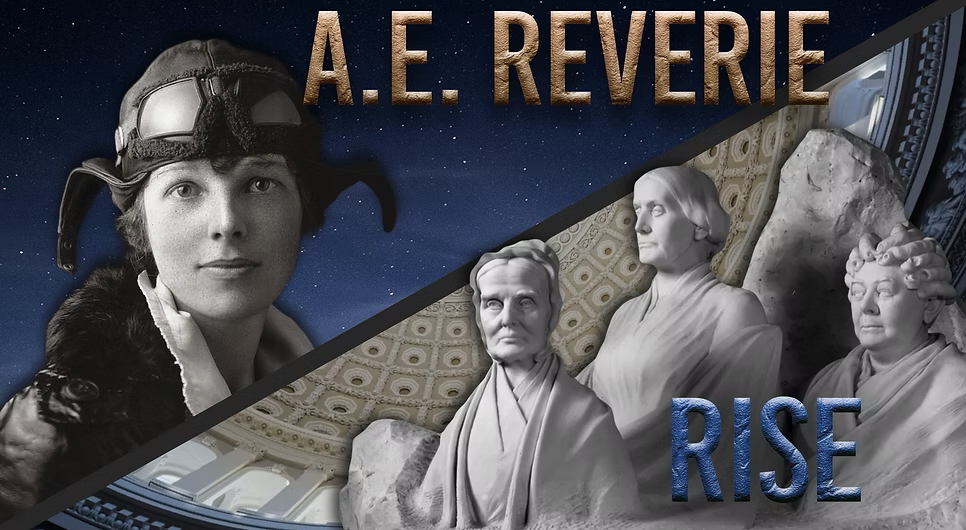 Asked at the post-concert talkback about her musical influences, composer Kamala Sankaram described an eclectic hodgepodge — Kaija Saariaho, Radiohead, and the Cameroonian electronic musician Francis Bebey, to name a few. “For the most part, things that I write sound very different from each other,” she said. “So it’s interesting that these two pieces sound kind of similar.”
Sankaram was referring to the pairing of A.E. Reverie and Rise, a duo of chamber operas recently co-presented by Baldwin Wallace Opera and the Cleveland Museum of Art. The February 1 performance in the Museum’s Gartner Auditorium showcased a double-bill united not just by composer but also by topic: both operas center on female protagonists pushing against gender stereotypes.
The weekend of shows in Cleveland marked the first time that either work had been performed since their respective premieres in 2024 and 2022. It also featured a new chamber orchestration for Rise commissioned by Baldwin Wallace. “It’s a lot of firsts,” director Scott Skiba said in his opening remarks. Sankaram herself flew in for the occasion.
A.E. Reverie takes place in 1929, when Amelia Earhart gave a lecture at the Chautauqua Institution, but the story is less about her and more about what she symbolizes to a young woman (soprano Christine Cabrera). Swirls of harp and flute underscored Cabrera’s earnest performance of Jerre Dye’s libretto, where she expresses her admiration for the pioneering pilot.
The props and set in Gartner Auditorium were understandably kept to a minimum, with much of the setting created by Brittany Powell Blashke’s projections. Her designs transitioned smoothly between the realms of real life and imagination, as the young woman dreamt of flying in the cloudy sky.
While continuing to sing, Cabrera donned a hat and goggles over her Girl Scout uniform before making figure-eights on stage with a kick scooter — a task that was surely harder than she made it look.
From the side of the stage, conductor Dean Buck led a chamber orchestra made up mostly of local freelancers with a few BW students. Rhythmic interjections from triangle and other percussion kicked in as Cabrera’s character raged against the thought of girls restricted from pursuing their dreams, declaring: “That’s not me.”
Like the young woman in A.E. Reverie, Rise’s Alicia Hernández is ambitious and determined. She’s also a Girl Scout, a detail that was original to Rise and added to A.E. Reverie for this production. Hernández’s magical tour of the U.S. Capitol building takes a realist turn when she becomes lost, leading her to encounter women from past and present and to wonder: “How do I find my way into the story?”
Soprano Virginia Grabowsky’s voice and acting lent Hernández a fittingly quizzical air, fidgeting from foot to foot in the face of A Powerful Woman (a female politician portrayed by Alison Booth) and police officer Victoria Wilson (Nyla Watson). Sankaram’s music and A.M. Homes’ libretto are purposefully on-the-nose with their message, a balance that comes off as refreshing rather than pushy.
Politics “is like American theater — a comedy of the absurd,” says the Powerful Woman, before explaining the history of the women’s restrooms in the Capitol building. Later, muted trombone and drum set announced the arrival of Adelaide Johnson, the sculptor of the Portrait Monument, which depicts three key players in the women’s suffrage movement. “My work is not about beauty, it is about political commentary,” sings Johnson, also confidently performed by Alison Booth.
Nuanced interactions between the perspectives of a white woman born in the 1800s (Johnson), a Black police officer (Wilson), and a girl whose mother immigrated from Mexico (Hernández) eventually coalesce into an optimistic ending, encouraging Hernández and her mother Maria (soprano Angelina Salotto) to rise and add their name to the annals of history.
For the post-concert talkback, the cast were joined onstage by Sankaram, the design team, and representatives from the Girl Scouts of Northeast Ohio, the League of Women Voters, and Baldwin Wallace Women’s Center. A question about problems they want to solve prompted some knowing laughter from the all-women panel, some of whom looked at imaginary watches as if to say: How much time do you have?
Their answers of increased representation and opportunity were a reminder of how much is still left to do — and also how much is already being done, thanks to the women working tirelessly to find their own ways into the story.
Published on ClevelandClassical.com February 9, 2026
Click here for a printable copy of this article
