

by Mike Telin
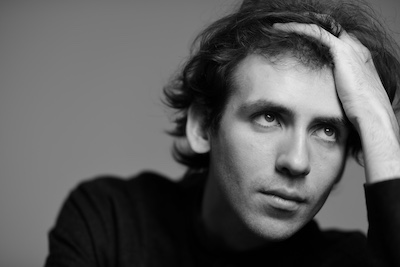 In 2019 at the age of 22, Alexandre Kantorow became the first French pianist to be awarded the Gold Medal at Tchaikovsky Competition, along with the Grand Prix, something that has happened only three times in the competition’s history. In 2024, he received the Gilmore Artist Award.
On Thursday, April 16 at 7:30 pm, Alexandre Kantorow will make his Severance Music Center debut as part of The Cleveland Orchestra Recital series. His program will feature works by Liszt, Chopin, Medtner, Alkan, Scriabin, and Beethoven. Tickets are available online.
Answering his phone in Paris, he told me he was taking care of real-life things like renewing his passport before heading back into the music world. His American tour begins on Tuesday, April 14 and continues until May 2.
“I think it’s the biggest tour I’ve ever done In terms of the number of concerts,” he said, adding that he looks forward to discovering the real America, not just the big international cities. The Severance Music Center recital will be his Cleveland debut. “I’ve never been there, so it’s part of the discovery.”
The pianist said that when planning a program he generally starts with a piece that gives him inspiration then slowly builds off of that. For this program that piece was Nikolai Medtner’s Sonata in f minor, Op. 5.
“I had listened to a bit of Medtner’s music, and I thought that I wanted to create a program where Medtner would be in the center. This is his first piano sonata and you feel the tribute to Bach: there’s a lot of counterpoint and imitation. There’s also a tribute to Beethoven — literally, from themes that reference the string quartets — so you have this obsessive power and general spirit of going from darkness into light.”
What attracted the pianist to Medtner’s sonata? It was hearing French pianist Lucas Debargue play the piece at the XV International Tchaikovsky Competition.
“I remember watching him in the conservatory when I was very young. And I remember the impact and the power and emotion of this music because it felt as logically built as a Brahms symphony. Every motif is precise and is linked. So you feel that the first notes of the piece are the germ that make the whole sonata expand from there. I’ve always wanted to play it, and now I have the opportunity.”
Kantorow will open his program with Franz Liszt’s Variations on Weinen, Klagen, Sorgen, Sagen, a piece that he said amplifies what J.S. Bach did in his Cantata BWV 12.
“There’s a huge introduction that feels a bit like Liszt’s Dante Sonata. There are 30 variations, so you can get lost in a sort of nightmare. You also get lost harmonically at the end with this long recitative that goes nowhere. But at the end, you are finally saved because he adds a chord that was not in the original piece. So you get a triumphant ending to this work.”
The pianist said that Frédéric Chopin’s Prelude in c-sharp minor acts as the first of a group of pieces — including Alexander Scriabin’s Vers la flamme, and Charles-Valentin Alkan’s Prelude No. 8, Op. 31 — that will put listeners in the mood for Beethoven’s last sonata. “When you look at the composers who took inspiration from the last sonatas of Beethoven, I thought that Scriabin was really the first to return to those last sonatas of Beethoven.
He noted that the Alkan is a bridge between Chopin and Scriabin. “He’s very famous for his grandiose works, but his smaller works are a bit like Chopin and Liszt, but always more deranged. There’s something that’s a bit grotesque, something that doesn’t fit the rhythm, doesn’t fit the measures. And here it’s a very poetic and romantic view of madness.”
Asked about Beethoven’s Sonata No. 32 in C minor, Kantorow said that it’s a piece you have to live with all your life to come close to understanding it. “I feel that during the last period of his life, he explores a sort of slow redemption of humanity.” He added that the Sonata’s second movement is the heart of the piece and has a lot in common with the slow movement of the composer’s Ninth Symphony, and the slow movement of his penultimate string quartet.
“That movement is a thanksgiving prayer to God. And you have these variations that start from very slow chords and expand — every variation brings more life, more humanity, and more joy.”
He said the first movement harkens back to the original sin of humanity when Adam and Eve were chased out of the Garden of Eden.
“That’s why the movement is so powerful and so dark. You have a recitative at the beginning that feels very much like the words of God in the Book of Genesis. And then this slow movement represents the redemption of humanity. Maybe that’s totally false, but it helps me to get enough will and conviction together to try to interpret this music, because it’s incredibly universal.”
Alexandre Kantorow’s interests extend beyond his musical pursuits, and astrophysics is a subject he has been enthralled by for a long time.
“I remember when I was really young reading books that talked about the Big Bang theory, and the idea that our universe is expanding, and maybe it will crunch back again at the end into black holes.
He recalled watching the stars through his first telescope. “I don’t know why, but it was always an interest for me as a kid. And it’s always quite fascinating to think about origins, although it can cause an existential crisis if you think too much about it. But then I feel beauty and mystery there, even if it’s very pragmatic.”
Does Kantorow find himself thinking about astrophysics while learning a piece? “Maybe not as precisely as that,” he said “But in general, it’s a feeling of being in the presence of something very complex and feeling that we are only scratching the surface. But then music is a human creation that was made to help humanity, so it is a bit different. Still, the feeling of mystery may be something that music and astrophysics have in common.”
Although his parents, who were both musicians, wanted him to have a well-rounded education and kept him in non-specialized schools for as long as possible, eventually he chose to go down the music path.
“I think it was in high school when I really decided to jump into the world of music because for the first time I was at a special high school for music, and I had friends who did the same thing as me,” he said. “From the first moments of being onstage with the high school orchestra, I could see having a future in music, and I suddenly felt normal. I felt that I belonged there. And I think the education that I received from my parents — even if I didn’t think too much about it at the time — it shaped me in so many ways musically that I felt something very natural at the moment.”
For those who remember watching the opening ceremony of the 2024 Paris Olympic Games, that was Alexandre Kantorow performing Ravel’s Jeux d’eau in the middle of a rainstorm.
“Jeux d’eau wasn’t my choice, it was the director’s. But I think for the organizers it was incredibly stressful because they couldn’t really rehearse. But it was all done in good spirit. There was a spirit of fighting through the elements to make it. And so, just doing my part and playing Jeux on this beautiful bridge surrounded with boats and just feeling alone in this middle of Paris, that was quite magical. It’s a story for the grandchildren.”
Photo credit: Sasha Gusov
Published on ClevelandClassical.com April 14, 2026
Click here for a printable copy of this article
