


By Kevin McLaughlin
 At noon on alternate Wednesdays, Trinity Cathedral becomes a refuge from the workweek. On January 21, the Cleveland Chamber Choir’s Brownbag Concerts continued a downtown tradition started in 1978 by Cleveland Classical.com’s own Daniel Hathaway — a series that offers listeners a midday pause, with informal, high-quality performances and a welcome sense of community.
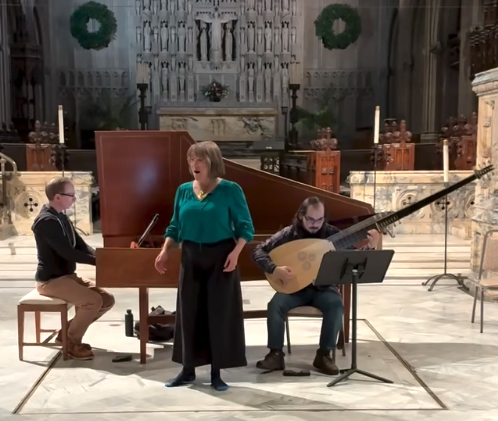
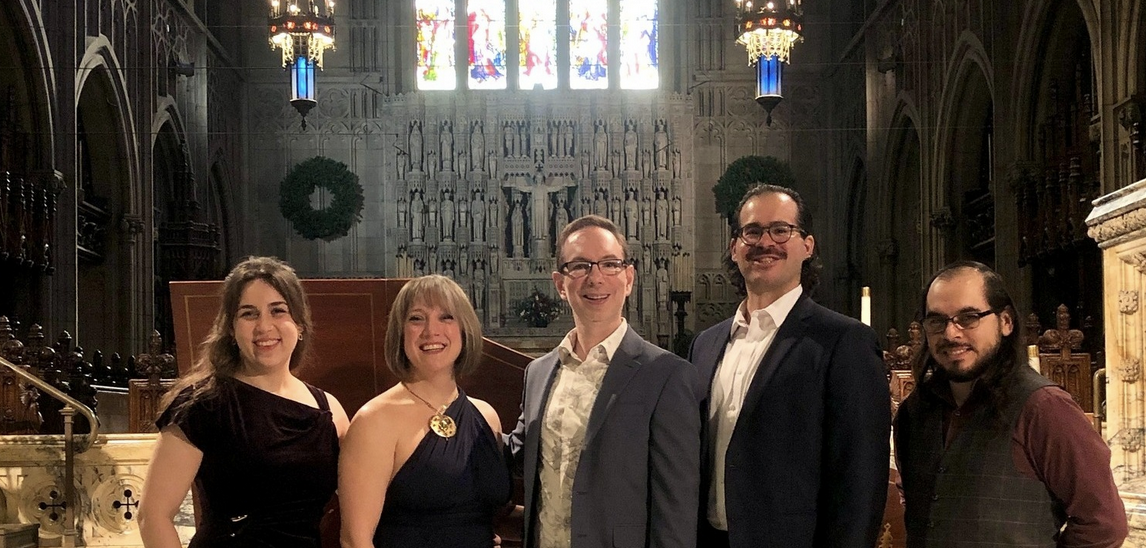
The Cleveland Chamber Choir has recently been part of this tradition as artist-in-residence, offering programs that complement the cathedral’s acoustic and reward an audience listening closely over the lunch hour. For this concert, a subset of the full choir performed: Abigail Hakel-Garcia (soprano and violin), Kira McGirr (mezzo-soprano) Gregory Ristow (tenor and harpsichord), Dominic Aragon (baritone), and Adrian Murillo (theorbo).
“Madness & Melancholy” brought together renaissance and baroque works that gave musical utterance to grief, obsession, abandonment, and emotional strain. Here, madness appeared mostly as an inward condition — suffered quietly, rarely displayed outwardly.
Kira McGirr made disorder sympathetic in “Bess of Bedlam,” a broadside ballad set by Henry Purcell and emblematic of Restoration England’s fascination with madness. Drawing on the figure of the Bedlam beggar — a stock outsider whose condition permitted startling candor — the song moves restlessly between bravado, prayer, fantasy, and despair. McGirr delivered the role with agility, control, and surprising empathy, resisting exaggeration and allowing the quick turns of the text to speak for themselves. Murillo’s theorbo and Ristow’s harpsichord kept close, quietly shadowing the character’s unease.
John Bennett’s “Weep, O mine eyes” belongs to the English madrigal tradition at the turn of the seventeenth century, when melancholy was not only an affliction but also a cultivated emotional state. The vocal quartet let grief unfold gently, in a dignified, public posture of sorrow. As sung, the piece felt like the social counterpart to Bess — sadness absorbed by order rather than declaimed. The grief stayed inside the lines.
That inward turn darkened in “Lagrime mie” by Barbara Strozzi, for whom emotional candor was a signature. The lament dwells obsessively on loss, pressing again and again the same wound. Hakel-Garcia, alternating here and elsewhere between voice and violin, brought an unforced intensity to the music, while Murillo’s theorbo repeated the same few chords — describing a grief that kept circling back on itself.
French baroque opera brought theatrical contrast. In Rameau’s “Monstre affreux” from Dardanus, terror and amazement are projected outward through bravura gestures. Aragon relished the dramatic declamation, as he admitted in his prefatory remarks. Joining him were Hakel-Garcia, Murillo, and Ristow at the harpsichord.
Two settings by John Farmer — “Lady, My Flame Still Burning” and the apparent sacred contrafactum, “Sweet Lord, Your Flame Still Burning” — showed how identical musical material could serve secular desire or devotional longing. Heard back-to-back, the quartet revealed how passion and piety could share the same set of feelings. Though the text changed, the affect didn’t.
Instrumental music offered no escape from melancholy. Murillo on lute played Dowland’s Lachrimae with steady tenderness, letting the falling motifs speak the language of loss. Without text, the grief became private — less suffering than resignation, sorrow made ritual.
Michel Lambert’s “Vos mépris chaque jour” (“Your daily scorn”) shifted the mood back to the French courtly world, where emotional suffering was refined into elegance. Aragon and Hakel-Garcia sang with composure, letting the bitterness of the text emerge through understatement.
The concert closed with excerpts from Purcell’s Dido & Aeneas. McGirr brought gravity and stillness to Dido, singing with noble despair, while Aragon’s Aeneas and Hakel-Garcia’s Belinda framed the queen’s isolation. In a deft bit of blocking, Ristow rose from the keyboard and Hakel-Garcia set down her violin just in time to join the others for the final chorus.
“Madness & Melancholy” reminded listeners how attuned seventeenth-century music can be to extreme emotions. Here, madness was something to listen to — patiently, sometimes uncomfortably — with an attention we rarely afford ourselves in the middle of the day.
Published on ClevelandClassical.com January 26, 2026
Click here for a printable copy of this article
