



by David Kulma
 We live in an age where opera, no longer restricted to theaters and concert halls, is happening in every place imaginable. This was the case when Baldwin Wallace Opera Theater presented two performances of Henry Purcell’s Dido and Aeneas at RED Space in downtown Cleveland. I attended on Thursday, October 24. Lasting about an hour and with roles that you can divide up between seven women and two men, Dido is perfect for female-dominated college voice programs. But how do you make it work in a cement box?
The large room was mostly draped off by curtains, as was the impromptu proscenium. The audience was seated in three terraced rows in a wide-angled V with the orchestra at center. Under the direction of Jason Aquila, the ensemble played stylishly and delightfully. It was all light and proper. The acoustic was surprisingly good and all the music was clearly audible, but the words themselves were often difficult to understand, even within a few yards of the singers. It would have been nice to have had the benefit of supertitles.
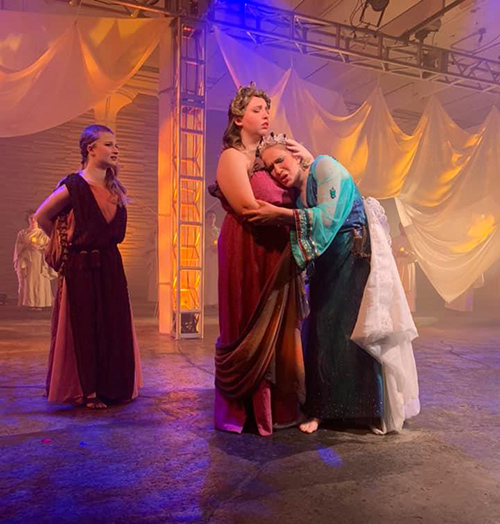 The libretto by Nahum Tate, based on Book IV from Virgil’s Aeneid, finds Trojan prince Aeneas landing in Carthage, and meeting and falling in love with Queen Dido. On orders from the god Mercury, Aeneas leaves to fulfill his destiny in Italy, and Dido kills herself in sadness. Tate’s story focuses on the more interesting character of Dido, and following the English penchant for magic, has a Sorceress take the form of Mercury.
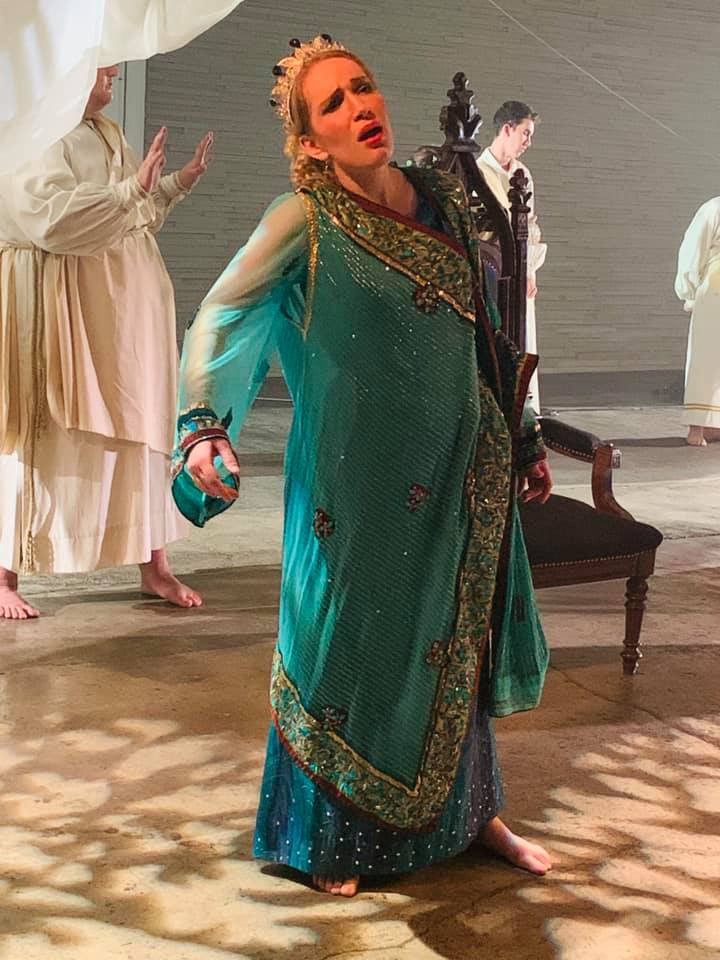
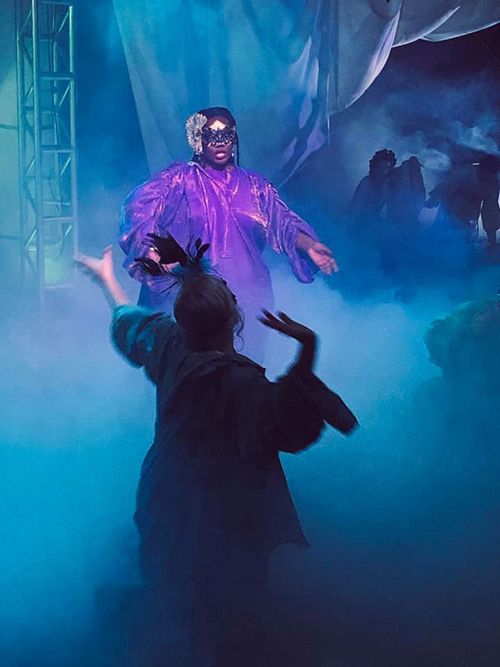 As staged by guest director Kathryn Frady, this story mostly stayed intact. The production, lighting, and costumes — by Scott Skiba, Steve Shack, and Glenn A. Breed, respectively — projected a vaguely ancient, yet Baroque feel. Dido was outfitted in a fabulous, royal green dress, and Aeneas in ancient military garb including a helmet with an ostentatious brush. The rest of the cast was in togas, with fancy colors for the evil characters.
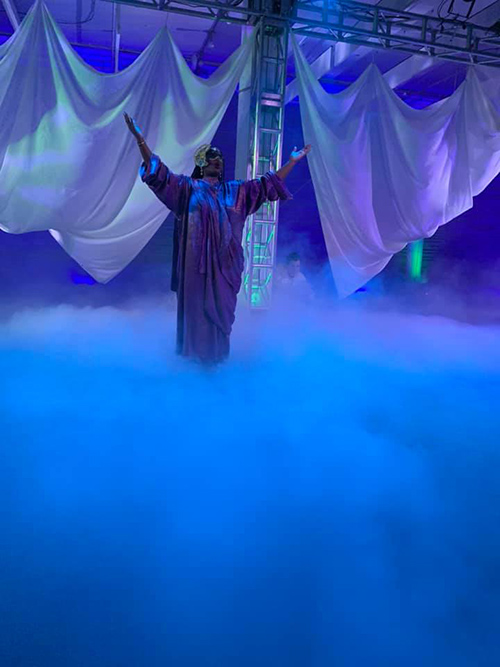 The lovely set was draped in white, and with plenty of effective mood lighting and fog (and a few helpful sound cues of thunder), it quite easily converted the room into the various locales. As the singers moved about the stage, they generally maintained an historical stage comportment, all very proper and stylized — although constant arm wiggling during the first witch scene quickly turned silly.
Frady’s major change was how the Queen of Carthage dies. Dido was prevented from stabbing herself before her famous aria, and after its affecting sadness had a very realistic panic attack — audible panting and all. That would have been powerful theater in a thoroughly modernized production of Dido, but in the context of mythical high tragedy it simply threw a bucket of cold water on the proceedings.
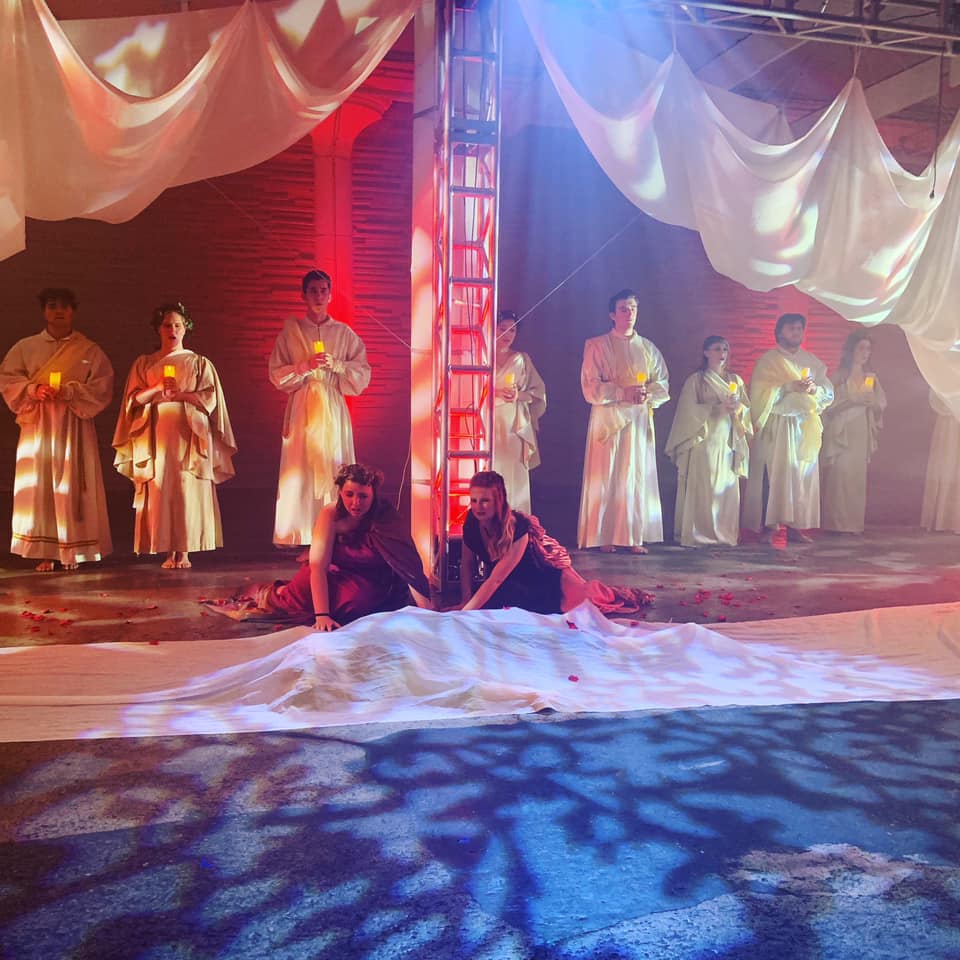 The singing was lovely all around. The chorus ably changed character and mood and sang with admirable blend, even when a foot away from the audience. Kat Davies as Belinda and Maggie Milano as the second handmaiden sang their solos with conviction. Rosie Kamara’s beautiful tone as the Sorceress was a delight, if on the quiet side, while the full-bodied voices of Kelsey Heacock and McKenna Jones as the two Witches were impressive. Jon Gesin’s Sailor and Sarah Strezewski’s Mercury were impactful in their short roles. Sam Wetzel’s Aeneas gained emotional steam throughout, becoming affecting as he sadly left Dido. Elaine Hudson ruled the show with her powerful, yet vulnerable Dido. Her vocal clarity and beauty of tone were especially memorable in her final aria.
In the end, producing opera at RED Space with the students of Baldwin Wallace worked with moving results, proving that Dido and Aeneas remains a powerful theater piece wherever staged.
Published on ClevelandClassical.com November 6, 2019.
Click here for a printable copy of this article
