



by Peter Feher
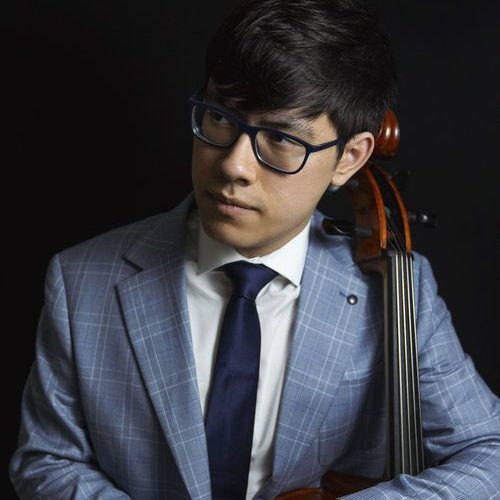 The Cleveland Orchestra put together an intricate and intriguing musical puzzle on July 22 at Blossom Music Center. Each piece on the brilliantly balanced program — which showcased the sensibilities shared by 20th-century composers in France, the Soviet Union, and Japan — held the key to understanding and appreciating the others.
The Orchestra, guest conductor Kahchun Wong, and the evening’s soloist, cellist Zlatomir Fung, (left) were more than up to the task of fitting it all together. Spareness, precision, and sensitivity to detail were the features uniting the mix of repertoire, and the musicians gave superb performances where not a note was wasted.
Claude Debussy’s La mer is a study in symphonic texture — all the more beguiling because the composer was not, by usual standards, a master orchestrator. In La mer, he calls for certain auxiliary instruments (piccolo, contrabassoon) and then puts them to limited use. Likewise, he rarely writes an extended solo for any one instrument, preferring instead to score such lines for multiple players, like the muted passage for trumpet and English horn that opens the first movement, “From dawn to noon on the sea.”
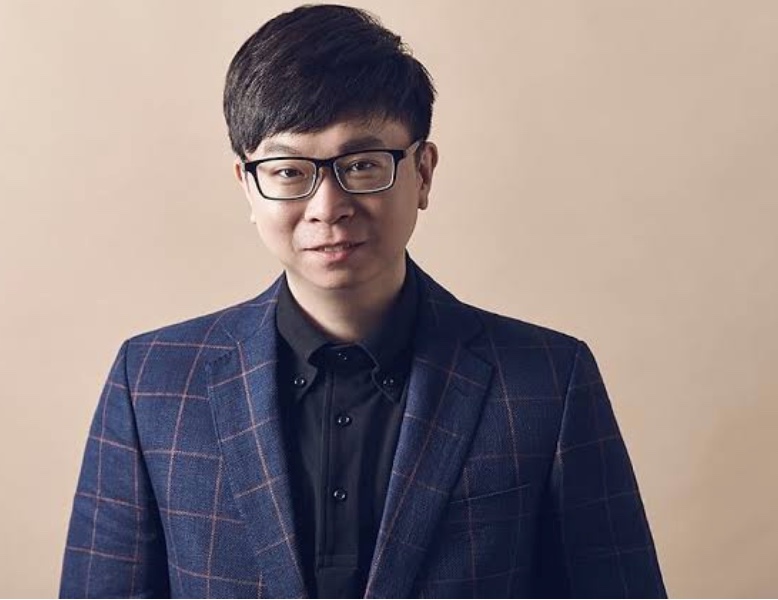
The result is an idiosyncratic sound world all Debussy’s own, even as La mer evokes familiar natural settings and sensations. If the challenge of the piece is translating each musical gesture into a stirring scenic impression — from the “Play of the waves” of the second movement to the storm in the finale — then the solution is performing exactly what the composer wrote. Debussy was meticulous in his notation, and Wong (pictured below) and the Orchestra attended to every detail Saturday, calibrating a perfect conclusion to the concert.
 Fung set a rigorous standard for the evening with his studied solo turn in Dmitri Shostakovich’s Cello Concerto No. 1. The 24-year-old cellist, here in his Cleveland Orchestra debut, showed remarkable maturity throughout this demanding work, playing less to show off and more to make sense of a steely score. You could hear the difference in approach from the start, with Fung treating the Allegretto first movement like a nimble piece by Mozart (and nothing like the strained endurance test of so many other interpretations).
At times, the cellist’s light touch didn’t carry over the Orchestra, but blame an outdoor venue where string soloists always seem to be at a disadvantage. It would have been great to hear this performance in a space like Severance, where Fung should make a return appearance soon. The subtlety of his choices shone through when he was unaccompanied, in the concerto’s cadenza and in a lighthearted encore, Gregor Piatigorsky’s arrangement of the March from Sergei Prokofiev’s Music for Children.
You could have mistaken the program’s opening piece, Yasushi Akutagawa’s Music for Symphony Orchestra, for the work of another Soviet composer. This delightful pair of miniatures — alternately melancholy and burlesque — sound like cleverly orchestrated pages taken out of Dmitri Kabalevsky’s piano compositions for children.
Akutagawa would, in fact, leave Japan for the Soviet Union four years after finishing Music for Symphony Orchestra. In a sort of inverse fashion, the art of Japan had come to influence Debussy decades before, and partly inspired La mer. This is certainly music and history worth piecing together.
Published on ClevelandClassical.com July 31, 2023.
Click here for a printable copy of this article
Return to the Front Page.