



by Stephanie Manning
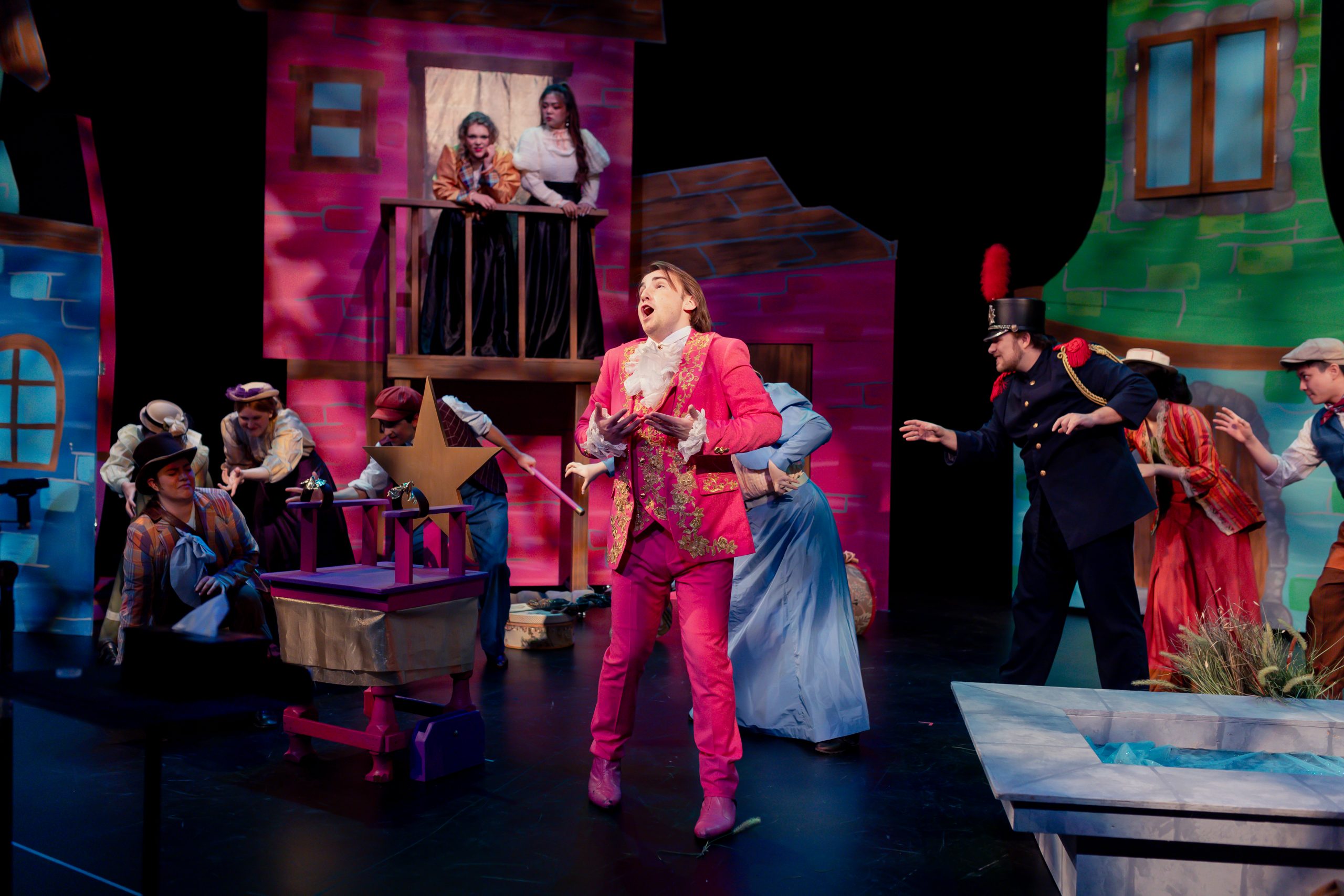 A black box theater might not be the first-choice location for an opera — but with a clever creative team, a smaller production can still get big results. Audiences at the Westfield Studio Theater on November 17 know this firsthand thanks to the Cleveland Institute of Music Opera Theater’s scaled-down L’Étoile, which came wrapped in a bundle of laughs and topped with a ribbon of genuine heart.
It’s true that the Playhouse Square venue — the CIM company’s temporary home while their primary hall is under construction — wasn’t ideal. Interrupted sightlines, occasional volume disparities, and the lack of a proper curtain simply had to be par for the course. But artistic director JJ Hudson’s choice of a comedic opera, especially one that relies on spoken dialogue and physical comedy as heavily as this one by Emmanuel Chabrier, was the perfect decision.
King Ouf, the story’s central character, is essential both to the plot and to the success of the show. Luckily, the swaggeringly charismatic, laugh-out-loud funny Connor Vrooman filled his hot-pink heeled boots with ease. While the music retained the original French lyrics, the dialogue was presented in English, only strengthening the tenor’s comedic timing and the connection with the audience.
The King, getting ready for his birthday celebration, starts the show not-so-sneakily undercover, giddily looking for a petty criminal to execute. He thinks he’s found one before the court astrologer, Siroco (the endearing baritone Davis Fischer), announces that both men’s fates are intertwined. Now Ouf must instead give the peddler Lazuli a life of luxury — for if one dies, the other will suffer the same fate.
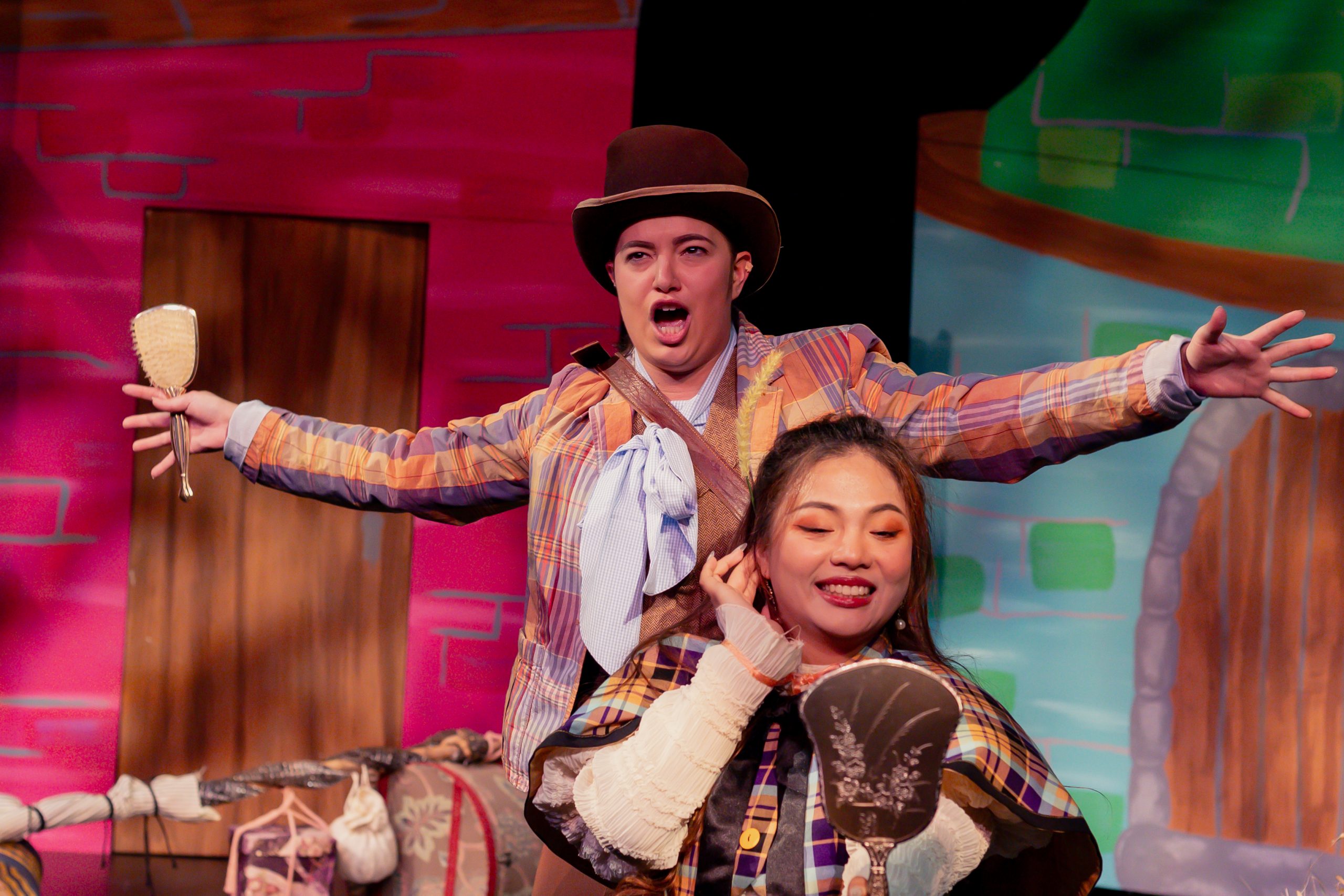 Soprano Zara Renae Smith brought a self-confident charm to Lazuli, who spends little time concerned about the King’s plight and plenty of time trying to win the heart of Princess Laoula, visiting from a neighboring kingdom. Smith’s voice wielded the most power and projection in her role’s highest-register moments, like Act II’s “Kisses Quartet” and Act I’s “O petite étoile.”
Of course, no typical comic opera is complete without a little mistaken identity storyline, so hijinks ensue thanks to Princess Laoula’s disguise as the wife of Hérisson le Porc-Epic. Soprano Chuting Huang gave a nicely doe-eyed performance as the swooning princess, while soprano Julie-Michelle Manohar — in a convincing trouser role — inspired plenty of laughs as the hot-headed ambassador.
Physical comedy abounded from soprano Catherina Carrington as Hérisson’s actual wife, Aloès, whose tryst with her husband’s advisor Tapioca (tenor Jianyu Yang) becomes so brazen that Hérisson eventually chases the two in circles around the stage.
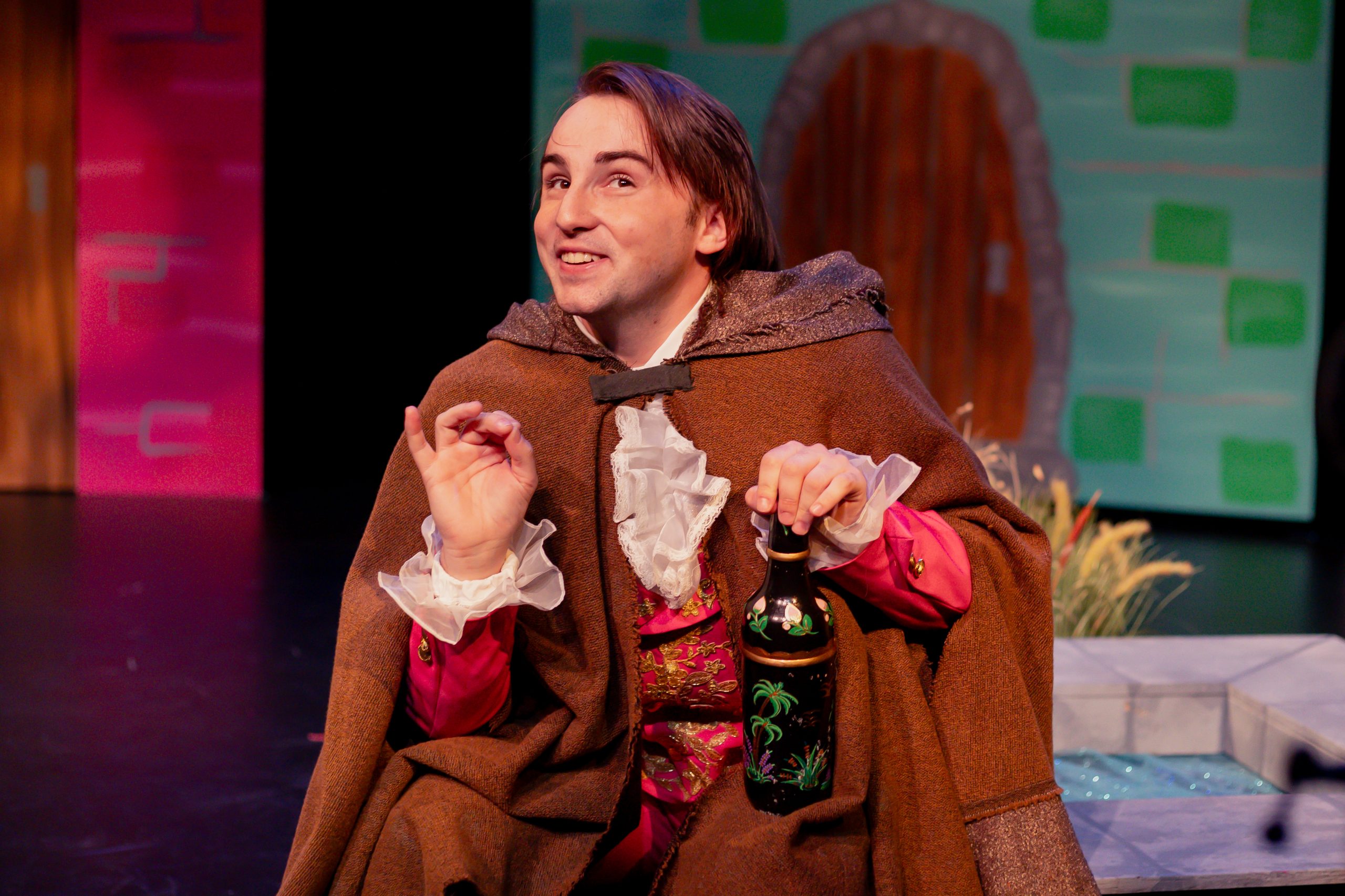 In both voice and mannerisms, Vrooman’s King Ouf dialed the hilarious dramatics up to 11 after a “kidnapping” incident leaves Lazuli presumed drowned. The King is in hysterics at the thought that he too will die in 24 hours, though we, the audience, quickly learn that Lazuli is alive — if a little dirtied by his adventure in the lake.
The dirt smudges on his pants and sleeves were just some of the many detailed touches from costume designer Esther Harberlen, who created clothing equally extravagant and elegant — from King Ouf’s loud pink suit with gold details to the Princess’ intricate gowns. The pinks and purples especially matched with the bold color-block set designed by Jerome Wills.
Harry Davidson led a 10-piece chamber ensemble, who accentuated the music’s lighthearted, cartoonish flair. The new score reduction from Michael Borowitz, necessary for this venue, also seemed nicely adaptable to other kinds of stagings.
Chabrier’s otherwise-concise plot does start to drag in the third act, but soon enough, the lovers are reunited and the King gets a new lease on life. The tongue-in-cheek final chorus sends the audience off with plenty of good humor: “Have pity on our silliness, and please come see us again!”
Published on ClevelandClassical.com November 26, 2024.
Click here for a printable copy of this article
