



By Peter Feher
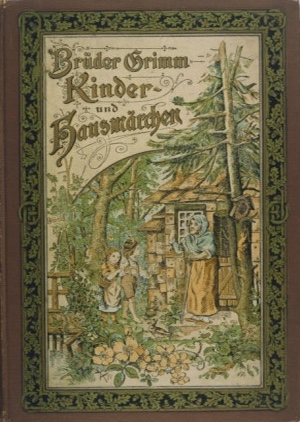 Hansel and Gretel had something better than breadcrumbs to accompany their journey through the forest of Ilsenstein, whose enchanted scenery recently sprang to life on the Kulas Hall stage at the Cleveland Institute of Music.
Whether avoiding chores, wandering from home, or outsmarting the Gingerbread Witch, the siblings were guided in their moments of trouble by the enduring melodies and leitmotifs of composer Engelbert Humperdinck.
Nothing too bad could befall these characters, buoyed by folk songs one minute and heavenly orchestral tunes the next. Indeed, there were ample delights — and only the slightest bit of danger — to encounter in CIM Opera Theater’s production of Humperdinck’s Hansel and Gretel, presented with two student casts in two performances, March 27 and 29.
Darkness doesn’t play much of a role in the German libretto by Adelheid Wette, who in 1890 enlisted her brother Humperdinck to collaborate on a kid-friendly adaptation of the Brothers Grimm fairy tale. Gone are the trail of breadcrumbs and the selfish stepmother who starves her family. The children simply get lost in the woods after eating too many strawberries.
Humperdinck introduces a measure of seriousness, with his score indebted to the operatic model of his mentor Richard Wagner. But where Wagner stretched even the smallest musical ideas to staggering, mythological proportions (the Ring Cycle famously opens with 100-plus bars of a single chord, meant to symbolize the dawn of time), Humperdinck lets simple material take its natural shape, achieving thematic unity and harmonic lushness all the same.
Hummable melodies are threaded through Hansel and Gretel, shared between the performers onstage and in the pit. The CIM Orchestra under conductor Harry Davidson could have seized the spotlight a bit more during each tune in the Overture, but Friday evening’s performance absolutely enchanted once the singers entered.
We meet Gretel in the first scene of Act 1 (and again at the top of Act 2) reveling in the refrain of a folk song, and soprano Emilie Williams instantly enraptured with her youthful vocal quality. Her brother Hansel soon interrupts, part of the good-natured bumbling that mezzo-soprano Caroline Friend embodied with mischievous glee in this quintessential trouser role.
That’s not to say the siblings can’t get along or harmonize, as Williams and Friend did beautifully in the transcendent Evening Prayer. The orchestra had another opportunity to shine in the Dream Pantomime that followed, staged by director JJ Hudson as a procession of silent angels who seemed restless to sing — and would have to wait until the Act 3 choral finale for that chance.
Music is offered as a kind of magical protection in the forest, made manifest in a pair of supernatural figures. As the Sandman and the Dew Fairy, respectively, sopranos Daniela Pyne and Fifi Huang each flitted onstage for a short, sweet aria that cast a benevolent spell.
Beware of the characters with full-blown operatic scenes, such as the Witch. Hocus-pocus on a broom alternated with powerful high notes in the 20 minutes that mezzo-soprano Calysta Tamara Jacobs spent stealing the show. Intriguingly, this vocal drama was matched only by soprano Kiana Lilly as the children’s mother, whose Act 1 soliloquy overflowed with conflicted maternal emotion.
Perhaps the safest path is presided over by Hansel and Gretel’s father. The sole male voice in the cast, baritone Hyeondo Park announced himself with a hearty “tra-la-la” wherever he went. Sure enough, this folksy motif can be relied upon to reappear at the end of Act 3, just before the family is reunited and the concluding moral imparted.
Published on ClevelandClassical.com April 8, 2026
Click here for a printable copy of this article