

by Mike Telin
 When Giacomo Puccini composed the three one-act operas that make up Il trittico (The Triptych), he intended for them to be presented as a set. But not long after the work was premiered at the Metropolitan Opera on December 14, 1918, the composer’s publisher began to receive requests for them to be performed separately. Nowadays, it is common for one or two of the operas to be presented in an evening.
On Friday, November 7 at 7:30 pm and Sunday November 9 at 3:00 pm in Kulas Hall, CIM Opera Theater will present Puccini’s Suor Angelica and Gianni Schicchi. Dean Southern directs and Harry Davidson leads the CIM Orchestra. Tickets are available online.
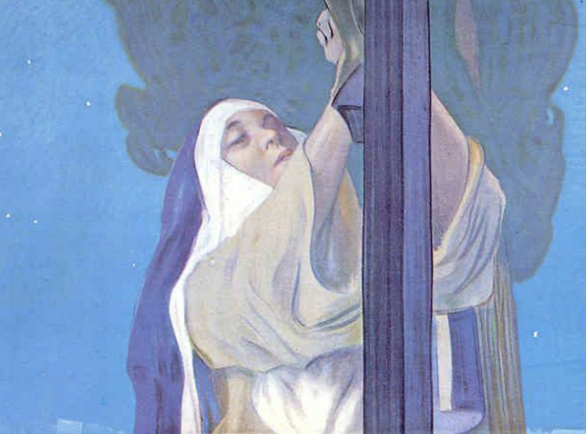
Suor Angelica (Sister Angelica) tells the tragic story about a young woman who is sent to a convent for having an illegitimate child. Her aunt visits and tells her that her son has died of a fever. Distraught, Angelica drinks poison but fears she has damned herself by committing suicide. In the end the Virgin Mary appears, and Angelica is reunited with her son in heaven.
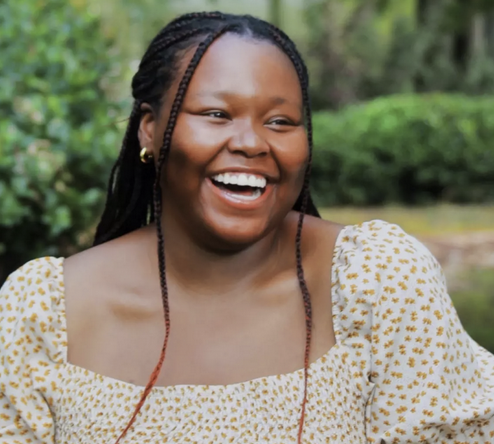 During a Zoom call, soprano Kiana Lilly, who will sing the title role, explained how she is able to relate to her character.
Kiana Lilly: It’s a heartbreaking story. She’s been sent to one of the Magdalene Laundries because she had a baby out of wedlock. She hopes that one day she’ll be reunited with her child. I can relate because I have a younger brother, so I can only imagine the things that I would do to protect him.
Mike Telin: What are the challenges of inhabiting the role?
KI: It’s later Puccini and it’s a big sing. So the hardest part is getting lost in the beauty of the music and in the storyline. You do become emotional but you have to separate yourself and your feelings from the character so you can maintain your singing the entire time.
MT: How do you view her relationship to the other sisters?
KL: Dean has us doing Uta Hagen’s Nine Questions right now, so I was thinking about this yesterday. Angelica has been there the longest, so she is this senior figure to the others. In one scene the nurse comes to her for help when a sister is stung by a wasp. But I think the abbess, at least in our setting, is a mentor to her and is someone she can confide in.
MT: How do you feel about her aunt?
KI: I think that when her aunt first arrived, she has a little bit of hope because she shares the good news about her sister and maybe she’ll also talk about her son. But then everything turns around when her Aunt asks her to sign away all of her rights.
MT: What are your thoughts about Puccini’s music?
KL: Puccini writes so perfectly for the voice and this role shows off the qualities of someone’s pianissimo high notes, chest voice, and middle voice. But the orchestration and the vocal line go together like wine and cheese. It’s the perfect combination, and I’m so glad that my voice type fits this music because it is so beautiful.
MT: You’re having fun working with Dean Southern?
KL: Dean Southern directed the first opera I ever did at CIM. That was another double bill of L’enfant et les sortilèges and Le Rossignol. It’s nice that during my first year and now in my last year he is directing.
He’s just doing such a great job of having an idea but also allowing us to take artistic liberties. In rehearsal we’ll take his idea and expand on it, and if it works, he’ll say, “Do it.” If it doesn’t work, he’ll say “Okay, how about we try something similar but in a different direction?”
As a young artist that space and environment allows me to grow because I have so much liberty, but constraints as well.
MT: I know you enjoy working with Harry Davidson.
KL: As always he has been super helpful in creating beautiful lines. Not only am I feeling the music, I’m allowing my phrases to have the audience feel the music as well. He is just amazing, so musical, so educational — he’s always teaching and we’re always learning,
 Gianni Schicchi is based on an episode from Dante’s Divine Comedy. After the wealthy Buoso Donati dies, his greedy relatives are unhappy to discover that he left his fortune to a monastery. Enter the shrewd Gianni Schicchi, who offers to impersonate the deceased Donati in order to write a new will. What could possibly go wrong?
During a Zoom conversation I asked baritone Davis Fischer, who will sing the title role, to talk about his character.
Davis Fischer: Gianni Schicchi is the typical trickster. He has the master plan and by the end of the opera, he gets his way by tricking the rest of the family. For this production we’re taking a 1920s, New York immigrant Italian family approach. Our Gianni Schicchi is a new immigrant and sort of a performer, a vaudeville-type act. I’ll have my mustache all waxed up and curled.
He’s the one with his head on his shoulders. He is clever and can find the answers when the answers need to be found. He has many talents that he can use in order to get what he wants. He’s cunning.
The family is dysfunctional. And he takes advantage of that because they are blinded by their greed and they couldn’t fathom that he would undercut them. Seeing how much the family hates him at the beginning and how much they come to rely on him and love him blindly is a really funny part of the opera.
Mike Telin: How did you go about figuring out how you were going to embody him?
DM: I’ve had a long time to sit with the opera because it was the first one I ever did — I was Beto. But the music that Puccini gives us goes a long way in figuring out how I portray Gianni Schicchi. That first step was really important, because once you feel like you know where the music is taking you, you can let the character really blossom. I think he’s definitely having fun with his trickery. He’s not taking himself too seriously, especially in our production.
MT: His daughter Loretta’s aria, “Mio babbino caro,” is the one that people go away singing, What is his relationship to her.
DM: Loretta is young, she’s in love, and she knows she can manipulate her father. I think her father is upset at first, but he knows this little game that he plays with his daughter. He loves her, and then she manipulates him until he says “You know, all right. I’ll do it because you’re my daughter and I love you, and I want you to find love.”
MT: Gianni Schicchi is such an ensemble piece. How much time have you spent around the table getting to know each other?
DM: Because it’s a comedy the details and crispness of action are so important. And you need to know what everyone is saying so you can act comedically correctly for all those moments. So we would do our blocking and then let our understanding of each other’s characters grow organically. We spent a good amount of time doing that because you’ve got to be comfortable enough with each other to act like a family.
MT: The opera is quite funny.
DM: I think it’s splendidly hilarious. You do see how much money can come between people and the family, and that is shown very comedically. And how much someone’s death becomes an opportunity — we’re going to get this beautiful house. It is a bit of a dark commentary but it takes on a humorous angle that serves it well.
Published on ClevelandClassical.com November 4, 2025.
Click here for a printable copy of this article
