


by Mike Telin
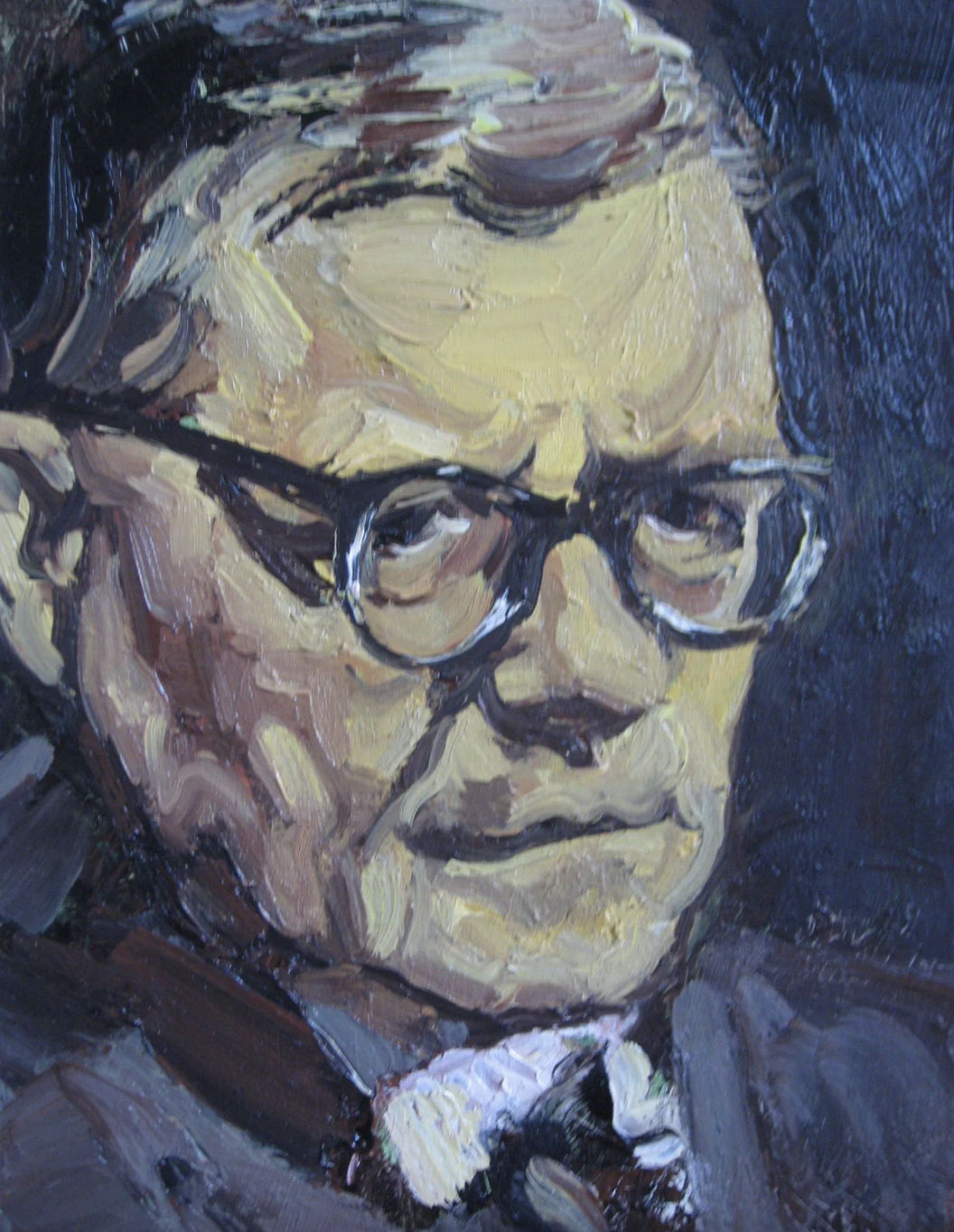 In 1948, when three faculty friends from Western Reserve University convinced the Budapest Quartet to come to Cleveland to perform a three-concert series, who could have predicted that the humble event would lead to the creation of one of the city’s venerable presenters of classical music. Since its founding in 1950, the Cleveland Chamber Music Society has gone on to create one of the most respected chamber music series in the country.
In honor of its 75th anniversary, CCMS has planned a five-concert celebration from April 21 through 30 featuring the complete Shostakovich quartet cycle performed by the Jerusalem Quartet — violinists Alexander Pavlovsky and Sergei Bresler, violist Ori Kam, and cellist Kyril Zlotnikov.
The performances will be held in Gartner Auditorium at the Cleveland Museum of Art. James Wilding will give pre-concert lectures at 6:30pm before each event. Tickets are available online. On April 23 at 3:00 pm in the Museum’s Morley Lecture Hall, there will be a free screening of the 1964 Grigori Kozintsev adaptation of William Shakespeare’s Hamlet, featuring a searing score by Dmitri Shostakovich. Click here for more information and to view a full schedule of events.
I caught up with first violinist Alexander Pavlovsky via Zoom in Portland, Oregon and began our conversation by congratulating him on the Quartet’s 30th anniversary — with only one change in personnel.
 Alexander Pavlovsky: Thank you so much. We are very happy to be celebrating our 30th anniversary. And during this tour we will present the complete Shostakovich cycle nine times. And we are talking about presenting it in Tel Aviv, so it’s probably going to be ten.
It’s exciting, but a lot of work — psychologically more than physically. It takes a lot of energy from your heart, brain, and soul. It’s also very personal music that I would compare to the Beethoven quartet cycle, which is also enormous in size and very powerful.
Mike Telin: You’re performing them in numerical order. Is there a specific reason for that?
AP: We have tried different possibilities. The last time, I think about twelve years ago, we presented them over four concerts at the request of the presenter and we found a way that was not chronological but still had a chronological development in every concert.
I think chronological order makes sense so that the audience can feel the development of the composer’s style. And since the cycle has a big connection to the history of the Soviet Union, there’s an extra extra layer of development.
Shostakovich’s music, especially the quartets, are a mirror of the time — there were a lot of changes in the politics and censorship by the Soviet government during his life, and that gives an extra perspective that I think is interesting.
MT: When you first formed the quartet, my gosh, you were all very young.
AP: At that time I was the oldest member and I was 17, which means our viola player, Amihai was 15. He’s the one who left to join the Berlin Philharmonic. Then Ori joined, so now I’m not the oldest one.
When we formed there were not as many string quartets as there are today. But still to start at the age of 15, 16, or 17 is quite a rare thing. Usually, a serious string quartet forms after their bachelor’s degree. But we started much earlier in high school, and we didn’t really have a strategic plan to become a famous string quartet.
We did have a wonderful teacher, Avi Abramovich, who was an immigrant from Romania. From the first rehearsals, we loved music and just being together and playing together. It became our love, passion, and then a career. But even then it was not a decision like, “Okay guys, let’s make a string quartet” — not at all. It was just a wonderful coincidence.
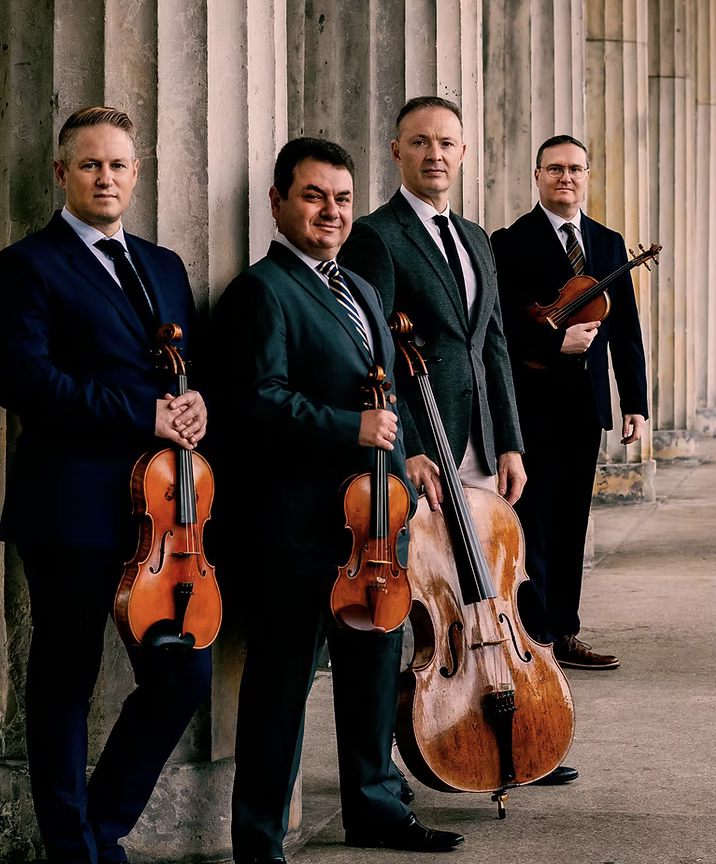 It’s a magical thing that we met — we were studying in the same high school and conservatory and playing in the same school orchestra. It was Avi and the director of the school who thought that maybe we could fit together. But as you know, most quartets or ensembles get together for half a year or so, and usually it doesn’t work out.
We received support from Jerusalem Music Center which was founded by Isaac Stern, we got our first concerts and first tours abroad, and we won a competition — our teacher wanted us to build a larger repertoire, so he started looking at competitions like the Schubert competition in Graz, Austria. So we prepared eight or nine pieces and we won first prize. So there are so many lucky things that happened on our way. But yeah, here we are 30 years later, playing the Shostakovich cycle in the States.
MT: Final question, and perhaps it’s unfair, but do you have a personal favorite of the 15?
AP: I think I should say that my favorite is the one we are currently performing on the stage. That’s the polite answer. But there are some like No. 2, which is actually rarely played. It’s one of the longest and the only quartet that was written during the war, but it’s not really strongly associated with the wartime.
I think No. 3 reflects the Second World War. But No. 2 is a very classical four-movement piece and personally, it’s my love because in the second movement it has this recitative and romance which is special since it’s a big fantasy or cadenza for the violin. I have the freedom to express many different things from the most personal crying, to the brutal. It kind of brings all the human spectrum of feelings into one movement.
I also like No. 9 very much. It’s in five movements, but there’s not a break between them. We love to play No. 12 which has quite an interesting numerological sign. It starts with a 12-tone motive presented by cello, so it has a little bit of a Schoenberg idea, but then Shostakovich brings the last two notes to a dominant and then tonic. It’s quite a long quartet, but it has only two movements, which is also quite unusual. It’s also not played very much. Of course the most famous is probably No. 8. Everyone knows this quartet. I think we all like to perform it.
And No. 7 is the shortest quartet. And I personally compare it to Beethoven Opus 95. It’s exactly in the middle of the cycle and it has what I like to call the DNA of Shostakovich. You have everything there.
MT: Is there anything else you’d like to tell me?
Just that three of the quartet members were born in the former Soviet Union and some of our parents were musicians and making art during the time of Shostakovich. And our teachers also were studying, and later on teaching, during the time of Shostakovich — and they knew Shostakovich.
My teacher, Matvey Liberman, was a student of David Oistrakh, and he always said that from time to time the students played some music of Shostakovich. And very often Shostakovich would open the door and come to the room and say, “Who’s playing my music?” So in a way, there’s also a personal connection that makes his music very dear to us.
Published on ClevelandClassical.com April 16, 2025.
Click here for a printable copy of this article
