


by Stephanie Manning
 This article was originally published on Cleveland.com
CLEVELAND, Ohio – Although written by a European composer, Antonín Dvořák’s beloved “New World” Symphony represents a particularly “American” idea of music to many.
An audience favorite ever since its premiere in New York in 1893, this symphony is often performed together with works by American composers — an approach taken by The Cleveland Orchestra the last time they played it here in 2023.
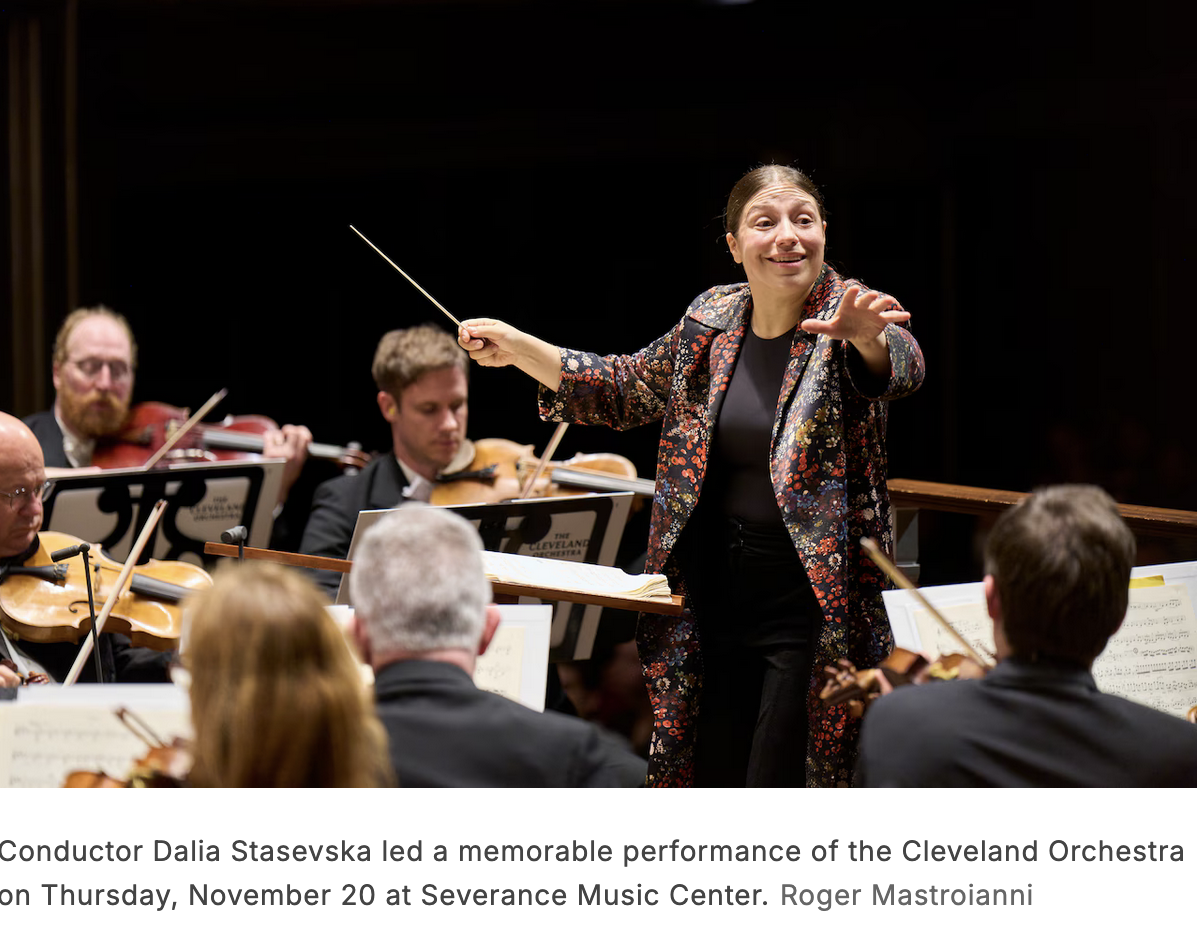
This time around, the program expanded its scope to encompass the North American continent, pairing the Dvořák with a piece by Mexican composer Silvestre Revueltas. Conductor Dalia Stasevska led a memorable performance of both works on Thursday, Nov. 20 at Severance Music Center.
Addressing the question of how best to create “American” music, Dvořák concluded that such pieces would need to show the influence of African American folk songs and spirituals.
Without directly quoting any particular example, his Symphony No. 9 draws on that inspiration in places like the second movement English horn solo, performed with a tender, singing quality by Robert Walters.
Stasevska luxuriated in that movement, lingering especially during the beautiful section scored for the first desks of string players. She also added moments of rubato to the outer movements, drawing attention to the lovely solos by flutist Jessica Sindell and clarinetist Daniel McKelway but sometimes impacting the overall momentum.
The conductor picked up the pace in the third movement even pushing the tempo a bit. The Orchestra sounded more settled during the final movement, with its grand brass chorales and thrilling conclusion.
Silvestre Revueltas shared Dvořák’s perspective on the importance of folk music. An active composer for only ten years before his premature death in 1940, Revueltas found inspiration from the present-day music being made on the streets of his native Mexico.
But he also created music that evoked the past when he composed the score for the film La Noche de los Mayas (The Night of the Mayas) in 1939, one year before his death.
Almost twenty years later, conductor José Yves Limantour arranged those fragments into a convincing four-movement symphony structure. The insistent bass drum provides the heartbeat for the sweeping first movement, while the third turns romantic and gentle, especially with the theme played by the clarinet duet.
Stasevska and the Orchestra created some irresistible rhythms in the second movement, driven by shakers and drums looping over various uneven meters.
But nothing was quite as much fun as the finale, when thirteen percussionists simultaneously rose to their feet and launched into groove after groove.
Between improvised solos on everything from conch shell to bongos to xylophone, the players shouted animatedly to cheer each other on.
The addition of the large percussion section came entirely from Limantour’s arrangement and not from Revueltas himself, so whether the composer would have approved remains up for debate.
Still, the infectious energy quickly had the crowd on their feet, cheering madly for the percussionists as Stasevska singled them out during the bows.
Published on ClevelandClassical.com November 25, 2025.
Click here for a printable copy of this article
