


by Stephanie Manning
 This article was originally published on Cleveland.com
CLEVELAND, Ohio — Works by pianist-composers Frédéric Chopin and Sergei Rachmaninoff offered some dazzling displays of virtuosity on The Cleveland Orchestra’s final Summers at Severance concert on August 21 at Severance Music Center.
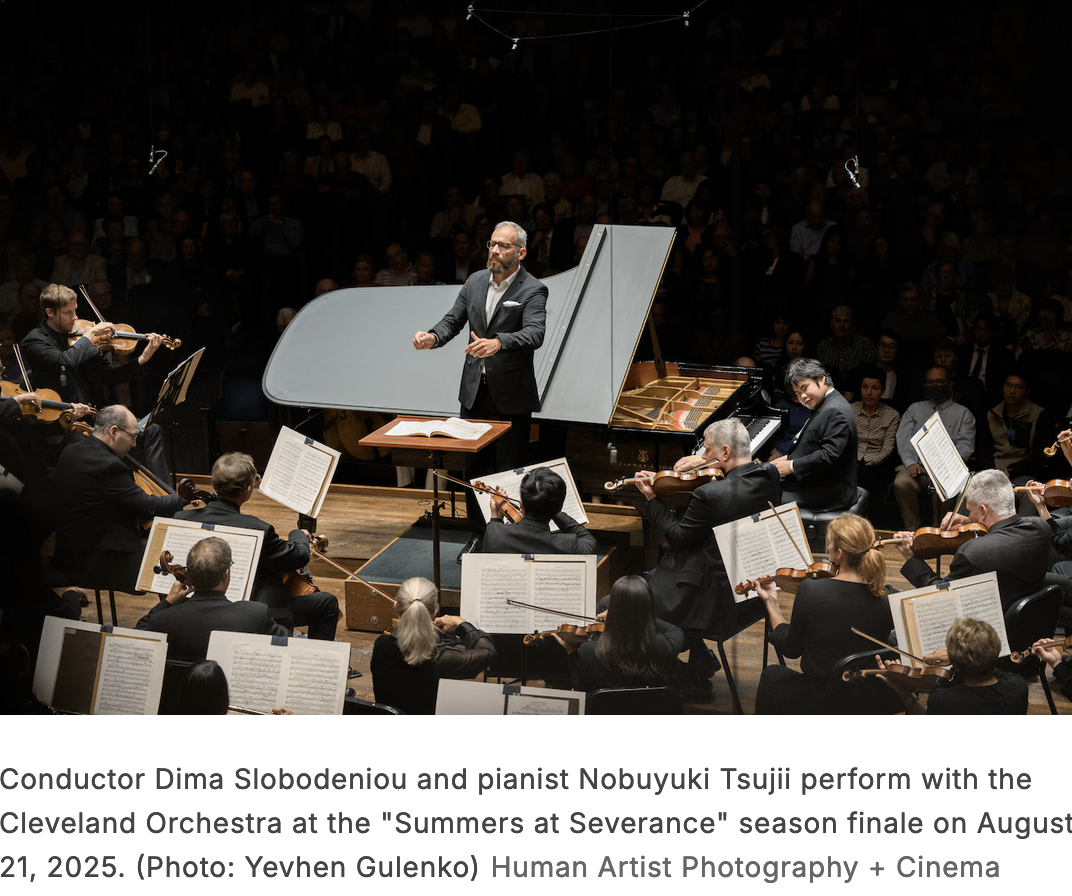
Chopin’s Second Piano Concerto gave soloist Nobuyuki Tsujii multiple opportunities to shine, and Rachmaninoff’s Second Symphony provided guest conductor Dima Slobodeniouk with a rich palette of orchestral colors to paint with, even without a soloist at the Steinway.
Rachmaninoff’s Symphony No. 2 was first performed in Cleveland by the Boston Symphony in 1911 and first played by The Cleveland Orchestra under the direction of Nikolai Sokoloff in March of 1920 as part of the newly formed ensemble’s second season.
On Thursday, The Orchestra responded emphatically to Slobodeniouk’s direction as the foreboding opening of the first movement gave way to lush Romanticism. Robert Walters’ rich English horn playing frequently soared above the texture, and clarinetist Afendi Yusuf captured attention during his plaintive third-movement solo. While Yusuf played, Slobodeniouk put down his baton, opting to help shape the musical line with his bare hands.
The even-numbered movements are more lighthearted. In the second, robust brass chorales are accentuated by sparkles of glockenspiel, an effect that delightfully appears again in the fourth. Even at the end of the hour-long runtime, the swell of the grand finale could have swept you off your feet. It certainly did for the conductor’s eyeglasses, which suddenly went sailing towards the viola section.
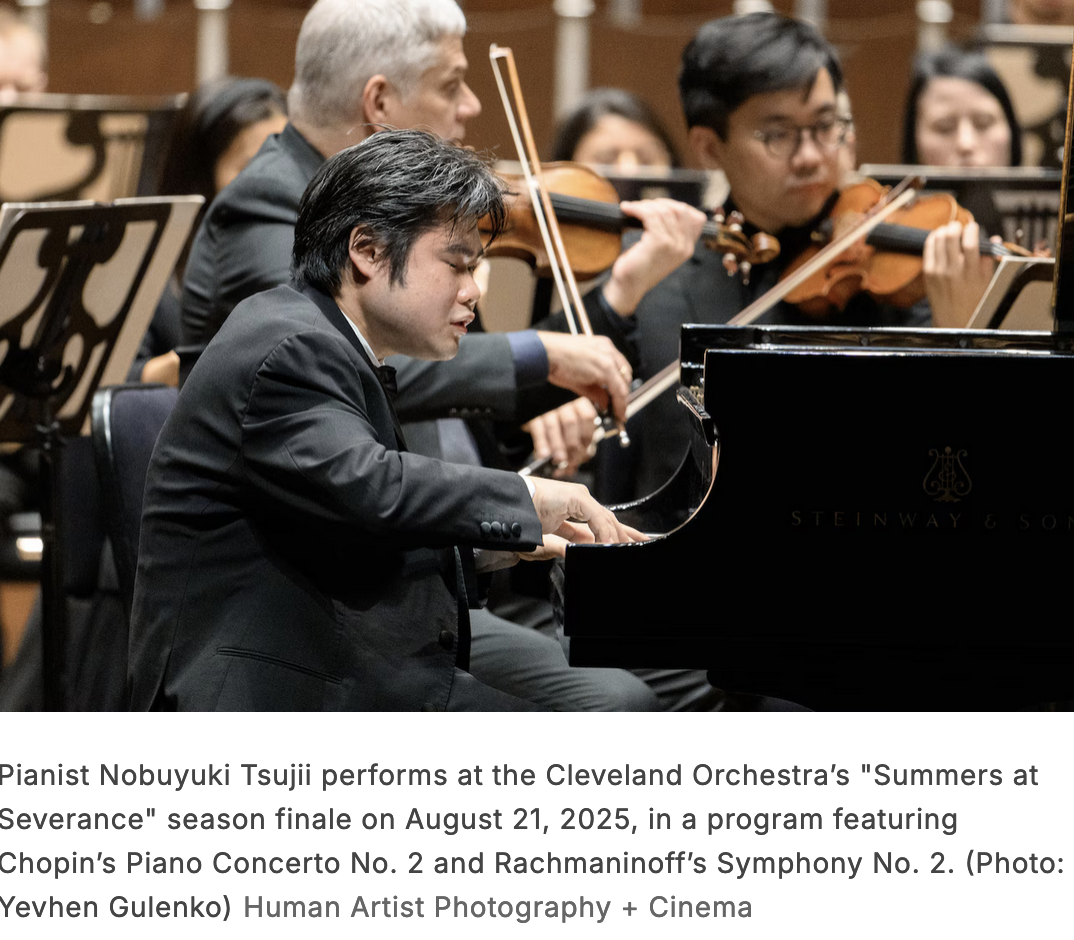
 Opening the program was Frédéric Chopin’s Piano Concerto No. 2 in F minor, which calls for the composer-pianist’s characteristic virtuosity and technique. At the Steinway, Nobuyuki Tsujii brought remarkable fluency and musicianship to Chopin’s score.
The Japanese pianist, who has been blind from birth, has an ear as finely tuned as his instrument. He constantly leaned his head low over the keyboard, as if drawn closer by magnetism. When not playing, he gently rocked back and forth and twisted his head from side to side, feeling the music in his body.
Tsujii treated every note like a precious jewel, giving his playing an ethereal quality. That approach felt especially apt during the beautiful second-movement Larghetto, which featured his exceptionally clear trills and arpeggios.
The orchestra takes somewhat of a backseat during this concerto. The spotlight remained steadfastly on Tsujii, creating a sense of awe both at how difficult the solo part is and how effortless the pianist made it sound.
For an encore, Tsujii brought out one of his specialties: “La campanella” by Franz Liszt, another famous composer-pianist whose legendary technique Tsujii matches in spades. He delivered its blazing-fast octave jumps and virtuosic chromaticism with plenty of character. Then he popped off the bench for some deep bows, a cheerful wave, and a beaming smile.
Published on ClevelandClassical.com August 26, 2025
Click here for a printable copy of this article
