


by Kevin McLaughlin
 In 1993 Dolores White was commissioned by the Cleveland Women’s Orchestra to write Celebration, Salute to the Arts for the centennial celebration of the Chicago World’s Fair, and the resulting work was premiered by CWO that year at the Cleveland Museum of Art. It is fitting, then, that the Orchestra’s program on Sunday, April 30 featured that work, both as tribute to the longtime Cleveland-based composer — who died on March 23 — and as a wider celebration of the arts and women’s contribution to it. The concert at Severance Music Center also featured Dane Johansen in a silky performance of Dvořák’s Cello Concerto, and the King Christian II Suite of Jean Sibelius.
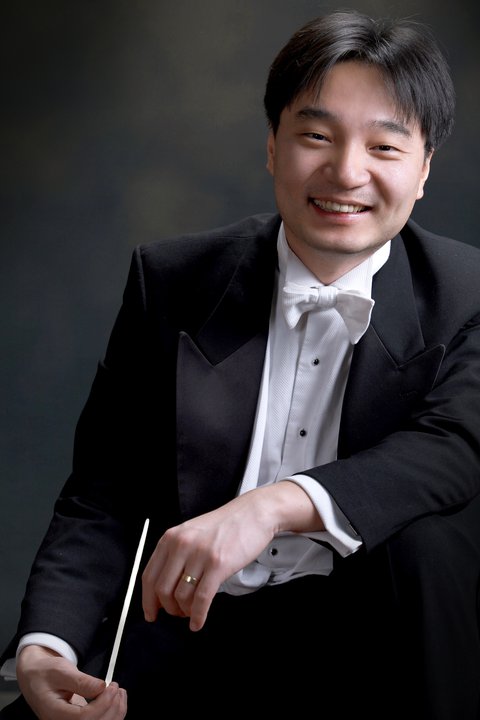
Conductor Jungho Kim (pictured) began by describing the orchestra’s commission of Celebration, and his meeting with the composer not long before her passing to discuss the upcoming concert. At age 90, White was so occupied by performances and personal appearances that she only had a few minutes to meet with Kim outside her apartment. Unconcerned by passing cars and street noise, as the conductor recalled, White intently pointed out important passages in the score. Kim was moved by her unflagging energy and attention.
The composer has described her work as “centered in a Western art music tradition,” drawing on a broad array of American styles as well as international influences. Celebration announces itself with rhythmically spirited tonal riffs reminiscent of jazz. A hi-hat cymbal interlude serves as transition to a bebop-tinged string tutti. Every section has work to do, but the woodwinds and brass contributed most to the rhythmic tautness. The final crescendo was like a push into the abyss, a gesture made even more dramatic by the collective refraining from applause afterwards in White’s honor.
Sibelius’s orchestral suite King Christian II, derived from incidental music for a play written in 1898, is delightful. Written just prior to his Symphony No. 1 (the finale of which shares motivic similarities with the Suite’s Ballade movement), the Suite, as played by Kim and the CWO, showed Sibelius’s twin strengths of conjuring a distinctive sound world and telling stories through music.
The tone of the opening Nocturne is set by motivic fragments from clarinet and oboe solos before melodic responsibilities are given to the strings. Kim set a controlled pace with the dynamics, starting soft and increasing gradually throughout up to a glorious conclusion with the brass.
The Elegy, scored only for strings, made for a good cry. Marked “Andante Sostenuto,” the movement requires tempo discipline, a steady bow, and a clear sense of phrasing. Kim and concertmaster Ani Sinanyan led the ensemble accordingly in a moving and assured performance.
Clarinetist Elizabeth Carney played a jaunty solo in the Musette movement, and bassoonist Charlotte Hines’ collaboration with the clarinets made for convincing street music, heard as it is in the play outside a lover’s window.
The Serenade, arriving and ending as a minuet with fanfare accents in the brass, transforms in the middle to an impassioned moderato for strings and winds. The final Ballade, aided by Jill Cornell’s fine timpani work, was the Suite’s dramatic high point. Toccata-like string passages, flagging a little midway, and brass fanfares aided in the drama and provided an appealing close.
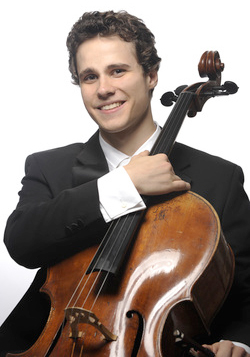 Appealing, too, was Dvořák’s Cello Concerto, with its blend of lyricism, passion, and folk-tinged melodies. Moonlighting from his duties with The Cleveland Orchestra, cellist Dane Johansen conveyed warmth and a technical command that provided a worthy example to every musician around him. Kim was a model collaborator, providing ample interpretive space for the soloist while keeping careful contact with the orchestra. In the second theme of the first movement — a cellist’s joy — the quality of Johansen’s lyricism and tone will stay with this listener for a long time. Intimacy and calm tenderness were his approach to the contemplative slow movement, and he brought intensity and a sense of fun to the finale.
Anna Shelow’s beautiful horn solo in the exposition of the opening movement was a lovely moment, and the clarinet solos (Elizabeth Carney) and duets (with Katie Cahn) in the second movement made my day.
Published on ClevelandClassical.com May 9, 2023.
Click here for a printable copy of this article
