

by Mike Telin
 EVENTS CELEBRATING BLACK HISTORY MONTH:
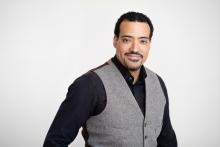
Tonight at 7:30 pm Oberlin Conservatory debuts their series To Be Young, Gifted, and Black with an overview hosted by Chris Jenkins (left), the Conservatory’s associate dean for academic support and liaison to the Office of Equity, Diversity, on Oberlin Stage Left. Read our preview of the series here.
[Editors’ note: the concert from Castle of Our Skins has been postponed to February 18 at 7:00 pm.] At 7:30 pm The Celebrity Series of Boston’s Castle Of Our Skins, a collective of artists dedicated to advancing Black artistry through music, remembers Dr. King’s legacy and his complicated life. The program includes music by Daniel Bernard Roumain and George Walker. Click here at start time.
And conductor Carl Topilow caught up with Cleveland Pops favorite, vocalist Capathia Jenkins. Their discussion touches on the early stages of her career, the many influences of African American vocalists, such as Ella Fitzgerald and Sarah Vaughan, and stories of some memorable performances. Click here to watch.
TODAY’S ALMANAC:
On this day in 1912 celebrated conductor Erich Leinsdorf entered the world in Vienna. His long association with The Cleveland Orchestra included a brief tenure as Music Director from 1943 to 1946. Click here to listen to a January 12, 1984 Severance Hall performance of Beethoven’s Symphony No. 7.
February 4, 2001 saw the death of Romanian born, Greek-French composer and architect Iannis Xenakis in Paris. A musical experimentalist, his 1953-54 Metastaseis for orchestra, includes an independent part for every musician. As an author, his theoretical writings include Formalized Music: Thought and Mathematics in Composition, and as an architect, he designed the Philips Pavilion at Expo 58 in Brussels.
Xenakis was responsible for significant works for percussion including Psappha (1975), Persephassa (1969), and Pléïades (1979), the later two having been premiered by the venerable ensemble Les Percussions de Strasbourg. Click here to listen to a recording of Pléïades performed by that ensemble and here to listen to an interview with the composer. In 2011, as part of their North American tour, (I happened to have been the tour manager) Les Percussions de Strasbourg performed Persephassa and Pléïades at Alice Tully Hall at Lincoln Center. Read the New York Times review here.
On personal note, I remember when Xenakis came to Oberlin for a residency in November of 1981. As a member of the Contemporary Music Ensemble, I had the privilege of working with the composer, who introduced me to the concept of “playing ugly.” I cannot remember the title of the piece, but I do remember it having a wicked bassoon part that spent a good deal of time in the instrument’s highest register. I was frustrated — and so was he.
Finally during a rehearsal break Xenakis came to me and asked “Why are you trying to make it sound beautiful? It’s supposed to be ugly.” That advice pretty much solved the problem. It was during that same residency that the Oberlin Percussion Group gave the U.S. premiere of Pléïades — and my fascination with music for percussion ensemble and my love for contemporary music was born.
