

by Mike Telin
 STREAMED CONCERTS:
At 7:00 pm The Cleveland Orchestra: In Focus Episode 11, debuts “Order & Disorder.” Led by Franz Welser-Möst, the concert features Mozart’s Clarinet Quintet and Berg’s “Three Pieces” from Lyric Suite. The digital stream was filmed March 18-20 and April 14-16 at Severance Hall. Click here for more information.
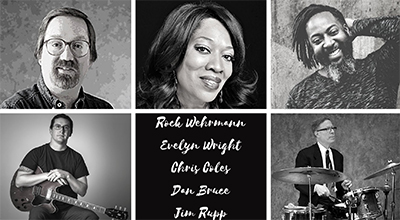
At 7:00 pm, Local 4 Music Fund’s “Tuning In” features Rock Wehrmann, Evelyn Wright, Chris Coles, Dan Bruce and Jim Rpp. “Jazzy jazz jazz,” the final program in this season’s virtual concert series. Live streamed only. Click here at start time. It’s free, but donations are welcome.
There’s more happening in other parts of the country — check our Concert Listings page for details.
IN THE NEWS:
The inventive ensemble Burning River Baroque has announced the live broadcast of a concert from St. John’s Episcopal Church, Youngstown, Ohio on June 26, at 7 pm. The environmental themed program — in English and Spanish — will feature a new work by Dawn Sonntag set to poetry by Craig Santoz Perez. Click here for more information.
Tri-C JazzFest has announced that it will return to live and in-person performances this year on September 11 and 12 at Cain Park in Cleveland Heights. To accommodate those who still do not wish to attend in-person, the festival will once again offer a free live streaming option. The lineup will be announced on June 1.
Conductor Carl Topilow has announced that his new book, The Orchestral Conductor’s Career Handbook, is now available for purchase. Written during the pandemic, the book is designed both for aspiring and established conductors. Click here for more information.
Speaking of Carl Topilow, The Cleveland Pops Orchestra will resume their concert series at Severance Hall on November 12, 2021. Click here for details.
Events of the past year have taught us that meaningful change is possible even in dark times.
Oberlin College and Conservatory will host the Crafting Change Symposium, a fully virtual series of presentations, concerts, panel discussions, and workshops, through which teachers — from kindergarten through college level — and artist-makers from a wide array of disciplines share their creative approaches to exploring science, humanities, art, and more, with an emphasis on inclusion. Crafting Change is free and runs from Tuesday, May 25 through Saturday, June 19. View a schedule of events here.
TODAY’S ALMANAC:
There are two notable passings today: In 1896, Clara Schumann, German pianist, composer, teacher, and wife of Robert, left the world in Frankfurt, Germany at the age of 76. And in 2000, French flutist Jean-Pierre Rampal, died of heart failure in Paris.
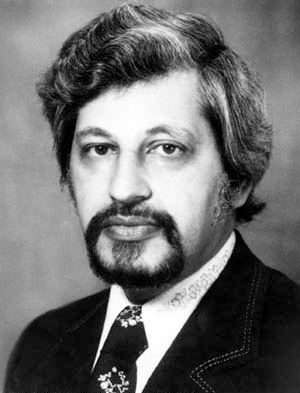 Now, on to the birthdays. It’s always interesting to scroll through the list of musicians born on any single day and see who catches your attention. Although I found today’s list to be a bit sparse, aside from singers Joe Cocker and Cher, one name particularly caught my eye. On May 20, 1927, composer and teacher Walter Aschaffenberg was born in Essen, Germany in 1927.
After immigrating to the United States with his family at age 11 — he became a naturalized American citizen in 1944 — Aschaffenburg served in the U.S. Army counter-intelligence corps during World War II.
He began composing at an early age and would go on to study with Herbert Elwell at Oberlin College, Bernard Rogers at Eastman, and later with Luigi Dallapiccola in Florence, Italy. During his career, Aschaffenburg was the recipient of two Guggenheim fellowships as well as awards from the Fromm Foundation and the National Institute of Arts and Letters, and in 1980 he was awarded the Cleveland Arts Prize for Music. He joined the theory and composition faculty at Oberlin in 1952, a position he held For 35 years.
In her Cleveland Arts Prize tribute, Wilma Salisbury wrote, “Aschaffenburg, a meticulous composer whose technically challenging music often required a long gestation period, combined 12-tone technique with diatonic melodies and consonant harmonies.”
His expansive catalogue includes the short opera Libertatem Apellant (1976), based on correspondence between John Adams and Thomas Jefferson, and an Oboe Concerto (1986) which longtime Philadelphia Orchestra principal John de Lancie called “the most impressive contemporary work for the oboe.” The piece was recorded by James Caldwell and the Cleveland Chamber Symphony and by Elizaveta Zuyeva and the Russian State Philharmonic Capella. His Ozymandias and Three Dances for Orchestra received performances by The Cleveland Orchestra — the first under the direction of Leopold Stokowski, the second under James Levine.
But as Salisbury noted, his most frequently performed piece is a fanfare he wrote for Blossom Music Center. “The brief composition was one of two winners in a competition sponsored by the Junior League of Akron. Cleveland Arts Prize winner Donald Erb (1966) and Special Citation winner Louis Lane (1971) selected Aschaffenburg’s fanfare from more than 200 entries by 158 American composers. The festive piece was recorded by the Cleveland Orchestra brass, premiered June 23, 1970, and repeated on orchestra concerts at Blossom for the next two decades.”
