


by Stephanie Manning
 HAPPENING THIS WEEKEND:
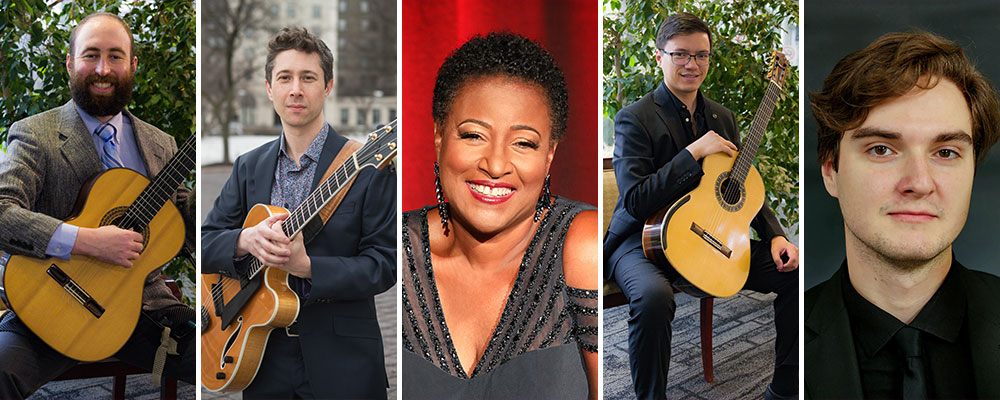
The fall concert calendar is officially in full swing. Kicking off their seasons on Saturday night: the Cleveland Classical Guitar Society, with their 2025 Showcase Concert (pictured), and the Akron Symphony, with Mahler’s “Titan.”
Also in the orchestral realm, the Oberlin Orchestra presents a Saturday night program anchored by Beethoven’s Sixth. And on Sunday afternoon, the Cleveland Chamber Symphony presents works for small ensembles, as does the Cleveland Chamber Collective.
Meanwhile, the Cleveland Silent Film Festival continues with Friday evening’s showing of Lady Windermere’s Fan (1925), a Saturday afternoon double bill of avant-garde films by René Clair, and a Sunday afternoon showing of Go West (1925). All concerts are accompanied by live music and take place at the Cleveland Museum of Art.
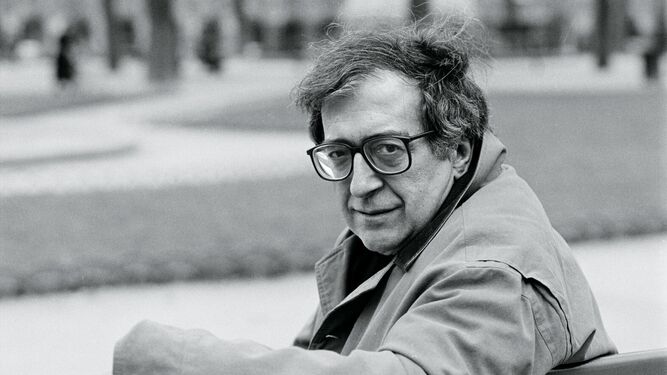 In the mood for new music? On Friday night, the Oberlin Contemporary Music Ensemble presents works by Samuel Adams (world premiere) and Olly Wilson. Then, the CIM New Music Ensemble celebrates the 100th birthday of Luciano Berio (pictured) on Sunday afternoon.
Also on Sunday, pianist Jeffrey Siegel presents a program all about Beethoven, and Rocky River Presbyterian Church presents chamber music by Vivaldi. And rounding out Saturday’s schedule is an organ recital at Pilgrim Christian Church, a one-night-only presentation of Faust at Opera Western Reserve, and Suburban Symphony’s “epic” outdoor concert.
TODAY’S ALMANAC:
September 19 — by Daniel Hathaway
On September 19, 1972, French pianist Robert Casadesus died in Paris. Known especially for his interpretations of Mozart’s concertos, he recorded a number of them with George Szell and The Cleveland Orchestra (sometimes credited as “The Columbia Symphony” for contractual reasons). Listen here to nos. 21 and 24 in recordings remastered in 2018. Beginning in 1975 and for its first ten seasons, the Cleveland International Piano Competition was known as the Casadesus Competition.
September 20 — by Jarrett Hoffman
While Sibelius casts an imposing shadow as his country’s greatest composer, Uuno Klami (born on this date in 1900 in Virolahti) has carved out a legacy as one of the most significant Finnish composers of the generation following Sibelius.
In fact, Maurice Ravel may have been the composer who most influenced Klami, but the culture of his home country was clearly a driving force, given how frequently he drew inspiration from the Kalevala, a 19th-century collection of epic poetry from Karelian and Finnish oral folklore and mythology.
Among those works is the five-movement Kalevala Suite — which, to make our discussion more complicated, also took a cue from Stravinsky’s The Rite of Spring. Listen to a live performance from 2017 by the Turku Philharmonic Orchestra under the baton of Leif Segerstam.
September 21 — by Daniel Hathaway
British composer Gustav Holst was born on September 21, 1874 in Cheltenham. Prolific and inspired by such diverse influences as Hindu music and English folksong, he left a large catalogue of music, much of which has been overshadowed by works like The Planets that made his name famous.
Explore some of Holst’s less familiar choral works with these recordings: His Two Psalms, sung by the Estudio Coral de Buenos Aires in 1981, his Hymn to Jesus, based on the Apocryphal Gospels and performed by the University of North Texas Symphony Orchestra and Grand Chorus in 2012, and — continuing the metaphor of sacred dance — his folklike but sophisticated setting of the old Cornysh carol, This have I done for my true love, performed by the choir of Christ Church Cathedral, Oxford with scrolling score.
