

by Stephanie Manning
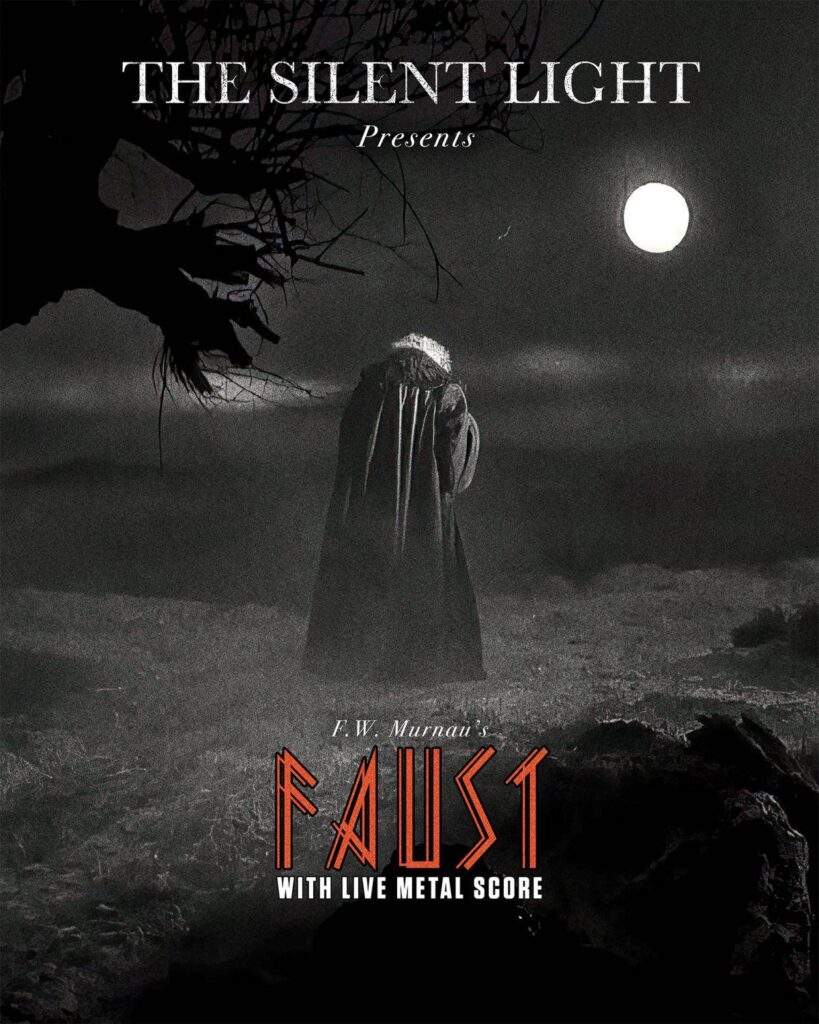 Horror movies and metal music seem a natural fit. Too bad that F.W. Murnau’s Faust isn’t really a horror movie.
The late-night showing of the 1926 German Expressionist film, presented at the Cleveland Cinematheque, promised a spooky atmosphere with a score to match. This enticing premise didn’t always deliver, especially after the film’s plot veered off course. But the packed screening on September 27, which closed out this year’s Cleveland Silent Film Festival and Colloquium, provided other moments of synergy between screen and sound.
Live metal act The Silent Light — guitarist and synthesist Michael Formanski and drummer Matt Hardy — artfully set the scene as the opening credits rolled. The duo slowly built up layers of eerie synthesizers and a rumbling subwoofer before eventually adding electric guitar and drums as the demon Mephisto casts a plague over the village, his shadow descending from above as he menacingly spreads his black wings.
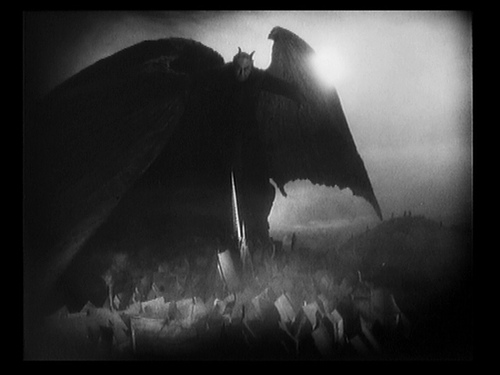 What makes Faust compelling is its evocative imagery and elaborate and groundbreaking creative effects, which remain impressive almost a century later. The scene where Faust first summons Mephisto practically crackled with energy — thumping drums kicked in as the demon himself abruptly appears, leering at Faust with glowing eyes.
Mephisto has made a bet with an Archangel on whether Faust will follow the path of good or evil, a setup that raises some interesting questions in the first act. The alchemist, desperate to heal the plague-ridden villagers by any means necessary, turns to demonic powers as a way to do good. However, this moral conflict is mostly abandoned when Faust — now in a youthful form thanks to his deal with the Devil — indulges in hedonistic pleasures and becomes infatuated with the beautiful and pious Gretchen.
A tiring romance plot ensues, where Faust relentlessly pursues the object of his affections despite her firm attempts to rebuff him. The soundtrack couldn’t quite adjust to this tonal shift. The duo underscored much of it with only a low, pulsing drone — even during what was supposed to be a comedic scene between Mephisto and Gretchen’s aunt, Marthe. (Visually, however, actors Emil Jannings and Yvette Guilbert deliver some impressive physical comedy.)
Quieter and somber moments also struggled to find a musical fit, a pattern that might have been avoided with a larger instrumentation. The example of “The Devil’s Spell” scene found on The Silent Light’s website features a haunting violin that adds so much to the texture. Without it, the Cleveland performance substituted a shorter, somber guitar melody.
After Mephisto exposes a late-night tryst between Faust and Gretchen, the plot spirals from there. The real horror elements of the movie are the ills that then befall Gretchen, the innocent party in this whole scenario. With her mother and brother now dead, she is ridiculed during an episode in the stocks, cast out into the winter chill with her newborn baby, and eventually burned at the stake.
The film’s conclusion that “love” can save the day rings hollow, despite Faust’s last-minute heel-turn where he gives up his youthful appearance and sacrifices himself along with Gretchen. Thankfully, the final confrontation between Mephisto and the Archangel brought back the full force of the echoing guitar, rumbling subwoofer, and pounding drums — making the last few minutes of music ones to remember.
Published on ClevelandClassical.com October 2, 2025.
Click here for a printable copy of this article
