

by Mike Telin
 When I first read about the Crafting Change Symposium, I learned that it was a series of free, virtual presentations, concerts, panel discussions, and workshops, through which teachers — kindergarten through college — and artists/makers from a variety of disciplines would share their creative approaches to exploring science, humanities, and art with an emphasis on inclusion.
When I read further I encountered such terms as Maker Movement, STEM (science, technology, engineering, and mathematics), and STEAM (science, technology, engineering, the arts, and mathematics).
My initial reaction was, I know a little bit about most of this, but not a lot about any of it. But after reading session descriptions and presenter bios, I was hooked. I needed to know more.
Last week I attended two sessions. “Crafting the Hybrid Body,” led by Cindy Kao from Cornell’s Hybrid Body Lab, was a fascinating lecture about wearable technology, and the four presenters in the “Lightning Lunchtime Panel” all had inspirational stories to share. Hearing Sara Trail talk about how she uses sewing and quilting to engage young people though the Social Justice Sewing Academy was enlightening. Crafting Change continues through June 19.
I spoke to Symposium director Abby Aresty, technical director and lecturer in Oberlin’s Technology In Music And Related Arts program (TIMARA), to learn more about the world of Making.
I began our Zoom conversation by asking her how she would describe the Symposium and its title during a short elevator ride.
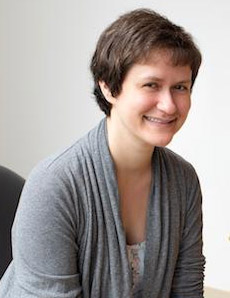 Abby Aresty: First and foremost, it’s a birds-eye view of how artists, technologists, educators, and creative people are using creativity, crafts, and technology to effect change in their community and classroom or whatever space they are working in. So it’s really a big-tent idea and there’s quite a lot that can fit into that.
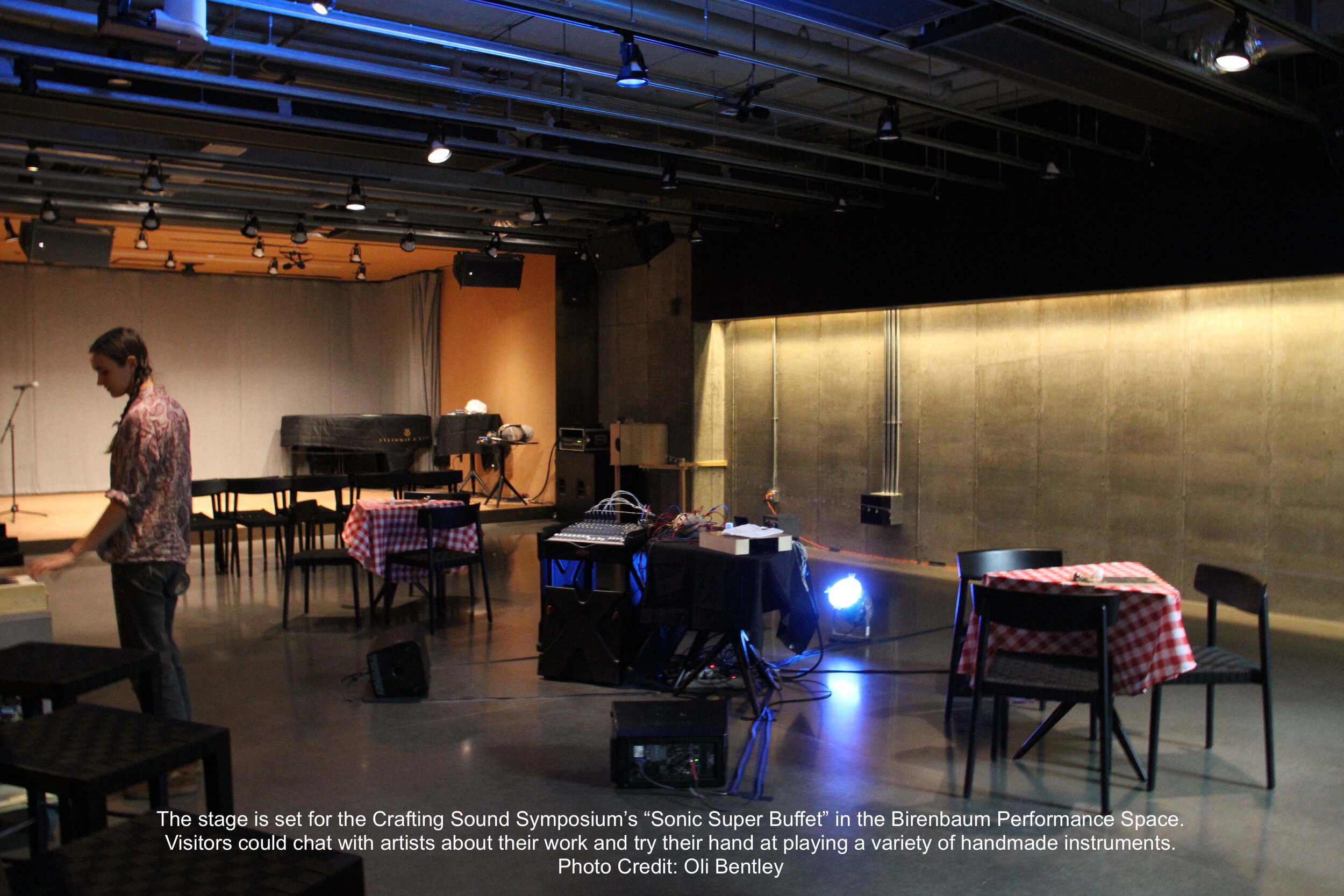
There have been a lot of “crafting” titles lately. In the fall of 2019 the TIMARA department hosted a Crafting Sound Symposium and last fall I taught a class called Crafting Change: Art Activism in the 2020 Election. And I’ve been interested in embedding traditional handicrafts into sonic art practices and thinking about how that can “craft change” in the field that I’m in, which is music technology.
I hope this is not too much “inside baseball” for folks, but if they are drawn in, even for a moment, it will start to make sense.
Mike Telin: Does the Maker Movement work in tandem with the academic disciplines that are part of STEM and STEAM?
AA: Absolutely. There are so many people who have been working to create that connection. One of the most famous is Leah Buechley, who created the LilyPad Arduino, which is all about making a way to interface with sewing and technology. But a lot of her research has been about answering the question, how do we bring the Maker Movement to a broader audience?
MT: When did the Maker Movement begin to blossom?
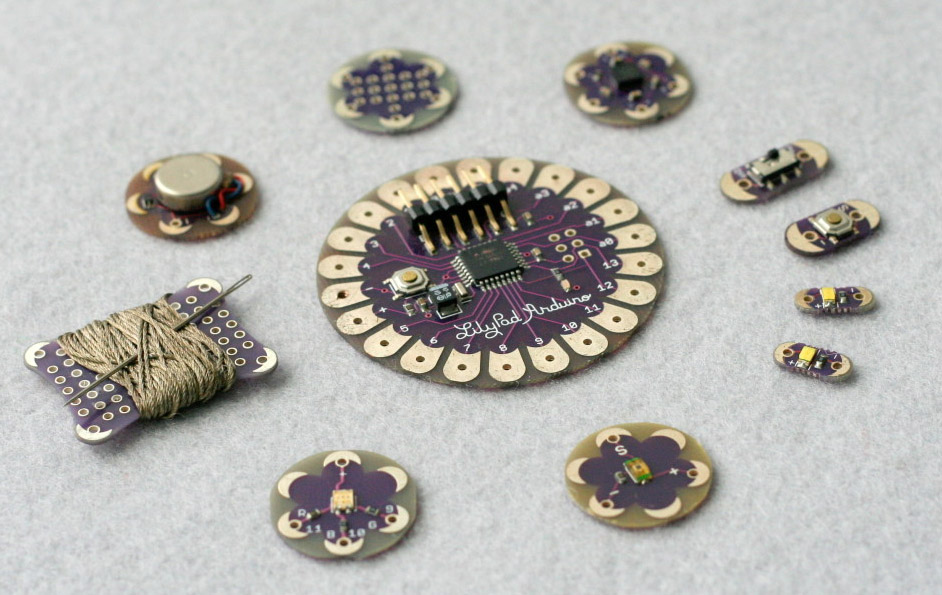 AA: We often point to 2007, when the LilyPad Arduino became commercially available, but it does go further back than that. In the ‘90s, Maggie Orth and others at the MIT Media Lab were in the beginning phases of answering the question, how do we actually start to integrate technology like embedding electronics into textiles? But in 2007 it began to become a little more open-source, and it blossomed from there.
MT: How did you become interested in it?
AA: My background is music composition — Eastman, University of Michigan, and University of Washington — and every time I was introduced to a technology, I was excited by what it afforded. At Eastman that was recording sound and working with physical objects to create sound.
At the University of Washington I took a mechatronics class where I learned a little bit of code and electronics. But my dissertation was about putting sound into an arboretum — a physical space. It was incredibly empowering to be able to walk through that space with the general public — I was like, wow, I can actually use technology to reach a different audience.
Since I’ve been at Oberlin, I’ve become more interested in the Maker Movement, which is how I came to collaborate with people at Lorain County Community College in their incredible FAB Lab. And that’s how I came to create with Kyle Hartzell for the Crafting Sound Symposium, where suddenly all these artists came and shared workshops and presentations that opened the door for me and many of my students to an even broader range of technologies and crafts.
 MT: Your passion for technology is infectious, but do you ever wish things would slow down?
AA: Honestly, my computer is probably my least favorite technology, but what is so appealing to me about these technologies is that they really are in the physical world. I love the imperfection of working with DIY, low-fi electronics and the sounds they are generating. I love experimenting and coming up with sonic results that I don’t expect — I think that’s beautiful. The imperfection is what makes it so exciting.
There is a growing interest in experimentation, and working with hybrid technologies brings up that energy, enthusiasm, and creativity. And the uncertainty about whether something is going to work.
MT: As an educator, what do you hope students will take away from their studies?
AA: There are so many things, I could talk your ear off for hours. But I work with many different types of students — college students, and younger students alongside college students in the Girls Electronic Arts Retreat (GEAR), a summer camp for third- to fifth-grade girls.
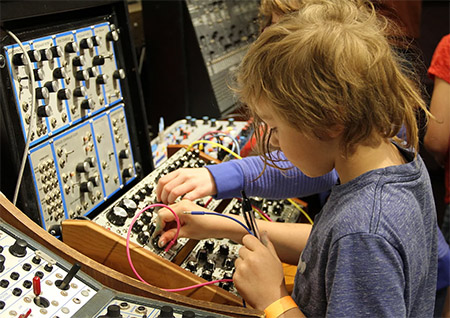 I’m interested in creating a space where students feel empowered and excited to tackle new technologies and see the connection between them. Maybe they knit for fun and think, “I can knit some conductive thread through that,” and suddenly they understand how sensors work. It’s an authentic integration of STEM and arts that creates this really powerful loop — I want to make this thing, and in order to make it I need to learn how resistance works. It’s the cascading effect where they start small and over time they work to create something new.
For me, that’s what this symposium is about — seeing what all of these artists and educators have done, and bringing these different worlds together.
Published on ClevelandClassical.com June 2, 2021.
Click here for a printable copy of this article
