

by Peter Feher
 If James Ehnes ever decided to launch a fan club, one of the first chapters would undoubtedly be formed in Northeast Ohio.
The esteemed Canadian violinist has made occasional concerto appearances with The Cleveland Orchestra over the years, but local audiences have come to know him best through chamber performances that offer an unparalleled experience of his artistry.
This feeling of intimate familiarity united Ehnes and an enthusiastic crowd at Disciples Christian Church on Tuesday, Sept. 16, for the opening concert of the Cleveland Chamber Music Society’s 2025–26 season. The recital reacquainted listeners with all there is to admire in the violinist’s playing — from his immaculate technique to his exquisite sound — while also showing how musical relationships can continue to deepen.
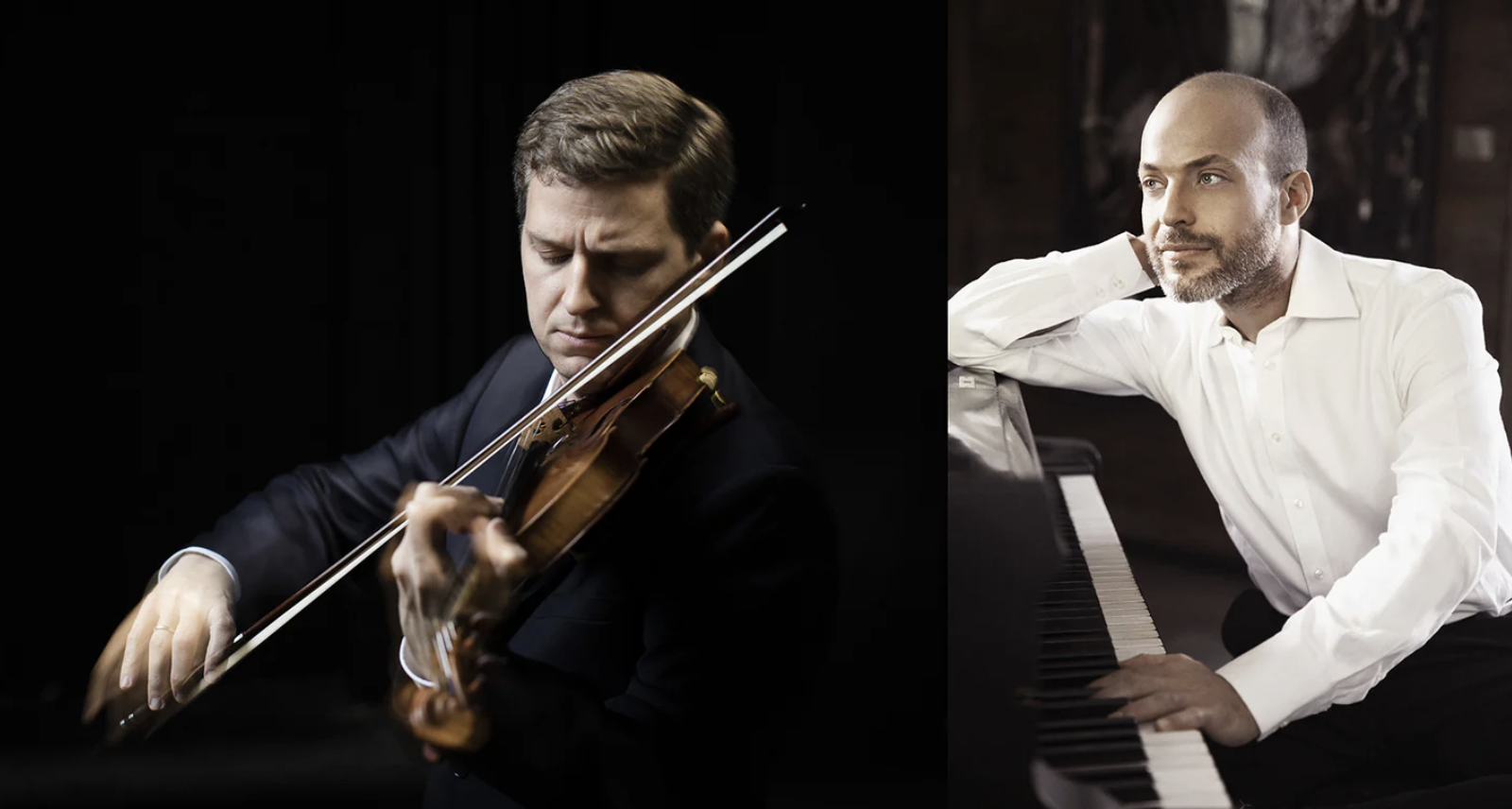
It was only proper that pianist Orion Weiss, a longtime collaborator and Northeast Ohio native, should partner with Ehnes for this program exploring the many sides of a few favorite composers.
Erich Wolfgang Korngold is remembered today for his classic Hollywood film scores, as well as a handful of concert works that he wrote in the last decade of his life. Remarkably, his early successes seem to foreshadow both genres. His 1919 incidental music for a Vienna production of Much Ado About Nothing reveals not just a brilliant ability to draw out the emotions of a story but also a keen understanding of what instrumentalists delight in.
Charming details abound in the composer’s duo arrangement of four pieces from this score, and Ehnes and Weiss dispatched every note with absolute precision, taking pleasure in the changes of mood and articulation from measure to measure.
The evening centered on the idea of “theme and variations,” starting with Ralph Vaughan Williams’ late-career Violin Sonata from 1952. The work’s rhapsodic first movement and furious second movement give way to a dense, arcane finale that develops a melody the composer originally used in an unpublished piece some 50 years earlier. We’re a world away from Vaughan Williams the English pastoralist, though Ehnes’ sweet tone in certain moments evoked those simpler times.
Another transformation occurred after intermission courtesy of Paul Hindemith’s Sonata for Viola and Piano, Op. 11, No. 4, for which Ehnes switched instruments backstage. Between composer and performer, a serious affinity for the viola was on display. Hindemith, beginning with this work in 1919, sought to elevate an often-undersung instrument to a starring role, and Ehnes met the challenge with soloistic skill to spare, projecting his sound where other players might stay subdued.
Still, for sheer lyricism, the program’s concluding piece, Edvard Grieg’s Violin Sonata No. 3, couldn’t be beat. At the height of his fame in 1887, Grieg managed to strike a miraculous balance in this score between his gifts as a songwriter and the demands of larger musical structures. Ehnes and Weiss accessed something special here, approaching every expressive moment as if it was closely cherished yet somehow being heard for the first time.
More in the spirit of a reprise than an encore, one final melody — the tender, touching aria “Marietta’s Lied” from Korngold’s opera Die tote Stadt — brought the evening to a close.
Published on ClevelandClassical.com September 25, 2025
Click here for a printable copy of this article