

by Mike Telin
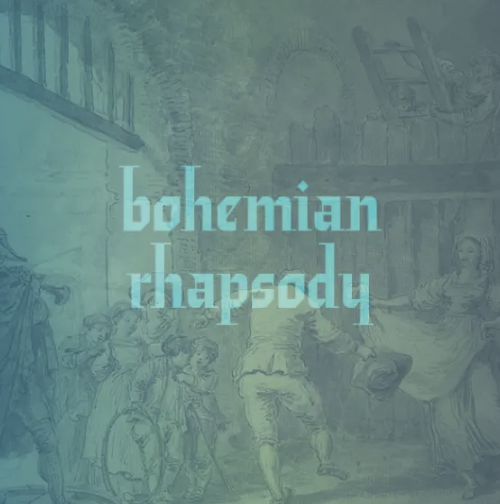 The first thing you may think of when you hear the words “Bohemian Rhapsody” is that 1970’s iconic Rock song by Queen.
But when Les Délices launches their new season on Friday, October 17 at 7:30 pm at Westminster Presbyterian Church in Akron their “Bohemian Rhapsody” will feature music by Bohemian and Moravian composers Franz Krommer (1759-1831), Georg Druschetzky (1745-1819), and Katerina Veronika Dusikova-Cianchettini (1769-1833).
Performed by oboist Debra Nagy, violinist Shelby Yamin, violist Allison Monroe, and cellist Rebecca Landell, the program also includes Mozart’s Oboe Quartet and a new work by Nathan Mondry.
“We’re opening with Franz Krommer’s Quartet no. 2 in F major for oboe & strings, and he is probably the best-known of these lesser-known composers,” Debra Nagy said during a telephone conversation. “He was a very popular composer during his time along with Beethoven. He wrote 100 string quartets, but today he’s known mostly for his wind partitas.”
Nagy said that she has been carrying around the score of Georg Druschetzky’s Quartet in g minor for oboe & strings for a very long time. “I’m so happy to finally be able to play it. Druschetzky was an oboist, and he was also certified to be a civic drummer and played for official events. He also wrote some of the first concertos for timpani and a concerto for oboe and timpani. What’s interesting about this quartet is that in the second movement Andante he uses the motif B-A-C-H — B-flat, A, C, and B-natural — for the variations.”
Click here to see a performance of Georg Druschetzky’s Concerto for Oboe and Timpani.
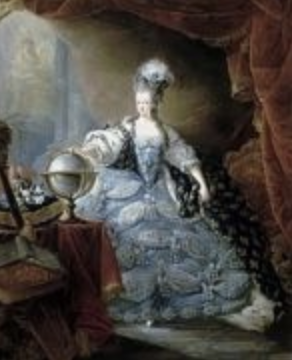 Also featured is Nagy’s own arrangements of Katerina Veronika Dusikova-Cianchettini’s Waltzes V & V, and Air Russe. “I didn’t know anything about her until I was at a festival in North Carolina and they asked me to play some of her music on a Women Composers Concert. She’s fascinating because she was a singer, a harpist, and a pianist as well as a composer, and unlike other women composers she was able to get her music published — because she was married to a publisher.”
“Bohemian Rhapsody” also includes a brand new work by harpsichordist, organist, fortepianist, composer & improviser Nathan Mondry. “He’s just a really cool guy and I asked him to compose a piece in the early 18th-century style that would incorporate some folk tunes. He’s written a wonderful three-movement suite for oboe and strings that includes an opening chorale prelude (Mládi a láska), a cheeky fugue (Bývalost), and a theme and variations (Důvod).
Concluding the program is Mozart’s Quartet for oboe and strings in F major for which Debra Nagy will exchange her Baroque oboe for a Classical oboe. What is the difference between the two instruments? “The Classical oboe has two keys but it’s not really about the keys — most of the changes are on the inside with the instrument’s bore. It produces a silvery sound and it’s an instrument that Mozart would have been familiar with when he was composing his quartet.”
The program will be repeated on Saturday October 18 at 7:30 pm at Forest Hill Presbyterian Church and on Sunday October 19 at 4:00 pm at West Shore Unitarian Universalist Church. Tickets are available online.
Published on ClevelandClassical.com October 14, 2025.
Click here for a printable copy of this article
