


by Kevin McLaughlin
 This article was originally published on Cleveland.com
CUYAHOGA FALLS, Ohio — The marketing department of The Cleveland Orchestra seized on two works by the 19th-century “rock star” composer and pianist Franz Liszt on its programs at Severance and Blossom to advertise the weekend events as “Lisztomania” — with a nod to “Beatlemania,” the 20th century craze for the music of The Beatles by their adoring fans.
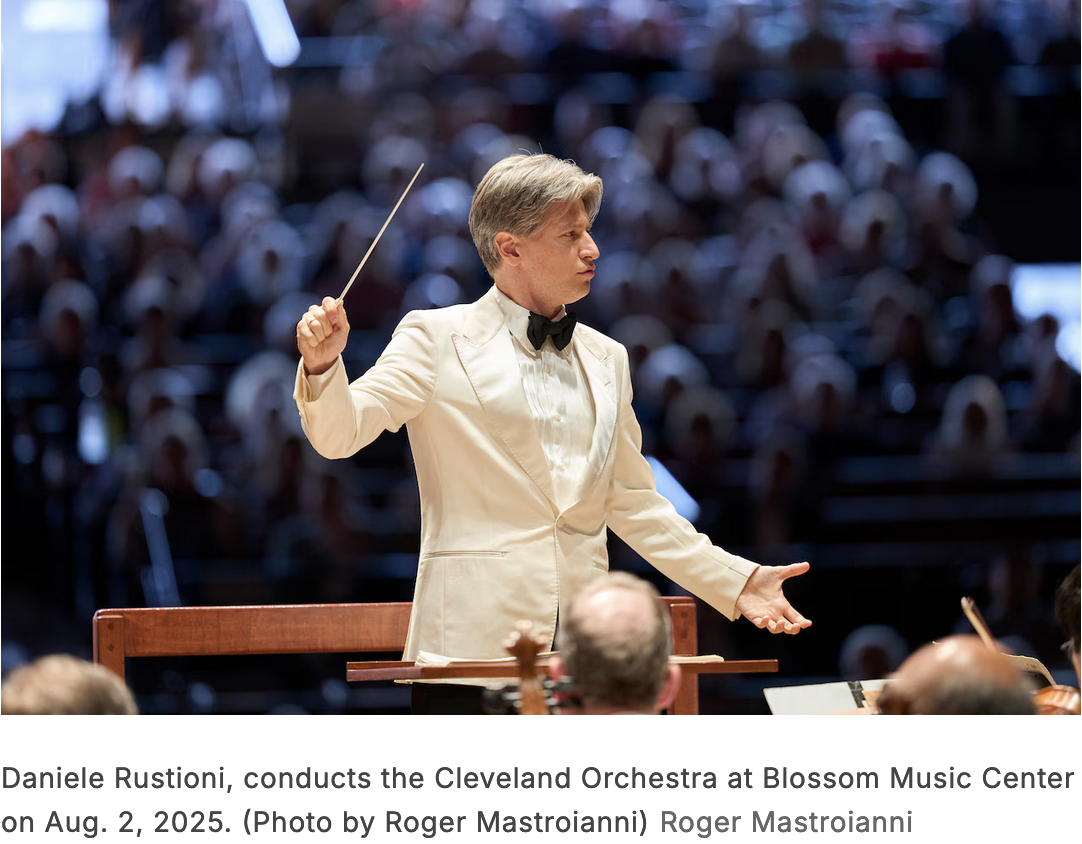
On Saturday night, August 2, at Blossom Music Center, Daniele Rustioni made his Cleveland Orchestra debut, conducting with clarity and joy but also with a flair reminiscent of Liszt’s charismatic presence. His physical expressivity drew a palpable response from the ensemble, an experience of shared energy between conductor, soloist and orchestra that recalled how Liszt could drive his fans into a frenzy.
Wagner’s Tannhäuser Overture opened the program with a musical struggle between spiritual penitence and sensual abandon. Rustioni conducted with cinematic sweep, drawing a radiant, finely layered sound from the orchestra. The Pilgrims’ Chorale emerged with solemn majesty before yielding to the seductions of Venusberg. Rustioni relished the contrasts: surging violin figurations, the pilgrims’ noble hymn, and a bacchanal that glittered with wild, unrestrained color. In the final section, the hymn returned, culminating in a resplendent and redemptive closing.
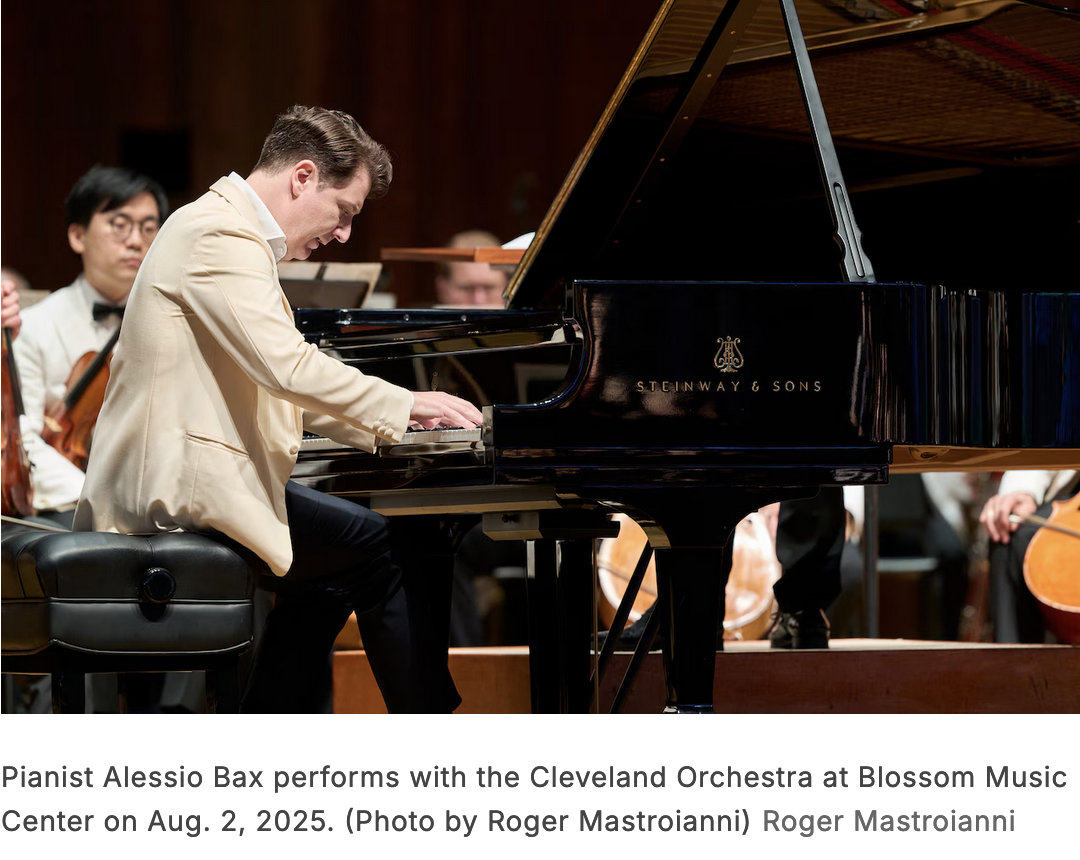 Liszt’s Piano Concerto No. 1 requires a soloist who can dazzle, charm, and converse, and Alessio Bax, making his Cleveland Orchestra debut, met the challenge with style. Though the score brims with theatrical flourishes, Bax approached it as chamber music on a grand scale.
The opening string unisons snapped with rhythmic bite, answered by Bax, who brought clarity and poise to Liszt’s virtuosic writing. Rustioni matched him gesture for gesture, drawing alert, responsive playing from the orchestra and shaping transitions with expressive flexibility.
The Quasi Adagio emerged as a reverie, its sighing phrases shaped tenderly before dissolving back into the concerto’s restless momentum. The triangle-accented scherzo danced with precision and wit, and the final cadenza felt less like a sprint to the finish than the culmination of a grand improvisation.
After intermission, Rustioni led Brahms’s Symphony No. 1 illuminating its underlying radiance. The opening movement grew organically from the timpani’s measured tread into a turbulent development, eventually arriving at a catharsis that felt earned rather than imposed. In the Andante, Brahms’s lyrical gifts came through in the warmth of the strings and the tender interplay between principal oboe Frank Rosenwein and concertmaster Liyuan Xie.
The finale began with glowing horn calls led by Nathan Silberschlag that set the stage for the symphony’s most radiant transformation. Rustioni led the hymn-like theme, often likened to Beethoven’s Ode to Joy, with glorious simplicity. He and the orchestra brought Brahms’s symphony to life as a luminous expression of Romantic idealism.
Rustioni’s smile at the end was infectious, his delight unmistakable — and both were met with extended, heartfelt applause from orchestra and audience alike.
Published on ClevelandClassical.com August 6, 2025
Click here for a printable copy of this article
