

by Mike Telin
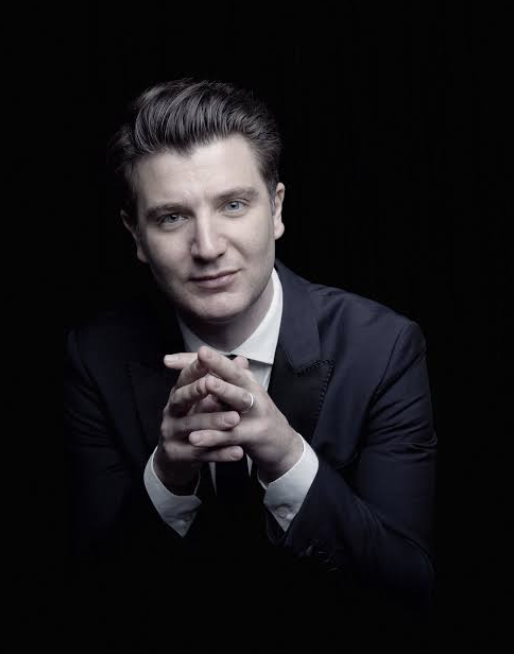 Although Alessio Bax has performed twice in Cleveland for the Cleveland Chamber Music Society — most recently this past January — on Saturday, August 2 at Blossom Music Center, the Italian pianist will make his Cleveland Orchestra debut.
The 7:00 pm concert, under the direction of guest conductor Daniele Rustioni, will include Richard Wagner’s Tannhäuser Overture, Franz Liszt’s Piano Concerto No. 1, and Johannes Brahms’ Symphony No. 1. Tickets are available online.
“I’m incredibly excited about it — It’s really a dream come true,” the pianist said during a telephone conversation. “I grew up listening to The Cleveland Orchestra’s recordings and I have friends who play in the orchestra. I’ve never been to Blossom, but I know what a special place it is.”
I began our conversation by asking him about his choice of concertos.
Mike Telin: I know you like Liszt very much: how did you come to settle on his first concerto?
Alessio Bax: It was a conversation I had with the conductor Daniele Rustioni, who’s a very good friend. We haven’t had the opportunity to actually collaborate but we’ve known each other for a few years now. This concert will also be his debut with the Orchestra, which is very exciting. But basically we wanted a balanced program and I think that Wagner and Brahms with the Liszt in the middle is going to be great.
MT: It is a great concerto — what are your thoughts about it?
AB: My own history with it is that when I was a young kid starting to play piano, I was attracted by the virtuosity of the piece. It’s incredibly exciting to play and to listen to.
Then I put it aside for many years and last season I brought it back for a couple of concerts. Only then did I really appreciate its greatness compositionally. It’s a genius piece in so many ways that I don’t know where to start.
It’s in four short, connected movements. Liszt produced so many ideas and themes that are used in all four movements, so there’s an incredible arc throughout the piece. Emotionally it touches on absolutely everything and it’s a piece that is intellectually stimulating. I think it inspired composers in many different ways. It has heart — every phrase is so special and the narrative is so engaging. It’s so masterful and full of incredible tunes and virtuosity. And he does all that in 20 minutes, which is amazing.
MT: It also has a fun orchestra part.
AB: It does, but the orchestra is not merely accompanying the piano, it’s driving the narrative. There are tender moments of chamber music, whether it’s with the violins or the winds, but there are also symphonic moments where the piano and the orchestra play as one. And there are other moments where the piano is fighting with the orchestra, so there’s absolutely everything. It’s such a compact and effective piece — really stunning.
MT: Excuse me for asking — but is it difficult?
AB: Liszt wrote it for himself, so it is very difficult music but also very exciting.
MT: It is a concerto that the Orchestra knows quite well.
AB: You really need a top orchestra like Cleveland to make it come to life. Someone recently said that this Liszt concerto only becomes as good as the person playing it because there are so many different layers to the music.
Of course anyone can approach Liszt in a superficial way, but there’s so much more to it. You really need amazing musicianship and a level of commitment, which I’m sure The Cleveland Orchestra will bring.
I can’t wait to play it with Daniele Rustioni, who’s a highly communicative conductor, and is very well known in the opera world.
MT: Changing topics, I understand you’ve had a very busy Festival season this summer.
AB: I played a couple of concerts with my wife, the pianist Lucille Chung, and then I went to Seattle for the Chamber Music Festival. After that, I was in Europe where I direct a festival in a beautiful part of Tuscany. It’s called Incontri in Terra di Siena — which is a mouthful.
It’s held at an estate that’s not only beautiful, but also historically significant. So year after year I basically abuse my good friendships, but I don’t think they mind. It’s a labor of love, and as musicians, we use the summer to grow and to feed our souls and to get the energy for the rest of the season coming up.
Published on ClevelandClassical.com July 30, 2025
Click here for a printable copy of this article
