


by Mike Telin
 What is there not to like about Homer’s Odyssey? The ancient Greek epic chronicles the warrior Odysseus’s ten year journey home following the Trojan War during which he is confronted by storms, monsters, and temptations.
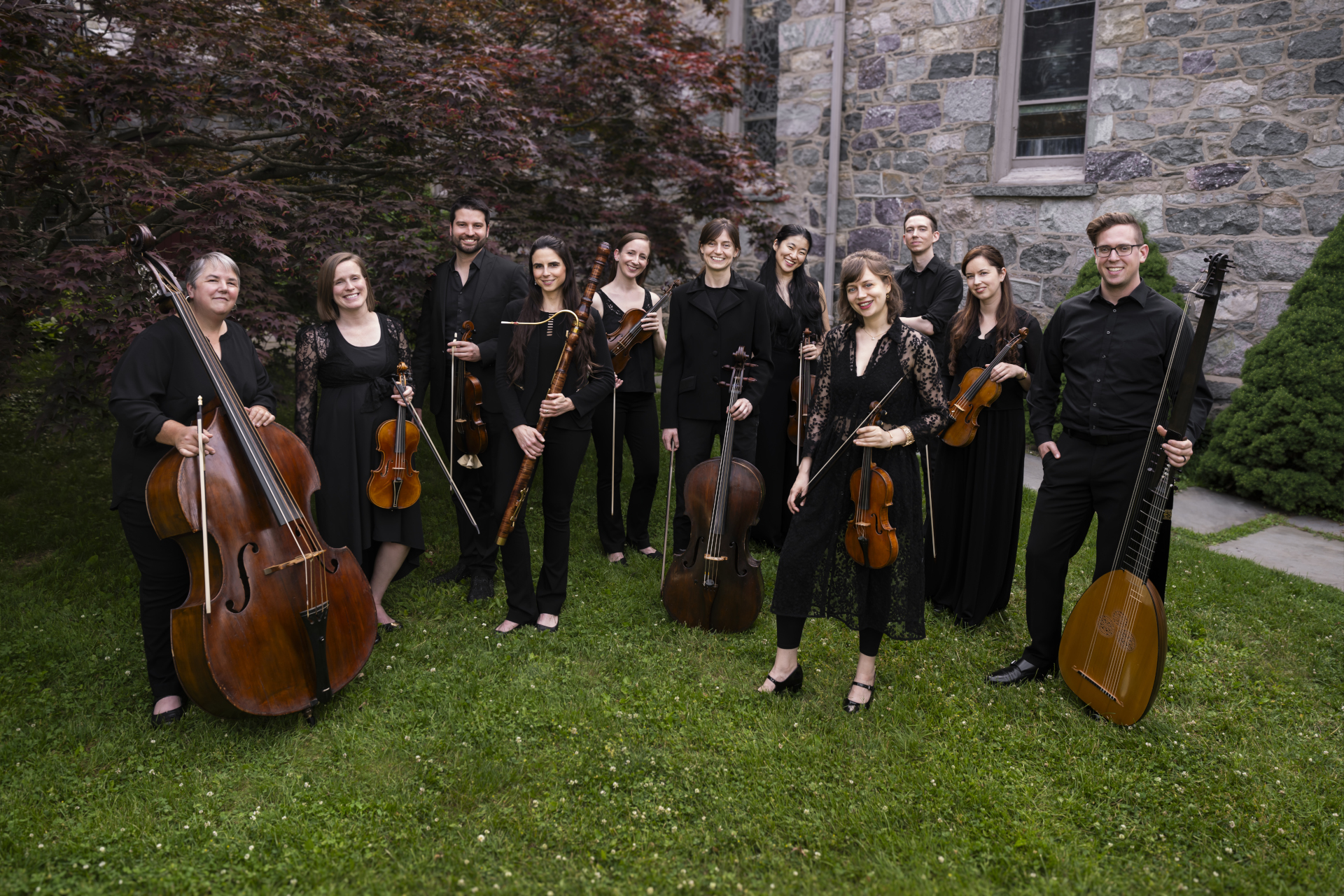
On Sunday, January 18 at 7:30 pm at Heights Theater, the period instrument Relic Ensemble will present “The Odyssey.” The one-hour, original program will be presented without intermission. Tickets are available online.
I spoke with violinist Aniela Eddy and cellist Cullen O’Neil, two of the group’s founders and began by asking them where their Odyssey begins.
Cullen O’Neil: We’re starting with one of the most memorable episodes, Odysseus’s encounter with the Cyclops. We also have the Lotus Eaters, Circe, and the Sirens. We have his trek into the underworld where he meets his mother who he didn’t know had died, so that’s a heartbreaking chapter. Then we have the episode when his men release the bag of Four Winds because they think that he’s hiding gold — which causes a massive storm and delays their trip even further. Then there’s the Enchanted Sleep, when Athena takes pity on Odysseus and puts him into a deep slumber in the middle of the storm. And finally we have his return.
MT: How did you go about choosing the musical selections?
CO: We started by looking for as much Baroque Odyssey-themed music as we could find and put it all into a playlist so we had a place to work from.
Aniela Eddy: We have music by seventeen composers. Nine of them are Italian, three are French, three are German, and two are English.
CO: We’ll begin with music from Monteverdi’s Il Riturno d’Ulisse in Patria, The Return of Odysseus to his Homeland, which is probably the most famous and is the first opera that was written about Odysseus’s adventures.
Then there are some lesser-known operas we found like Nicola Porpora’s 1735 opera Polifemo. So we use the overture to that in our Cyclops chapter.
There’s one by the virtually forgotten composer Giuseppe Zamponi about Odysseus when he goes to Circe’s island from Ulisse nell’isola di Circe. In its time it was incredibly popular, and it has some really beautiful excerpts that we’ll be playing in the Circe chapter.
MT: What were the challenges of taking on The Odyssey as a theme? And how did you make it your own?
CO: It did take a lot more thought and discussion than a lot of our programs. We always structure them around some sort of narrative or story, and the narrative really weaves its way into the structure. We divide it into chapters, and each chapter is a string of pieces that flow from one to the other.
With The Odyssey, the challenge was that there’s so many different adventures and the details of those adventures are so important. What we ended up doing was to adapt sections from each of the eight adventures that we chose using the translation by Robert Fagles from 1996 and set them to music.
AE: Usually each chapter begins with some sort of spoken word, and the difference in this program is that those spoken words will be set to music.
MT: Can you talk about the collaborative process?
AE: Out of the six of us we form teams. We have a repertory team and four members of Relic are on that team.
We create a framework for the idea and the theme, then we divide up the task as to who is going to curate which chapter. Then we come back and present it to each other and go from there.
MT: Very democratic. How long did it take to put this together from conception to completion?
AE: We worked on it in spurts. We had a residency at Avaloch Farm where we started to get the ideas going and because we were together in person, that made a big difference.
Then about a month later we had a meeting online and divvied up the work. It takes a while and for me personally, the chapters that I was assigned took me forever to wrap my brain around. The Odyssey theme is so specific, and yet there’s a lot of room for interpretation and creativity. And there’s so much music out there, how do you pick what fits a specific thing? So it helped to have a good month to really think about it. I would say it took us about two months to get it all solidified. Uploading all the music and sending it to everybody took some time as well.
MT: Was there anything surprising that you discovered when you were creating the chapters?
CO: This was not necessarily unexpected, but I gained a deeper understanding of the story. I had studied The Odyssey back in high school with a very good English teacher. So I thought I understood all the themes, but diving into the text to set it to music, I also had to condense it in a way that the heart of each adventure was expressed. I definitely started to understand some of the human elements of each adventure more than I ever had.
AE: The two chapters that I was assigned were both very different in character. I guess the surprising thing for me was how hard it felt. Because we had done programming of our previous theme, which was called “The Spheres,” and that felt a lot more straightforward because there’s no actual text. With this, because there is a set storyline you want to honor that. At the same time you need to expand on it in a different way. So it was surprising how difficult that felt. That’s why I needed more time to just digest everything.
MT: The Odyssey is a great story for the entire family. Why do you think it still enchants people?
CO: I think it’s the quintessential hero’s journey — he leaves, he returns, but he faces all these obstacles on the way, and who can’t relate to that?
The adventures can appeal to kids. They can appeal at any age. The adventures are so good that once you dig into them there are countless layers that you can explore.
It’s been really exciting for us to explore those adventures and all those layers, but music can express some things sometimes that the text cannot.
MT: If you met somebody on the street and they asked why they should go hear the concert, what would you tell them?
CO: That it’s going to be exciting from beginning to end. If you think you don’t like Baroque music, or you think you don’t like classical music, this is going to change your mind.
MT: You have three concerts on this tour.
AE: Our first concert in Kalamazoo on Thursday, then one in Ann Arbor on Friday. And then the concert in Cleveland on Sunday.
I love all of those places for different reasons. Ann Arbor is very close to me because I grew up very near to there, and I also went to high school there. And Kalamazoo is very close to me because that’s where Cullen is from and where Relic started.
Cleveland is very close to me because I lived there for seven years when I was studying at CIM. It’s our second time performing there, and it’s very exciting for me to be able to bring this huge project to Cleveland, because I know that the audiences there are very special.
Published on ClevelandClassical.com January 13, 2026
Click here for a printable copy of this article
