

by Daniel Hathaway
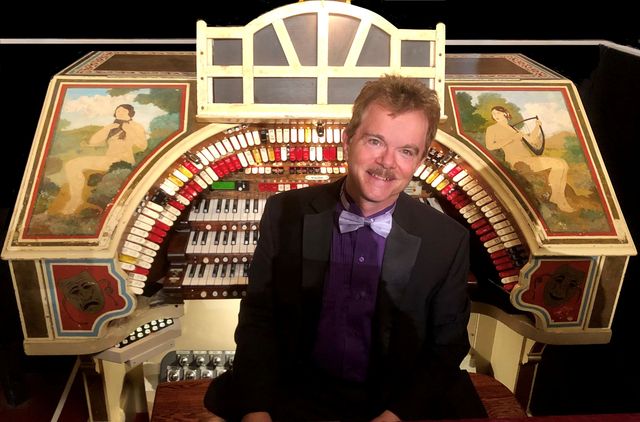 Three of the classics to be screened at the Cleveland Silent Film Festival & Colloquium from September 6-9 will enjoy the live collaboration of Colorado’s Mont Alto Silent Film Orchestra. But Harold Lloyd’s iconic comedy Safety Last!, the opening event on Wednesday, September 6 at 7 pm at Masonic Auditorium, will be accompanied by a single musician.
Organist Clark Wilson is one of the most prominent scorers of silent photoplays in America today. His accompaniments reflect the techniques and materials of the musical performances given in major picture palaces during the heyday of silent film.
One of those resources is the theater organ, which represents a special tributary in the grand stream of pipe organ history, and was only made possible by developments in electricity around the turn of the 20th century.
Before that time, the liaison between player and pipes was mechanical. Once inventors like Robert Hope-Jones in Britain discovered how to open valves to let air into pipework electrically, entirely new possibilities arose. That led to inventions like the Hope-Jones Unit Orchestra, which comprised a small number of ranks whose individual pipes could be wired in at different pitches on different keyboards.
According to the Western Reserve Theater Organ Society website, “The tonal sounds of the theater organ were designed specifically to provide more robust and engaging music to match the action and storyline of the silent film. [Read more…]
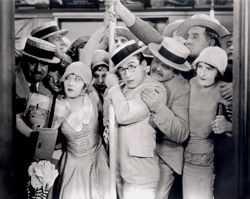 Last Sunday afternoon’s screening of Harold Lloyd’s silent film comedy Speedy delighted the Stambaugh Auditorium audience in Youngstown and offered improvised organ accompaniment by Todd Wilson. This type of improvisation was common in the 1920’s and even helped the late, noted musicologist Donald Grout pay for his higher education.