


by Mike Telin
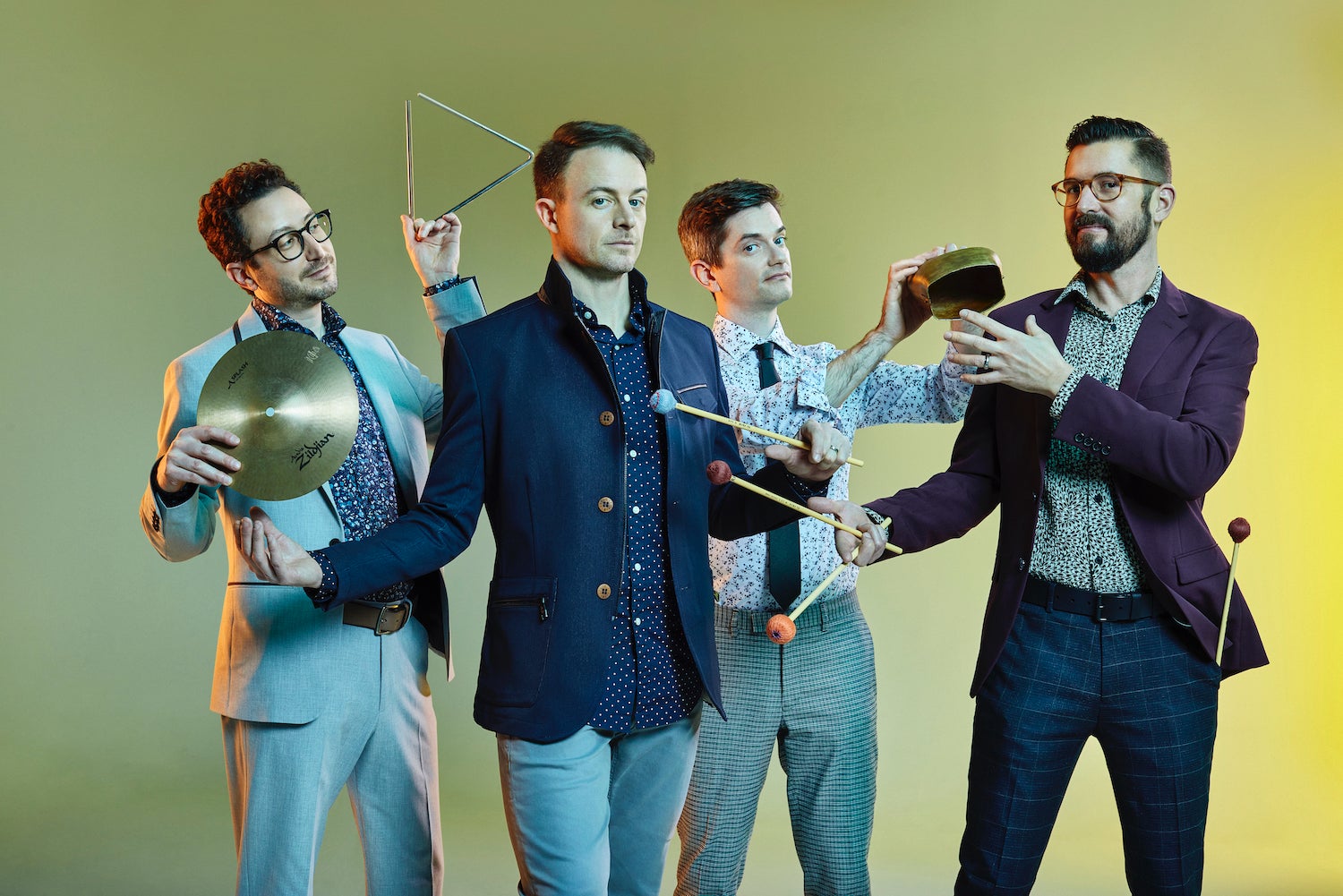 On Sunday, March 22 at 3:00 pm at the Cleveland Institute of Music, the Chicago-based Third Coast Percussion — Sean Connors, Robert Dillon, Peter Martin, and David Skidmore — will present “Time Pieces: The New Classical.” The program celebrates two decades of genre-defying, award-winning music, including many of the ensemble’s 20th anniversary commissions. The concert is sold out.
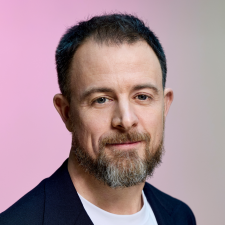
I caught up with David Skidmore on Zoom and began by asking about the group’s 20th anniversary program.
David Skidmore: The first half is highlights from the past 20 years. And the second half is all pieces that we commissioned for our 20th anniversary, which is some of our favorite music to play right now.
Mike Telin: For the first half, how did you begin to whittle down what you wanted to include?
DS: We started out knowing that we would only be able to include a fraction, so we made peace with that to start with. Then we tried to represent as many different projects or albums as possible. For the most part, no two pieces on the first half are from the same album or the same project.
We open with a beautiful, simple work by Danny Clay: “Teeth” from Playbook. It’s part of our Currents Creative Partnership, which is a program we’ve been running for over a decade now. It’s for early career composers or music creators who maybe haven’t written classical music or haven’t written for percussion, who are wanting to try something new.
It’s an application process — people send in their scores, and we’re able to choose usually two or three composers a year to work closely with in creating a new work.
Then we’ve got a piece from our album Paddle to the Sea called “Niagara,” that we composed. We are very active composers, so we wanted to represent that part of our music making.
Clarice Assad’s “The Hero,” is from our album Archetypes, which was a very special project. Clarice and her father Sergio are both a part of that project, and have become close friends and collaborators. We’ve done other projects with them as well, so it felt important to include a piece from that one. We also wanted to represent local composers, and Clarice is based in Chicago.
We included Steve Reich’s Music for Pieces of Wood — that’s the album that we won a Grammy for in 2017. Reich’s music has been important to us from the first concert that we ever played, so we wanted to tie it back to our very beginnings.
And finally we have a piece by jlin. “Obscure” is from Perspective & Please Be Still. jlin has become one of our closest collaborators and is another composer based near Chicago.
We’ll end the first half with Philip Glass’ Metamorphosis No. 1. Of course, Glass is an iconic American composer and someone we’ve been really fortunate to work closely with.
MT: The second half of the program’s title — The New Classical — what’s behind that?
 DS: If you’re going to put us in a genre area of a record store, Classical music is where we’d end up. And it makes sense. We went to conservatories and music schools where we studied classical music.
But as percussionists, and as the type of curious people that we are, we’ve opened ourselves up to so many other genres, other types of composers, and music creators. That title’s a little cheeky because in a way, using the label ‘Classical’ is a little silly anyway because it represents an idea for the rest of the world that doesn’t make any sense. When you say classical, are we talking about Ancient Greece or Ancient Rome, or are we talking about the 18th century in Vienna?
No genres are perfect, no words are perfect. But in our mind, the new era of this music that we love so much is about different genres, and composers from wildly different backgrounds. So that’s where we came up with that title.
MT: Percussion adapts itself so well to different styles and different approaches to music.
DS: I think there’s a reason that percussion is a part of almost every genre of music from almost every place in the world. Besides the human voice, it’s the oldest means of musically expressing ourselves. One obvious way that plays out is in rhythm, the way that a percussionist can be the rhythmic foundation or the heartbeat of so many different styles of music.
But also melodically and harmonically there are beautiful percussion traditions from all over the world. So I think it’s natural that it adapts, in our context, to so many different genres. I think it’s made to do that in a way.
MT: And percussion is still about the only ensemble for which you can write a piece for blocks of wood.
DS: That’s right — we do have a lock on that.
MT: Looking back over 20 years, did you think you would be still going strong in 2026?
DS: We hoped we would be. We started out very ambitiously. We had been playing this music in school, we’d fallen in love with it, and we just knew that there was a wider audience for it beyond the music schools and the conservatories.
When we started, there were already examples we could look to like Nexus, Kroumata, and Les Percussions de Strasbourg — all professional percussion groups and none of them based in the U.S.
Sō Percussion had just started about five years before us, so we had them to look to as well. But it was still a leap of faith. Even though we were ambitious and saw potential, I don’t think any of us would’ve been so cocky as to say, ‘this’ll be a full-time job, and 20 years later we’ll still be making new music.’ It’s hard for anyone to think that far ahead.
MT: But you are now a well-oiled machine. You have a Board and a 501(c)(3) exemption, and you’re creating all these different projects as well as concertizing.
DS: We’re really fortunate because we’ve been very deliberate and made the plans that we needed to make to realize the artistic ambitions that we had. I think it’s hard both to have the ideas and to see them through.
MT: This is an unfair question: With all of the pieces you’ve commissioned and performed over the years, do you have a few that are personal favorites?
DS: I don’t think that’s a totally unfair question. This is recency bias, but I will say that the second half of our program in Cleveland is my favorite music that we’ve done. I think we keep getting better at what we’re doing and better at realizing the type of music that we want to.
The pieces by jlin, Jesse Montgomery, and Tigran Hamasyan represent us doing what we do best because we’ve been at it long enough to hone in on what we want. And, the pieces are very different from one another.
We’ve worked with jlin so many times that we just start playing when we’re with her. We’re past the point where we’re trying to understand how each of us works creatively, and we just hit the ground running. Her new piece is very much a product of that. It’s her re-imagining of a snippet from the Bach B Minor Mass, which is very fun — there’s Bach, and then jlin, and then us.
And then Jesse Montgomery has become a very close friend, and she’s a Chicagoan now. And one of the most exciting compositional voices in the classical music field right now. She’s writing for major orchestras and all these other kinds of groups.
Then Tigran Hamasyan, who we just saw on Friday at a show in Chicago, has been one of our favorite artists for years. He is one of the most obvious fits for us because he loves melody and like us, he loves making an emotional connection with the audience. But he’s also rhythmically just one of the most fascinating music creators. Of course, anyone who can twist rhythm in a way that gets us excited is easy for a drummer to love.
MT: What is it about the percussion ensemble that makes it so popular with people in general, but especially younger people?
DS: I think that for a very young person percussion feels immediate. You look at someone who’s hitting a drum, and you say, ‘I could do that.’ Whether you’re two years old or seven, or whatever, you sort of say, ‘I understand what’s happening.’ On the other hand, if you see a violinist or an oboe player, you sort of wonder ‘How are they even doing that?’ I couldn’t begin to do it.
Percussion is in our ears from an early age, and it’s part of just about every genre of music that there is. If you turn on a radio right now and flip through the dial you’re going to hear a percussionist on almost every station.
For people like us whose first love is classical music, we approach our rehearsals and our preparation for concerts the same way a string quartet does — with the same rigor and attention to detail. We’re not trying to be everything for everyone because not everyone’s going to love percussion concert. But we do try to give people a lot of different entry points, a lot of different associations where they can say, ‘Oh, I love chamber music, so I love this group, or, ‘I love jazz, so I love this group,’ or, ‘I was in the drumline in high school, so I love this group.’ That sort of thing.
MT: Final question: how did you get started? Were you one of those kids who said, “I can do that?”
DS: The first thing I played was piano. My grandmother got me a tiny Casio electronic keyboard and I played with it enough that my parents said, “Okay, we better get a cheap upright piano and some piano lessons for David.” And I did that. Then, when middle school rolled around, I was living in Texas and fortunate to have a really great music education. And the drums seemed like a lot of fun.
I started it and then stayed with it because I had wonderful teachers. Michael Hernandez was my first teacher. Sean Shatroma, my band director James Hannah, and Art Ruangtip changed the course of my life because they saw that I loved it, they saw that I had a talent, and so they pushed me. They kindled the flame.
Published on ClevelandClassical.com March 18, 2026
Click here for a printable copy of this article
