

by Stephanie Manning
 Perhaps the afternoon of Super Bowl Sunday is not the best time to schedule a concert. So when only a small group of people showed up at Rocky River Presbyterian Church on February 8 to hear the Thorpe Ensemble, scheduling conflicts could be assumed to be the culprit.
The size of the audience said nothing about the quality of the playing, and those who were off preparing for the Big Game missed a lovely afternoon of string duets and trios.
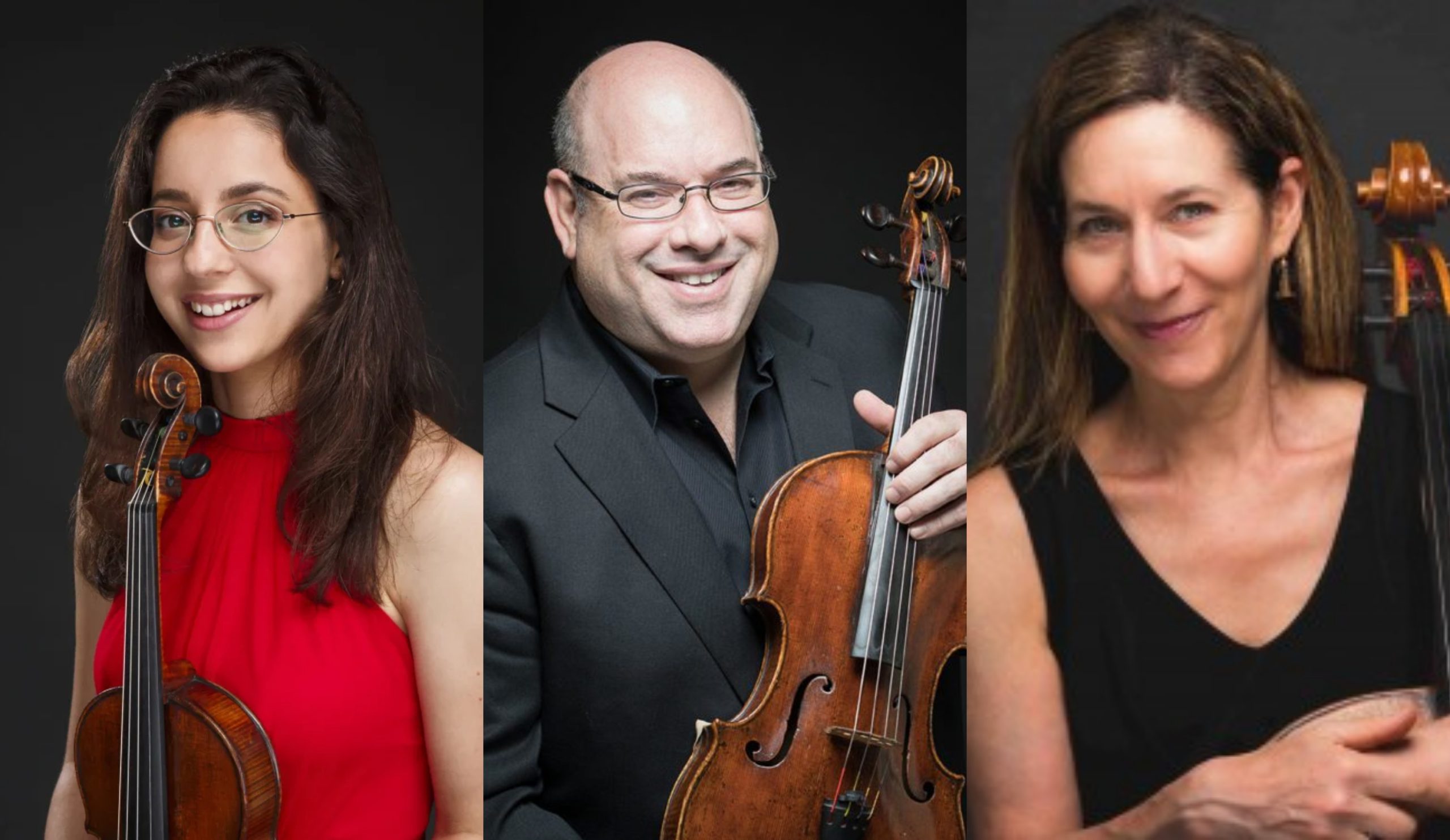
For those of us who did attend, the atmosphere was genial and relaxed. Violinist Hadar Zaidel, violist Michael Strauss, and cellist Julie Myers King all play together regularly in the Akron Symphony, and they clearly enjoyed their inaugural outing as a trio. Strauss, providing occasional commentary, explained that their “Thorpe” name derives from Jim Thorpe, an Olympic gold medalist and important figure in 1920s Cleveland pro football.
For the opening kickoff, Strauss and King chose Beethoven’s Duet with Two Obligato Eyeglasses, a cheerful little piece that Beethoven wrote for himself and a friend. The players followed the composer’s instructions by each walking out with the other’s glasses in hand and swapping them before they sat down, much to the audience’s amusement.
While the sanctuary is visually beautiful, with bright rays of sunlight casting colorful shadows through the stained glass, its acoustic smoothed the players’ sounds together more than necessary. Still, in a program of light and fun music, the nuisance felt minor. And because the acoustic favored Zaidel’s higher voice, it allowed more appreciation of her lovely phrasing during Mozart’s Duo in G Major for Violin and Viola, K. 423.
All three players returned to Beethoven for his String Trio No. 5 in C minor. King’s cello gave extra depth to their sound, as well as some more dramatic heft with the strong chords in the first movement. The third movement Scherzo brought out the group’s dynamic contrasts, and the suspended resolutions of the even-numbered movements both stuck the landing.
Handel’s Passacaglia in G minor functioned as a kind of built in encore, here arranged for violin and viola by Johan Halvorsen. “We saved the most athletic piece for last,” Strauss quipped. Trading off fast moving lines, Strauss and Zaidel wove their way through the theme and its following variations, adding complexity with pizzicato, extra harmonies, and the like. While certainly an athletic effort, both kept it from sounding too taxing, successfully maintaining a light touch.
Hopefully, there will be further outings of this trio to come. They just might want to avoid the dates of the NBA or Stanley Cup finals.
Published on ClevelandClassical.com February 25, 2026
Click here for a printable copy of this article
