

by Peter Feher
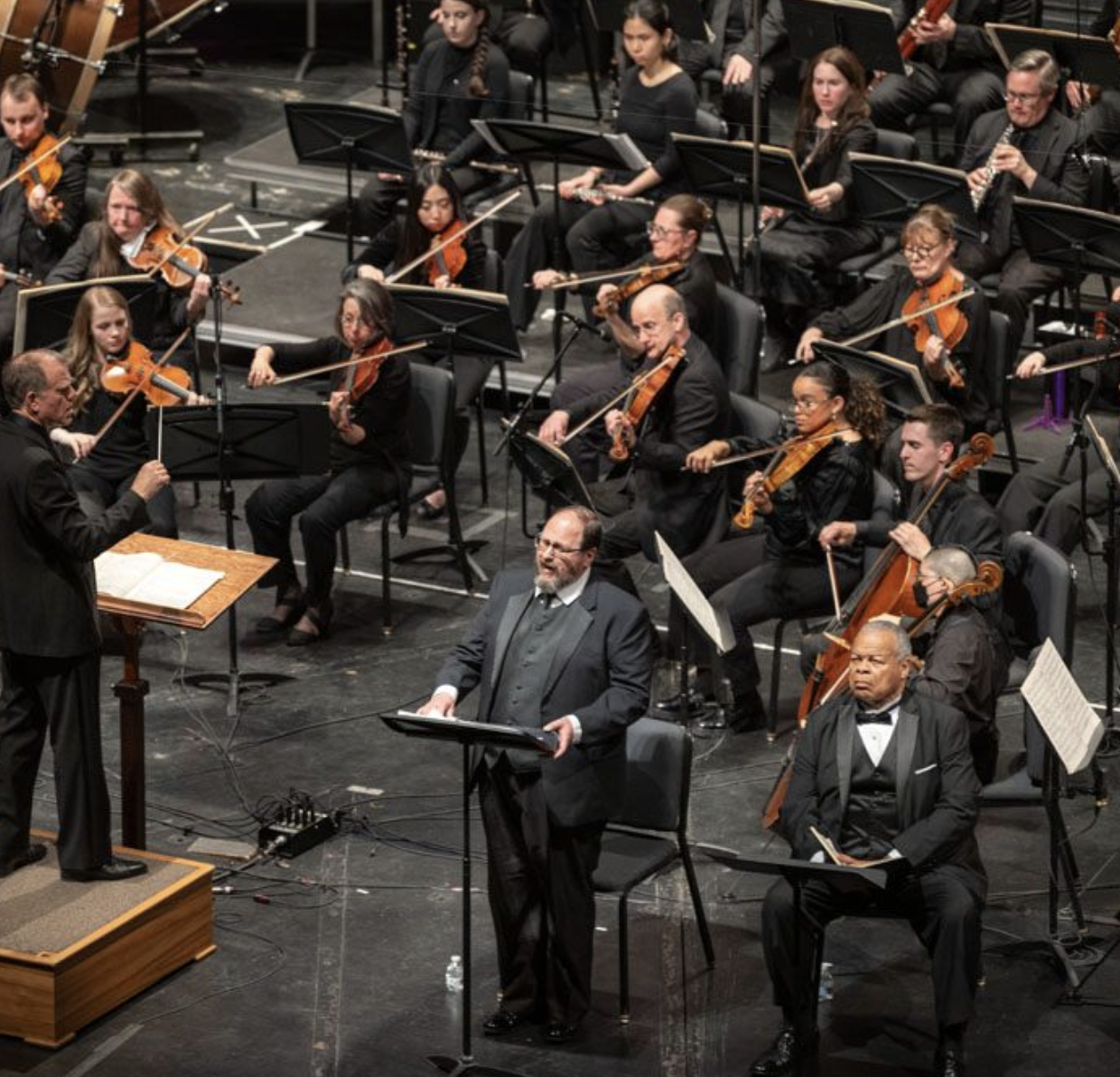 The Akron Symphony is ready to stage a full opera in some upcoming season, judging by the spectacular success of the orchestra’s performance of Verdi’s Requiem on May 10 at E.J. Thomas Hall.
All of the elements essential for a winning production were present. A sense of drama, a compelling cast of vocal soloists, and a stage packed with extra choristers and instrumentalists made the evening feel like a thoroughly theatrical event. It was a grand way for the Symphony to conclude its 2024-25 concert year.
That a sacred piece should seem so lavish and entertaining is the glorious crux of Verdi’s Requiem. Classical composers going as far back as the 15th century have set the Latin Mass for the dead with a certain creative flourish and delight in excess, but Verdi’s contribution represents the operatic peak of the tradition.
His realization was always intended for a concertgoing audience. The work was first conceived in 1868 as part of a tribute to the late leading opera composer Gioachino Rossini but only completed in 1873 following the death of Italian writer and politician Alessandro Manzoni.
The sublime reality of Italian art across the ages is that secular and religious inspirations are fundamentally intertwined. Akron Symphony Music Director Christopher Wilkins acknowledged as much on Saturday, calling the “Dies irae” section of Verdi’s Requiem “a representation to rival Michelangelo’s The Last Judgment.” It’s a paradox that pagan imagery was as central to the style of the deeply Catholic Michelangelo as Christian themes were to the work of a relative nonbeliever like Leonardo da Vinci.
Verdi, who by many accounts was an agnostic, struck his own compositional balance by adapting the dramatic principles of his operas like Rigoletto, La traviata, and Aida to a liturgical text. His Requiem is massive by symphonic standards, taking about an hour and a half in performance, yet paced so expertly as to feel fleet.
The core of the music is contained in the piece’s final movement, the “Libera me,” which Verdi penned first (as his memorial to Rossini). Everything is there in compact form: a soaring solo vocal line, the composer’s intricate choral writing, and all the fire and brimstone and bass drums of the “Dies irae.” Soprano Felicia Moore commanded the spotlight in this finale, singing with a ravishing tone, outstanding projection, and an intuitive, in-the-moment approach to phrasing.
Verdi expanded the material here to produce the rest of his Requiem, adding characters and scenes that flesh out the spiritual trajectory. Tenor Timothy Culver showed off a burnished high register in the impassioned cries of the “Ingemisco.” Mezzo-soprano Renée Tatum and bass-baritone Donnie Ray Albert contributed to many stellar solo and ensemble numbers throughout.
The combined forces of the Akron Symphony Chorus (prepared by Chris Albanese) and the University of Akron Concert Choir (prepared by Mickey McGroarty) were sometimes subdued and sometimes brilliant as the music required. On the podium, Wilkins calmly presided over the action, directing the musicians and letting Verdi’s theatrics speak for themselves. Costumes and sets would hardly have been necessary.
Published on ClevelandClassical.com May 28, 2025
Click here for a printable copy of this article