

by Mike Telin
 In his program note, Franz Welser-Möst writes that “Fidelio is not only an opera; it’s a philosophical statement about courage, liberty, love, and the triumph of the human spirit. Every stage director I’ve met wrestles with the same question when putting on Fidelio: How do you make it relevant to the time we live in? Here, we present it in concert to bring attention to the extraordinary ways that Ludwig van Beethoven’s music is philosophy set to sound.”
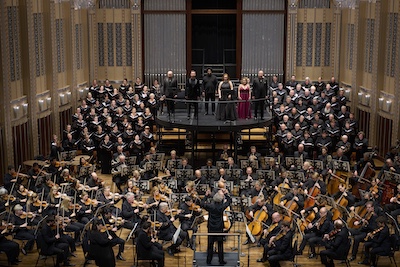
On Thursday, May 16 at 7:00 pm and Sunday May 24 at 3:00 pm in Mandel Concert Hall at Severance Music Center, Franz Welser-Möst will lead The Cleveland Orchestra and Chorus in the second and third performances of Beethoven’s only opera as part of the Jack, Joseph, and Morton Mandel Opera & Humanities Festival.
The all-star cast includes Sara Jakubiak as Leonore, David Butt Philip as Florestan, Tomasz Konieczny as Don Pizarro, Raymond Aceto as Rocco, and Dashon Burton as Don Fernando. Click here for Festival details. Tickets are available online.
I caught up with David Butt Philip by phone.
Mike Telin: I enjoyed your performance in Fidelio last year with the Metropolitan Opera — I heard it on the radio broadcast. And I watched the Vienna State Opera production that you did with Franz.
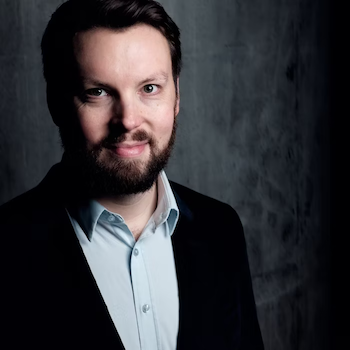 David Butt Philip Florestan has become a sort of signature role of mine in the last few years. I think I’ve done six or seven different productions now, so I’m very familiar with it.
MT: The opera has an amazing history, and it is a very political opera.
DBP: Absolutely. You could argue that it’s the most political opera there is. And as you know, Beethoven famously struggled with it for his whole life. He revised it and was never happy with it. And, he never wrote another opera.
He cared about it so much, and he cared about the idea that it espoused. To him the concept of freedom and liberty was a holy thing he could portray in his work.
It’s easy to make it political now, but the context in which it was written was a period of political tension in Europe at the end of the 18th and beginning of the 19th century with Napoleon and revolutions. That’s not something that we spend much time thinking about anymore. But Beethoven’s whole life really was consumed by this fire and passion for liberty, redemption and freedom.
MT: It’s also a story about the love between Leonore and Florestan.
DBP: On the surface it is a classic story of a couple who are divided by circumstances and their desire to be reunited. But it’s not really about that at all.
In this opera the story is really only there to drive the idea. And that’s what this piece is really, it’s an idea. It’s a philosophical concept rather than a story. The story itself is not important, except insofar as it serves the idea that Beethoven is trying to communicate.
MT: Musically, it’s a beautiful piece.
DBP: I don’t think anything will ever overtake La bohème, which I did about 60 times in my early career. But of the operas that I perform regularly now, Fidelio is the one I’ve done the most. I love performing it, and in the right hands it can be incredibly exciting, liberating and exhilarating.
Still, it’s a slightly strange opera. I’ve done it staged six or seven times and I’m not 100% sure that it’s possible to stage it in a way that really works.
It’s quite an uneven piece, dramatically. It can’t quite make its mind up whether it’s a comedy, a tragedy, or a drama. But some of the music is absolutely sublime, and some of the greatest ever written.
I’m very fortunate, because Florestan only appears in the second half. All the hard work of telling the story and making the characters relatable really falls on the director and on Leonore and Rocco. Florestan has a relatively easy deal in that he comes on about two-thirds of the way in, and then sings some of the most incredible music ever written. And then at the end you get this wonderful finale which can be sort of life-changing.
MT: Does the opera have the same impact when done in a concert version?
DBP: In many ways you could argue that it’s better in a concert version. Of all the operas that I do, it’s one that lends itself the most to a concert version. And a concert version solves several problems, one of which is how do you deal with the spoken dialogue?
From a personal point of view, I always find operas with spoken dialogue to be problematic. It’s very hard to sustain pace and tension when the music stops for two or three minutes. Doing it in a concert version means you don’t have to address the issue of dialogue. In Fidelio, the original dialogue, which is very rarely done these days, is quite extensive and not particularly theatrical. So the directors have to come up with a solution to that problem. In this production we have a narrator in between the musical numbers, which is a much neater and easier way of solving that problem.
Performance photo courtesy of Roger Mastroianni
Published on ClevelandClassical.com May 19, 2026
Click here for a printable copy of this article
