

by Daniel Hathaway
NEWS BRIEFS:
Dame Felicity Lott obituary
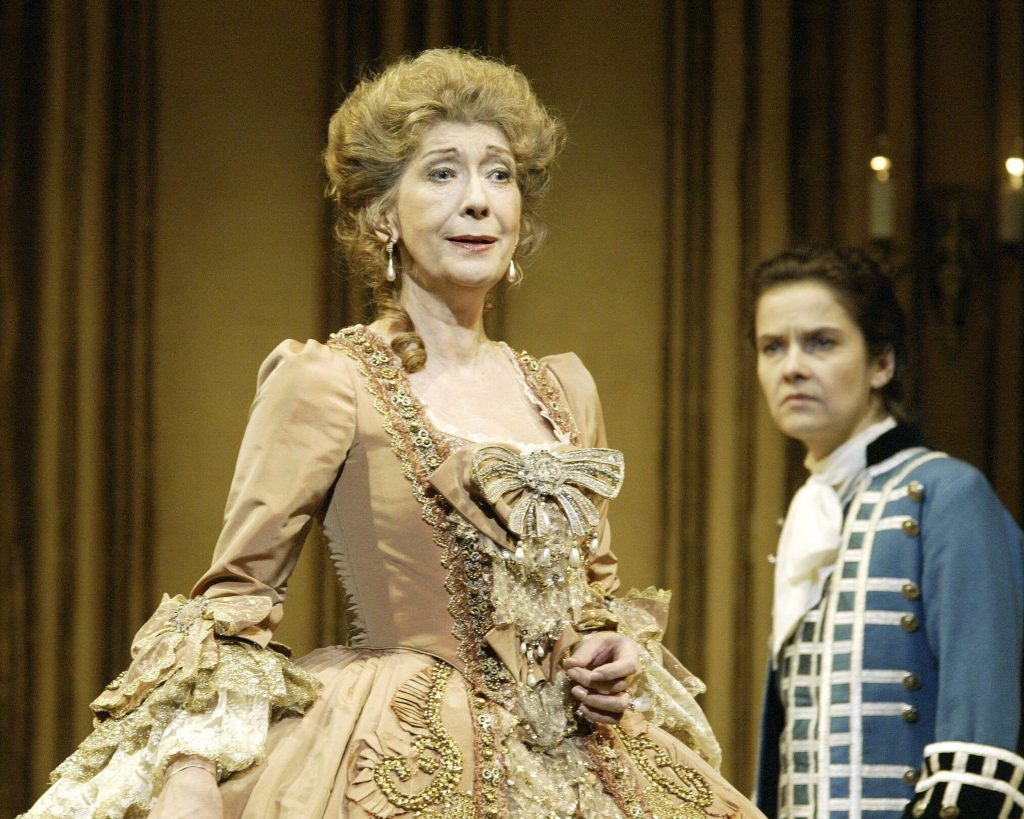 ”Felicity Lott, who has died aged 79 of cancer, enchanted audiences with a succession of Strauss and Mozart roles that she might have been born to sing. The mellifluous tone with just a hint of metal to give it that lustrous gleam, the effortlessly floated high notes, pin-sharp diction and captivating stage presence all combined to make her one of the most endearingly popular sopranos of her day.” Read The Guardian article here.
Herbert Blomstedt withdraws from weekend S.F. Symphony concerts after struggling
Read the San Francisco Chronicle article by Joshua Kosman here.
HAPPENING TODAY:
At 12 Noon, the season finale of Trinity Cathedral’s Brownbag Concerts presents Trio 42 (Kristen Capp & Jack Hughes, fiddles, and Tiffany Schaefer, Celtic harp).
And tonight at 7:30, Classical Revolution Cleveland presents a program featuring a variety of instruments, including guitar, violin, viola, & piano at the Happy Dog.
TODAY’S ALMANAC:
by Mike Telin
There are two notable passings to commemorate today: In 1896, Clara Schumann, German pianist, composer, teacher, and wife of Robert, left the world in Frankfurt, Germany at the age of 76. And in 2000, French flutist Jean-Pierre Rampal died of heart failure in Paris.
Now, on to the birthdays. It’s always interesting to scroll through the list of musicians born on any single day and see who catches your attention. Although I found today’s list to be a bit sparse, aside from singers Joe Cocker and Cher, one name particularly caught my eye. On May 20, 1927, composer and teacher Walter Aschaffenberg (pictured) was born in Essen, Germany in 1927.
After immigrating to the United States with his family at age 11 — he became a naturalized American citizen in 1944 — Aschaffenburg served in the U.S. Army counter-intelligence corps during World War II.
He began composing at an early age and would go on to study with Herbert Elwell at Oberlin College, Bernard Rogers at Eastman, and later with Luigi Dallapiccola in Florence, Italy. During his career, Aschaffenburg was the recipient of two Guggenheim fellowships as well as awards from the Fromm Foundation and the National Institute of Arts and Letters, and in 1980 he was awarded the Cleveland Arts Prize for Music. He joined the theory and composition faculty at Oberlin in 1952, a position he held for 35 years.
In her Cleveland Arts Prize tribute, Wilma Salisbury wrote, “Aschaffenburg, a meticulous composer whose technically challenging music often required a long gestation period, combined 12-tone technique with diatonic melodies and consonant harmonies.”
“His expansive catalogue includes the short opera Libertatem Apellant (1976), based on correspondence between John Adams and Thomas Jefferson, and an Oboe Concerto (1986) which longtime Philadelphia Orchestra principal John de Lancie called “the most impressive contemporary work for the oboe.” The piece was recorded by James Caldwell and the Cleveland Chamber Symphony and by Elizaveta Zuyeva and the Russian State Philharmonic Capella. His Ozymandias and Three Dances for Orchestra received performances by The Cleveland Orchestra — the first under the direction of Leopold Stokowski, the second under James Levine.
But as Salisbury noted, his most frequently performed piece is a fanfare he wrote for Blossom Music Center. “The brief composition was one of two winners in a competition sponsored by the Junior League of Akron. Cleveland Arts Prize winner Donald Erb (1966) and Special Citation winner Louis Lane (1971) selected Aschaffenburg’s fanfare from more than 200 entries by 158 American composers. The festive piece was recorded by the Cleveland Orchestra brass, premiered June 23, 1970, and repeated on orchestra concerts at Blossom for the next two decades.”
