

by Stephanie Manning
 HAPPENING TODAY:
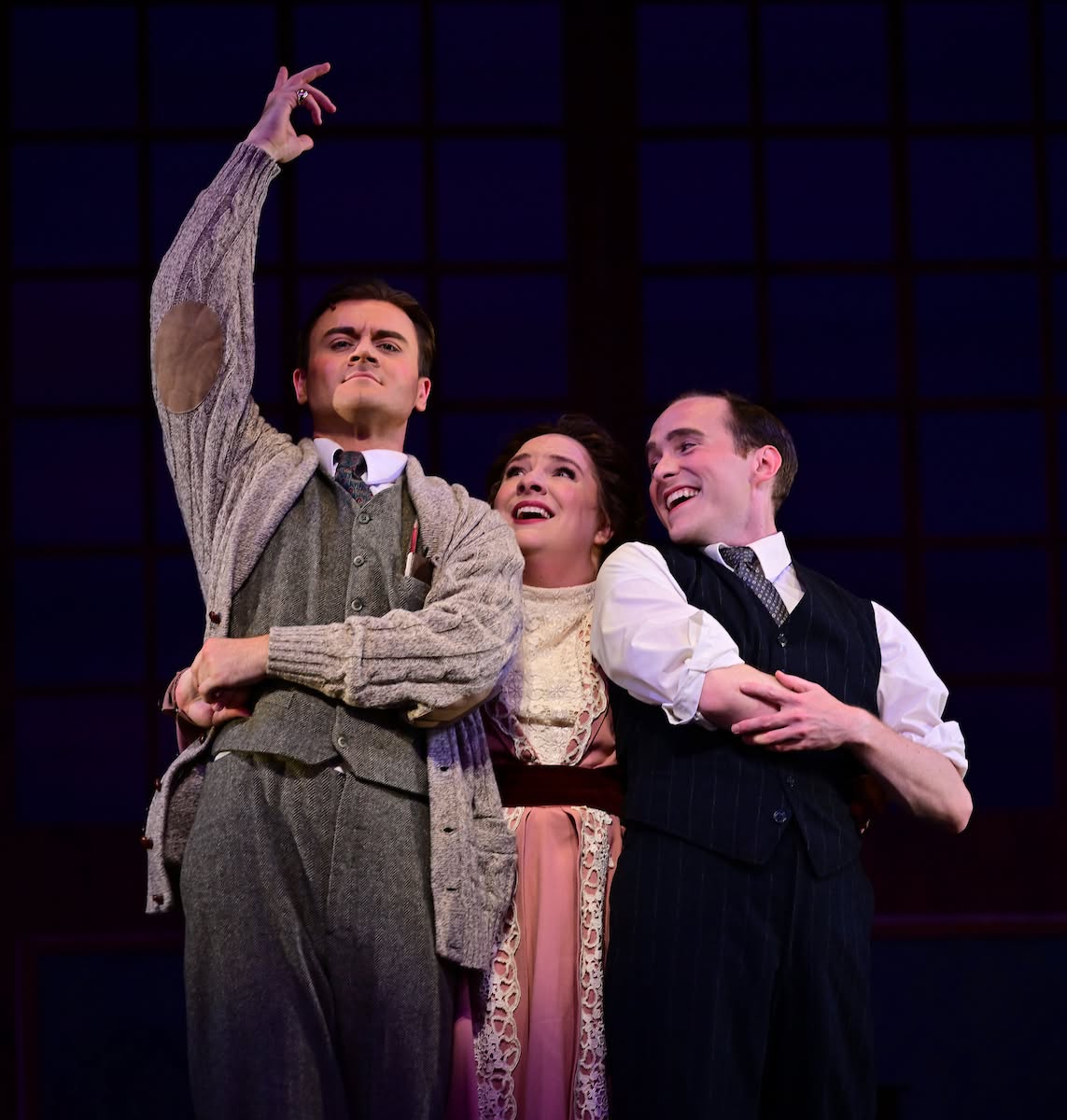
This afternoon at 2:00 pm, Ohio Light Opera continues its run of Lerner and Loewe’s My Fair Lady (pictured) at Freedlander Theatre in Wooster.
And tonight, Unity Spiritual Center in Westlake presents a program featuring guitarists Shohei Toyoda, Koyo Morita, and Hikaru Komatsu (6:00 pm), Akron Symphonic Winds presents their American semiquincentennial program in Richfield (7:00 pm), and organist Jonathan Moyer presents a recital in Oberlin’s Warner Concert Hall as part of the Oberlin Organ Academy (7:30 pm).
INTERESTING READ:
Joshua Barone of The New York Times recently profiled composer Joe Hisaishi ahead of his appearance at Carnegie Hall. Known for his soundtracks for Studio Ghibli movies like Spirited Away, Hisaishi guest conducted The Cleveland Orchestra in a program of his works in September 2025.
“A celebrity because of his chameleonic and enchanting soundtracks, he has long maintained a parallel life as a classical music artist. Now, that is where he is shifting his focus,” Barone writes. Hisaishi’s concert works embrace a contemporary, Minimalist style, with inspirations from Philip Glass, Steve Reich, and John Adams. Read the full article here.
TODAY’S ALMANAC:
by Daniel Hathaway
On this date in 1789, Parisians stormed the infamous Bastille prison, liberating seven political prisoners as well as its cache of arms and munitions, creating what has become France’s Independence Day.
Six years later, the revolutionary song La Marseillaise was adopted as the French national anthem. Claude-Benigne Balbastre, a famous Parisian organist of the time, wrote a set of variations on the tune that might be considered the equivalent of Charles Ives’ playful Variations on ‘America.’
Balbastre, who had served as organist of the Cathedral of Notre-Dame and the Royal Chapel and taught keyboard lessons to Marie Antoinette, somehow kept his head on his shoulders during the political upheaval of the Revolution. Click here to enjoy his La Marche des Marseillois et l’air “Ça ira” performed by Michel Chapuis on the organ at the church of St-Roch, where Balbastre played to great popular acclaim.
As Charles Burney reported, Balbastre introduced into his improvisations “minuets, fugues, imitations, and every species of music, even to hunting pieces and jigs, without surprising or offending the congregation.”
