

by Mike Telin
 This week Jeannette Sorrell and Apollo’s Fire will premiere a fresh version of their celebrated O Jerusalem! Crossroads of Three Faiths. In this musical tour of the four quarters of Old Jerusalem (Jewish, Christian, Arab, and Armenian), surprising cross-influences emerge.
The program will be presented on Thursday, April 9 at The Bath Church UCC, on April 10 in Gartner Auditorium at the Cleveland Museum of Art, and on April 11 at Congregation Mishkan Or, all at 7:30 pm. Pre-Concert Conversations will be presented by Daphna Mor (recorder, shawm, ney, and vocals) & Ronnie Malley (oud & accordion), one hour before each performance. Tickets are available online.
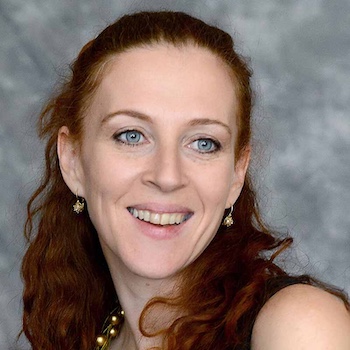
In addition to performing, Daphna Mor also served as the project’s Jewish musical and cultural consultant. Dedicated to the music of the Jewish diaspora, Mor is the founder and director of Beineinu Mitzvah, a New York-based initiative cultivating Jewish cultural expression through modern, inclusive practice. She regularly performs and teaches liturgical music, and was invited to Mumbai to lead a workshop on Jewish diaspora melodies while learning local traditions.
I caught up with Daphna Mor at home in New York and began our conversation by asking what she would like people to know about the 2026 version of O Jerusalem! Crossroads of Three Faiths.
DM: First, it’s just beautiful music, and the concerts will be a celebration of fantastic instrumentalists and singers.
It’s so rare to have programs of music of different traditions performed by such a large ensemble, but this one takes liturgical and folk traditions and reimagines them for a larger group, which gives us more possibilities. So you will get a taste of the most intimate to the most celebratory and grandiose versions of this material and I think that is exciting.
MT: Have current events in the Middle East influenced the programming?
DM: If you sit at home and read or listen to the news, everything about the Middle East screams division, struggle, and suffering. All of this does exist, but there is also so much culture that doesn’t make the headlines.
So this program brings out the beauty of the Middle East, but it also reminds us about shared histories. There’s always been struggle in the Middle East but there is also so much collaboration and cooperation and highlighting that I think will be really healing for people.
MT: In addition to performing you are also the Jewish musical and cultural consultant, and Ronnie Malley is the Arab musical and cultural consultant for this program. What did that entail?
Ronnie and I are good friends, and the last few years have been so heartbreaking for both our people. I used to say that we wanted to bring hope through our art, and that is still true. But now I feel deep in my gut that what I offer as a musician and as a ritual leader, is love and comfort. To just look people in the eye, make a connection, and give them all that I can give. That can provide some kind of a comfort and a feeling of “I can breathe,” that rejuvenates the soul to be able to deal with everything that we’re going through.
MT: What was your and Ronnie’s role as musical & cultural consultants.
DM: Jeanette, Ronnie, and I had a few meetings to prepare for this project, which has had different versions. There was O Jerusalem as a program and CD, then we had Exile and Resilience, which borrowed from O Jerusalem.
And now we’re bringing it back, but 2018 and 2020 is not 2026. So with Ronnie and I, there was the artistic challenge of bringing in new material and presenting something fresh. So we’ve taken some things that we’ve done before that are gorgeous and tested, and then added something new.
Ronnie and I were also looking for ways to enhance the knowledge of our cultures. For example, I wanted to represent the Arab Jews because in the previous program, we were focused more on the Sephardic and Ashkenazi.
I brought El Eliyahu, which is a 12th-century piyyut or liturgical poem from Spain that is common in the Sephardic and Middle Eastern Jewish community — but I chose one with a melody of the Babylonian Iraqi Jews.
Our prayers and our kind of piyyutim, which is what I specialize in, is the liturgical poetry that is common to all of us but the melodies differ with different traditions. I personally researched the piyyut for Adon Olam, and I know almost twenty different melodies.
Our work continues because we’re about to go into the week of rehearsals, and if questions come up about ornamentation, how to pronounce this Arabic or Hebrew word, or how to phrase things that are within a liturgical sentiment of Iraqi Jewry, we can be helpful.
MT: You will be playing a number of instruments. How many are you bringing with you?
DM: I’m going to bring a shawm, a ney — an Arabic flute — and I think only three recorders, so that’s five. I’m also going to be singing, that’s bringing my own voice, and I wouldn’t be surprised if I’ll also play some percussion, so that makes it seven.
MT: I understand there is quite a bit of improvisation involved as well.
DM: Absolutely. And not just improvisation — a lot of this material begins with one voice, one line and we build off of that. And there is the basic knowledge of what these traditions do with it — we usually know what kind of groove or percussive element would be fitting, like adding drones.
We’ll also say things like “Let’s do three verses, and put a solo between the verses. For the first solo, Alan, you take it. Or Ronnie starts this one with an improvisation.” So people will hear music that is arranged for twenty-six people. So it was a very creative process which is very rewarding for all of us.
MT: Is there anything you want to add?
DM: Just how passionate we are about this music, and how excited we are to share it with the people of Cleveland.
Following the Cleveland performances, O Jerusalem will travel to Chicago, then to New York, and on to London.
Published on ClevelandClassical.com April 7, 2026
Click here for a printable copy of this article
