



by Stephanie Manning
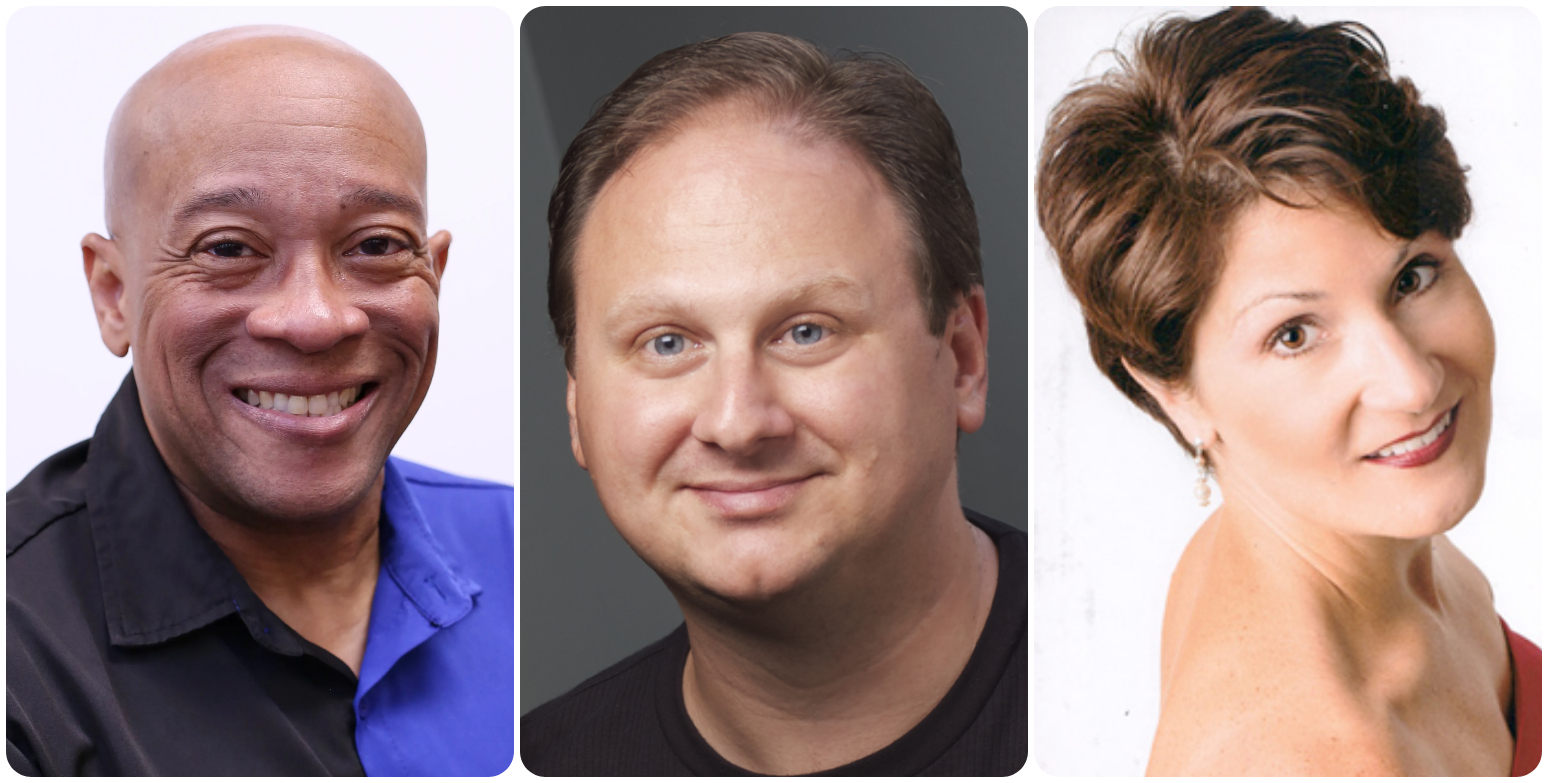 While the team at Chagrin Arts was in talks to bring Blind Injustice to Northeast Ohio, the question of location became increasingly important. “We talked about doing it in different cities, but it became clear that this needs to happen in Cleveland,” tenor Tim Culver said.
Composed by Scott Davenport Richards with a libretto by David Cote, the 90-minute opera follows the stories of six people who had their convictions overturned with help from the Ohio Innocence Project. Four of them lived in Cleveland or East Cleveland, while the other two lived in neighboring Lorain and Summit counties.
Soprano Marian Vogel said that having the work performed in Cleveland with a primarily local cast “gives it a very special flavor.” Vogel, Culver, and baritone Brian Keith Johnson all sat down for a group Zoom interview ahead of the performances, which will take place at Playhouse Square on July 11 (sold out), 12, and 13. Tickets for the Saturday and Sunday shows are still available online.
This production has been in development since 2019, when Chagrin Arts executive director Karen Prasser saw the world premiere at Cincinnati Opera. Over those years, many of the cast members have had a chance to meet the exonerees. “That made the story much more real for us,” Johnson said. “When you actually talk to the people who have gone through it, it makes a big difference.”
Johnson plays the role of Rickey Jackson, a Clevelander who spent 39 years in prison after being convicted of murder in 1975. That’s the longest wrongful incarceration case ending with exoneration in U.S. history. “ Rickey and I are very close in age, and close in stature now,” Johnson said. “So when I talk with him, it’s like talking to a brother. We’ve experienced similar things just by being men of color in this country.”
But, he noted, this opera emphasizes that wrongful conviction can happen to anyone, no matter their race. “ We definitely don’t want to present this as just a situation that happens to people of color. It can happen to anyone, and it’s a terrible thing.”
Culver portrays Clarence Elkins, a white man convicted for the 1996 rape and murder of his mother-in-law in Barberton. And Vogel takes on the role of Nancy Smith, a white Head Start bus driver from Lorain who was charged with abusing children in her care in 1994. Although the two singers haven’t had the opportunity to talk with their respective exonerees one-on-one, they’ve still found their own connections.
“ In a lot of the music that I sing, she’s prayerful and talks about that,” Vogel said of Smith. “I can definitely relate.” The soprano also spent time watching footage of Smith on the internet so she could best replicate her mannerisms. “ I’m really trying to represent her to the best of my ability and faithful to who she is.”
About 40% of the libretto is drawn verbatim from interviews with the exonerees, and the musical lines often replicate their speech patterns. Genres like gospel, hip-hop, and jazz also factor in. “ It’s a beautiful piece, but it’s unlike anything I’ve ever sung before,” Vogel said. Culver agreed. “A hundred percent.”
While the opera focuses on these six characters, it also tells a larger story. Towards the end, the defense attorney — an amalgamation of people involved in multiple cases — tells the audience that the Ohio Innocence Project has so far freed 43 people, representing over 900 years of wrongful convictions. “If you think about how incredible that number is, it’s really quite astounding,” Johnson said.
He added that the main takeaway from this opera is the power of hope. “ I can only imagine, because I’ve never been incarcerated, but it gives people hope knowing that some people have gotten justice and were freed. It gives people who are inside something to strive for.”
While the exonerees were imprisoned, they repeatedly refused to lie or to accuse others for their own gain. Rickey Jackson, for example, rejected an offer to get off death row because he would not confess to something he didn’t do.
These six people staying “true to themselves, true to their faith, and true to their friendships” are central themes of the opera, Johnson said. “Those are things that I hope are very prevalent in our portrayals.”
Published on ClevelandClassical.com July 7, 2025.
Click here for a printable copy of this article
