

by Kevin McLaughlin
 Renaissance polyphony can bloom in resonant spaces, but the Donna and James Reid Gallery at the Cleveland Museum of Art presents particular challenges: hard surfaces and a long reverb tend to blur consonants into watercolor. The Cleveland Chamber Choir’s four-voice ensemble met those conditions head-on during its “In Four Voices” program on December 3. What emerged was an evening of consistently beautiful vocal timbre shaped by a group navigating the sonic characteristics of the room.
The concert, to be followed in January and March by appearances of various-sized ensembles, is part of a new development for the Cleveland Chamber Choir, called the Camerata Series — more information here.
To improve their chances of hearing one another, the quartet — soprano Lauren Vanden Broeck, mezzo-soprano Kira McGirr, tenor Joel Kincannon, and bass Dominic Aragon — stood in a traditional “part book” formation, like a diamond, facing inward. This meant that their sound was directed toward each other, rather than outward to the listeners around them.
The result was a paradox: the silky, uniform blend, one of Cleveland Chamber Choir’s calling cards, also led to muddied diction, softened attacks, and occasional patches of uncertain intonation. Individually, each voice was lovely.
The program opened with three English pieces: Thomas Tallis’s If Ye Love Me, John Bennett’s Weep, O Mine Eyes, and John Farmer’s Fair Phyllis. Each relies on the interplay of distinct voices entering in clear imitation. In the gallery’s bloom, those details often melted together. Still, the choir’s sensitive shaping allowed Tallis’s serene lines to glow and Bennett’s to press the wound, even if Farmer’s rhythmic snap didn’t.
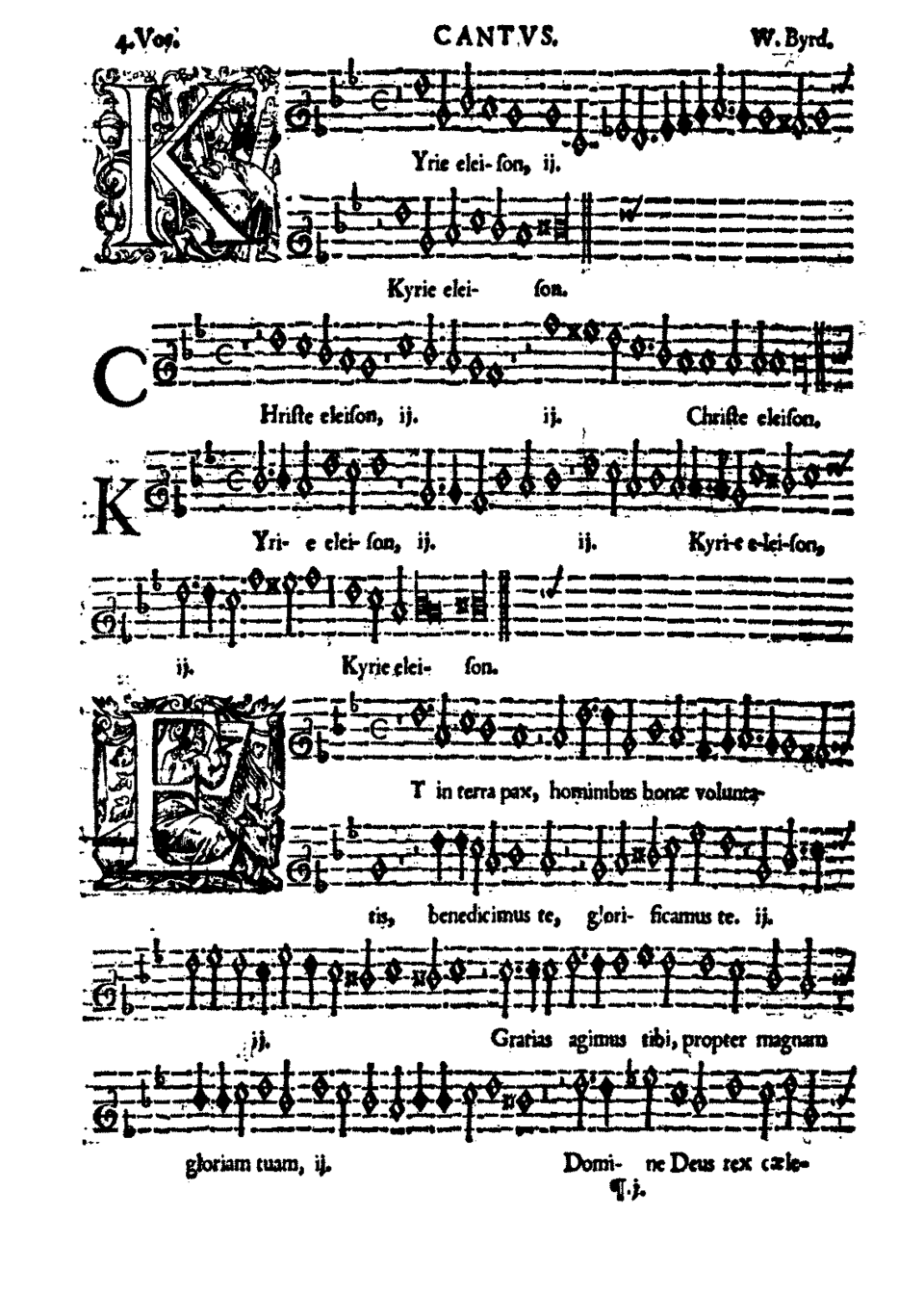
A high point came with William Byrd’s Mass for Four Voices. Here, the gallery’s resonance became an ally. Byrd’s Mass is the most intimate of his three, shaped by pliant counterpoint and long, devotional arcs that let the four-voice texture speak clearly. The Kyrie unfolded with calm inevitability, the Gloria gained direction through well-judged dynamics, and the Agnus Dei, with its quietly expressive cadential suspensions, emerged as the work’s — and the evening’s — culminating moment.
The second half broadened stylistic horizons. Daryl Runswick’s arrangement of Lennon and McCartney’s Blackbird recast the familiar melody as a floating, quasi-sacred cantus. Lauren Vanden Broeck’s pure soprano carried the solo line gracefully, though the inward-facing formation kept her sound more veiled.
Benjamin Britten’s 1934 part-song The Evening Primrose shimmered in its final phrases and Charles Villiers Stanford’s fleet Irish setting Quick! We Have But a Second brought rhythmic spark.
A trio of contrasting closers followed. Judith Eckelmeyer’s Sarum Prayer offered stillness and a kind of incandescent glow. Joseph Haydn’s Die Warnung — originally a solo song with keyboard accompaniment — took on a charming, lightly theatrical air in Eckelmeyer’s expert choral setting. Her arrangement of Francisco Tárrega’s Recuerdos de la Alhambra translated the guitar’s tremolo into gently undulating vocal textures. Amy Beach’s Peace I Leave with You offered a warm benediction, a fitting close. Kira McGirr’s thoughtful introductions throughout the evening added warmth and personal connection to the proceedings.
Despite the acoustic challenges of the Museum’s Italian gallery, the voices offered much to admire: beautiful timbre, careful musicianship, and an unerring instinct for phrasing.
Published on ClevelandClassical.com on December 11, 2025
Click here for a printable copy of this article
