



by Stephanie Manning
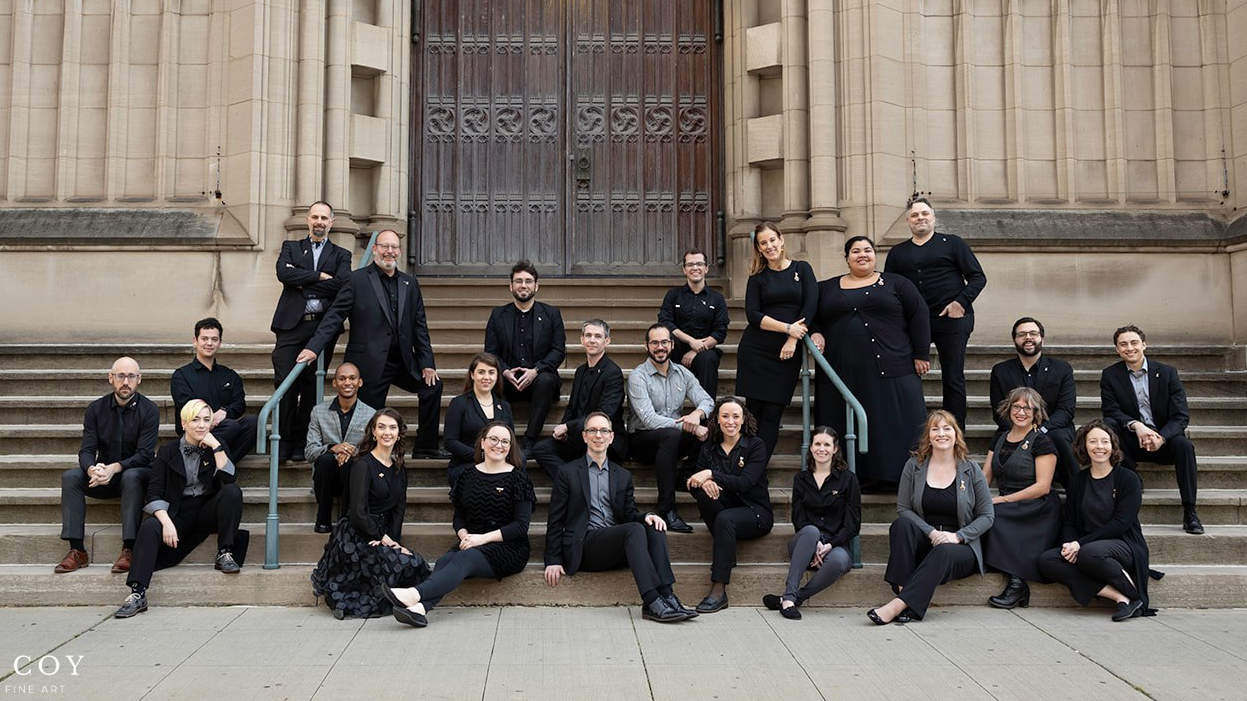 In the hands (and voices) of the Cleveland Chamber Choir, Joby Talbot’s Path of Miracles became both a piece about a pilgrimage and a piece that felt like one.
As it happens, those two activities — concert and pilgrimage — share more common qualities than not. Even without a religious element, each provides an opportunity for people to participate in a shared experience, go on a journey (physical and/or emotional), and arrive at a destination before going their separate ways.
The specific pilgrimage that inspired Talbot was the Camino Frances, part of a network of pilgrimages called the Camino de Santiago, which lead travelers to the city Santiago de Compostela in western Spain. The choir’s September 26 performance brought the composer’s hour-long work to Trinity Cathedral, perhaps the perfect venue to hear this music.
The spacious, gothic cathedral provided the appropriate gravitas as the choir sang pleas to St. James the Apostle, and extolled his virtues. Conductor Gregory Ristow used the space wisely, placing the singers in different locations throughout the piece to illuminate the sounds and text even further.
After a presentation from the concert’s local donation partner, the Interfaith Group Against Hate, Ristow asked the audience to enjoy the silences between each of the movements and save the applause for the end. The crowd thankfully obliged, with nary a distraction throughout the entire performance.
The anonymous 12th-century chant “Dum Pater Familas” physically divided the choir in two, with the upper voices located behind the audience and the lower voices far in front. Still singing, the lower voices then paced towards the stands set up in the center area to seamlessly begin Path of Miracles.
Librettist Robert Dickinson combined ancient texts in seven languages with his own poetry across the piece’s four movements, which are named for important cities along the Camino Frances. The first, “Roncenvalles,” builds up gradually, with slow upward glissandos in the tenors and basses that eventually blossoms into a big group sound highlighting the drama of King Herod’s execution of James.
Countertenor Joe Schlesinger beautifully led the entrance of the upper voices, and his ethereal voice was frequently featured throughout the evening.
The middle two movements sounded more somber and sparse, with “Burgos” introducing some dissonance as the singers recounted the trials and tribulations pilgrims faced on the road. Soloists Courtney Backer-Howell, Rayna Brooks, Emily Capece, and Schlesinger gracefully commented from the sides of the audience, emphasizing the physical distance between St. James and the relics representing his miracles (“His arm is in England, his jaw in Italy / And yet he works wonders”).
“León” employed repeated rhythmic figures (ostinati) to create a steady thrum of sound that resembled the daily routines of the route — waking up every morning to walk along the same road.
With the destination now in sight, “Santiago” returned to the uneven meter melody and overlapping fugue sections of the first movement. The descent into the city produced an outburst of angelic harmonies, delivered with stunning clarity, as the tempo sped up into the longed-for spring.
Once the celebration was complete, the piece gradually faded as the music and musicians dispersed, vanishing into the wings one-by-one as they sang their final prayers to St. James.
So with the pilgrimage now over, where do we intrepid travelers go from here? Perhaps the answer lies in the pilgrim’s cry that reappeared throughout the text — “Eultreya esuseya,” or “Onward! Upward!”
Photo by Mandy Coy Photography
Published on ClevelandClassical.com October 1, 2026
Click here for a printable copy of this article
