



by Mike Telin
 On May 4, 1970, the Ohio National Guard fired into a crowd of protesters at Kent State University, killing four students and wounding nine others. On June 3, 1970 that tragic event was commemorated when Robert Shaw led a community performance of the Cherubini Requiem in c at Kent United Church of Christ.
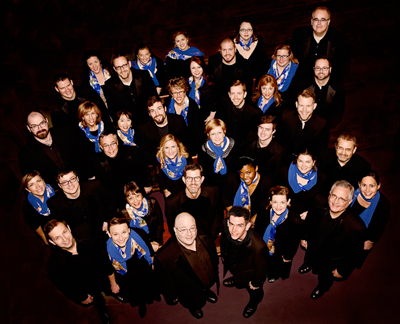
On Saturday, March 7 at 7:30 pm at Kent United Church of Christ, the Cleveland Chamber Choir will mark the 50th anniversary of the Kent State shootings with “We March On! Music of Social Justice.” Directed by Scott MacPherson, the concert includes music by Joel Thompson, Ethyl Smyth, Linda Kachelmeier, Catherine Dalton, and Natsumi Osborn. The program will be repeated on Sunday, March 8 at 3:00 pm at Cleveland’s St. Ignatius of Antioch Church. Charles Edward McGuire will give a pre-concert talk 45 minutes before the performances. The concerts are free.
The idea for creating a program around social justice music came about when a group from CCC attended a performance of Craig Hella Johnson’s passion cantata Considering Matthew Shepard at Bowling Green State University. “When we heard the song All of Us, we started talking about how we should sing it,” CCC alto and managing director Kira McGirr said by telephone. “We talked to Scott MacPherson and he said that if we could come up with a concert theme, he’d be happy to program it.”
 McGirr said the idea of music that addresses social issues past and present quickly caught on with the membership. “As far as the concerts I have been involved in planning, this concert is so much more meaningful because of how many people were involved in its creation.” The music addresses women’s suffrage — 2020 marks the 100th anniversary of the 19th amendment — gun violence, and police brutality. And in keeping with the theme of CCC’s fifth anniversary season, Women’s Voices Resounding, the majority of the compositions are by women composers and poets.
Bass Corey Fowler was also inspired by the performance at BGSU. “When they sang All of Us, area high school choirs that were seated in the audience stood and joined in. It was an incredible experience to hear the music coming from all sides,” the Kent-Roosevelt high school choir director said by phone. “I talked to Scott and he invited our top group, ChoralWorks, to sing in the March 7 concert.” (The Oberlin Choristers una voce musica will fill that role for the March 8 performance.)
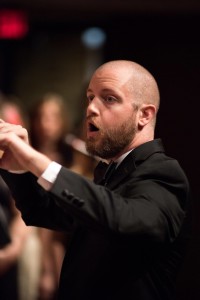 Fowler — who also serves as director of music and organist at Kent UCC, grew up in Warren, Ohio, and earned his bachelor’s and master’s degrees at Kent — said he was well aware of the anniversary of the shootings. “Scott met with people from the 50th commemoration committee last summer: the concert is part of the official commemoration activities. We’ll also be singing in the same space that Robert Shaw conducted the memorial concert.”
During Saturday’s concert, Fowler’s ChoralWorks ensemble will be featured in We Remember Them, which sets the text of a poem by Rabbi Jack Riemer and Rabbi Sylvan Kamens (who served at Temple Beth El in Akron). “We will connect that poem to the four people who died on May 4, 1970, as well as to the people who have died in recent anti-Semitic violence.”
“We March On!” will also include the world premiere of Natsumi Osborn’s Legacy. It’s based on Megan Neville-Jellen’s poem of the same name, which draws on imagery from the Pulitzer Prize-winning photo of Mary Ann Vecchio crying out over the body of Kent State student Jeffrey Miller.
Osborn, a composition student at Oberlin College and Conservatory who will graduate in the spring of 2021, said that when CCC director Scott MacPherson asked her to compose a piece marking the 50th anniversary, she was aware of the tragedy but knew very little about the details. “In the past year at Oberlin we’ve had a lot of displays and discussions about the shootings and the Vietnam War,” she said during an interview.
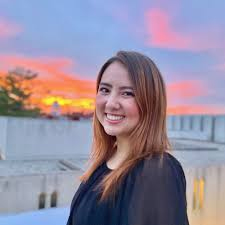 Osborn, who is from Tokyo and attended high school in Texas, said that while she had seen the iconic photo, she didn’t really know it until receiving the text for Neville-Jellen’s poem. “It is such a powerful image, and the day I really started doing my research about what had happened, it became very emotionally heavy,” she recalled. “I wasn’t sure how to write a piece about something so historically significant that would reach a wider audience. It was a sobering experience.”
The poem, which the composer said is “beautifully written,” is a stark reminder of the event that speaks to the imagery in the photo. “As the text goes on, you come to realize that the poet’s father is in the photo. And although he wasn’t shot, she is just now realizing that anyone in the photo could have been shot.”
When asked about the piece itself, Osborn said that she tried to “musically exploit” the dark themes of the text. “Some of the sounds will be familiar while others are more dissonant, and might be a bit foreign to the ear.”
Ultimately Osborn hopes that Legacy will offer listeners a different understanding of how horrible the event was. “This will be a very different experience from just seeing the photo. I hope the music reaches people in a way that will make them think and feel more sympathetic about what happened.”
Highlighting the issue of police brutality will be Joel Thompson’s Seven Last Words of the Unarmed. “There was a time when every choir would end their concert with a rousing spiritual and everyone would be on their feet,” Fowler said. “But in the past five years it’s become kind of a trend that when you program music that is attached to a culture or a group of people, you need to do your research. And Joel Thompson has a wonderful research website for Seven Last Words.” As the website states:
Each victim’s last words are set in a different musical style and Thompson incorporates the L’homme armé (The armed man) Renaissance French secular tune throughout the composition…
The song’s seven movements represent the last words from seven lost lives.
“It’s been nice to look at this information and really learn about those seven young men who were victims so we can talk about police brutality,” Fowler said. “The journey is still going on and in our rehearsals we’re having discussions about these topics. People are afraid to say the wrong thing, but with social justice and activism you need to take the step forward and get the conversation going.”
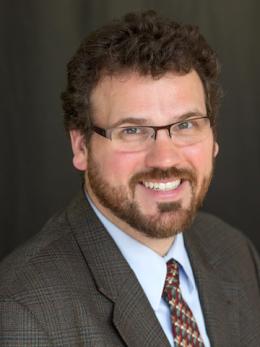 One work that addresses women’s suffrage is Ethyl Smyth’s Songs of Sunrise. “I had written about suffragist music in Britain so I knew the Smyth triptych,” Charles McGuire, Oberlin Professor of Musicology, said during a telephone conversation. “I thought this would be the perfect opportunity to spring that repertoire onto a lot of other people. The version we have is a copy from the Royal Academy of Music and it has Smyth’s hand in it, so it’s fun to have that kind of artifact to play with.”
McGuire pointed out that the oldest composition on the program is from 1910, but social justice music has been around for some time. “You can go back to the music of Heinrich Schütz, especially the stuff he was writing during the Thirty Years’ War. The idea of music as a vehicle for bringing attention to suffering is something that has been happening pretty much since the Renaissance in Western music history.”
Although this program only captures a small part of that music — just a little over a century — its objective is to shed light on some of the major issues of today. “It’s great when music, especially music from the Western classical tradition, can be relevant, not just something that is provocative but something that is provocative, thoughtful, engaging, and relevant,” McGuire said. “Particularly if you’re trying to make a statement about being a part of a community, rather than just entertainment for the community.”
Published on ClevelandClassical.com March 3, 2020.
Click here for a printable copy of this article
