

 The world-class concert music we enjoy in Northeast Ohio deserves robust promotion and coverage. Since 2008, ClevelandClassical.com has served as a one-stop guide to that art form with comprehensive concert listings, previews and reviews of performances, and links in the Daily Diary to the wider world of classical music — including jazz. On this Giving Tuesday, we hope you’ll consider a gift to help keep this publication alive and vital. Click here, and thank you!
HAPPENING TODAY:
[Note: The Olson recital has been cancelled due to inclement weather.]
Two events take place at noon in University Circle. Organist Chase Olson plays Charles-Marie Widor’s Symphony No. 9 complete at the Church of the Covenant, and the Song Recital Project presents baritone Jason Fuh and pianist Betty Myers in a program inspired by Don Quixote, including selections from Jules Massenet’s opera, songs by Maurice Ravel and Jacques Ibert composed for G.W. Pabst’s 1933 film, and selections from Mitch Leigh’s Man of La Mancha, in the Atrium of the Cleveland Museum of Art.
INTERESTING READS:
In the New York Times, concert pianist Jonathan Biss writes about the quest for perfection in music. Click here to read A Classical Pianist’s Plea To Let Art Be Messy, And Real.
And writing in Aeon, British classical guitarist Craig Ogden suggests How The Classical Guitar Becomes One Of The Most Complex Instruments, In A Good Musician’s Hands. Read his essay here.
TODAY’S ALMANAC:
by Mike Telin
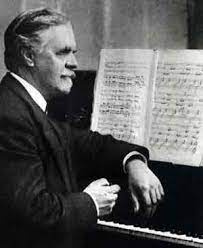 On this day in 1931, French composer and teacher Vincent d’Indy died in Paris at the age of 80. Born in Paris as well, d’Indy began studying the piano with his grandmother at an early age. He began his studies in harmony with Albert Lavignac at 14 and at 16 was introduced to Berlioz’s treatise on orchestration.
d’Indy’s talents as a composer caught the attention of César Franck, and In 1872, he became Franck’s pupil at the Paris Conservatory where he remained until he joined the percussion section of the orchestra at the Châtelet Theatre in 1875. Along with Charles Bordes and Alexandre Guilmant, d’Indy founded the Schola Cantorum de Paris in 1894, becoming principal in 1904. Of the school’s teaching, The Oxford Companion to Music says that “A solid grounding in technique was encouraged, rather than originality.”
d’Indy’s students included Albert Roussel, Joseph Canteloube, who would later write his biography, Arthur Honegger, and Darius Milhaud. His student roster also included Cole Porter — who left the school after a few months, and Erik Satie. Satie would later write: “Why on earth had I gone to d’Indy? The things I had written before were so full of charm. And now? What nonsense! What dullness!”
d’Indy created controversy at the Société nationale de musique after becoming its joint secretary in 1885, and managed to succeed in overturning its French-music-only rule, prompting the Society’s founders Romain Bussine and Camille Saint-Saëns to resign in protest.
Although few of d’Indy’s works have become staples of the repertoire, his best known pieces include the Symphony on a French Mountain Air for piano and orchestra and Istar, a symphonic poem in the form of a set of variations. He also was responsible for reviving forgotten Baroque works — he created his own edition of Monteverdi’s L’incoronazione di Poppea.
In his 1906 composer profile for The Etude, Edward Burlingame Hill writes that: “D’Indy’s principles as an artist are developed from the teachings of César Franck, of whom he was the ardent disciple, not only as a teacher of composition, but as an artist and as a man.”
Hill goes on to say that “It is too soon even to predict d’Indy’s ultimate rank as a composer. In mastery of technique, in vividness of expression, he stands very high; his originality and power are incontestable, while his reverent devotion to the memory of César Franck by word and deed is without parallel in this self-seeking age.”
Perhaps history has been the judge.
Click here to listen to Symphony on a French Mountain Air. Recorded in 1958, the performance features pianist Robert Casadesus and the Philadelphia Orchestra under the direction of Eugene Ormandy.
