


by Daniel Hathaway
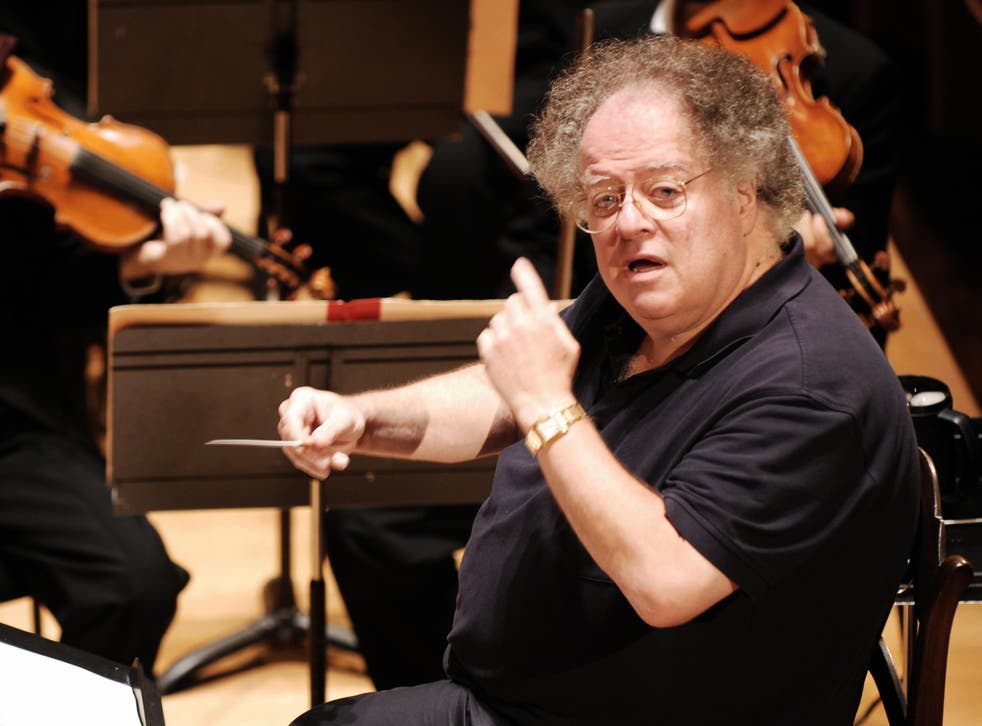 MEMORIALIZING JAMES LEVINE:
More than one commentator has struggled to respond to news of the death of longtime Metropolitan Opera conductor James Levine in Palm Springs, California on March 9 (an event that went unreported for several days). Read the New York Times Obituary by Anthony Tommasini here, the Washington Post obituary by Tim Page here, and a blog post by Philadelphia Inquirer critic David Patrick Sterns here.
ONLINE TODAY:
Former Clevelander Nathan Carterette plays a recital on Pittsburgh’s Chatham University Friday Afternoon Musicales today at 4 pm, with works by J.S. Bach, Schubert, Debusy, Medtner & Rachmaninoff. The video will be available for on-demand viewing indefinitely.
CityMusic Cleveland will broadcast an online version of its “New Voices” program featuring Jessie Montgomery’s Strum, Denise Ondishko’s Cloudshifts, Elena Ruehr’s String Quartet No. 3 & Amy Beach’s String Quartet Op. 89 at 7 pm in advance of a live, in-person performance at the Shrine Church of St. Stanislaus on Saturday.
Also at 7:00 pm, the CIM Orchestra goes online with Wagner’s Siegfried Idyll, Elgar’s Serenade for Strings, Op. 20, and Britten’s Variations on a Theme of Frank Bridge, Op. 10, led by student conductor Duo Shen.
And a few in-person seats for Apollo’s Fire’s Tapestry program in Avon Lake are still available for this evening, and seats may open up for Saturday and Sunday at First Baptist in Shaker Heights. If you can’t attend a live show, there’s a video in the works.
Details in our Concert Listings.
TODAY’S ALMANAC:
Not a busy day for Almanac Entries. Russian impresario Sergei Diaghilev was born on March 19, 1873 in Novgorod, followed exactly one year later by German composer Max Reger in Brand, Bavaria.
The history of Diaghilev’s Ballets Russes from 1909-1929 is featured in a documentary film from the National Gallery of Art. “He persuaded, cajoled, and charmed the greatest talents of the early twentieth century to join his company. Artists (Pablo Picasso and Henri Matisse), composers (Igor Stravinsky and Erik Satie), choreographers (Michel Fokine and George Balanchine), and dancers (Vaslav Nijinsky and Anna Pavlova) all collaborated to realize Diaghilev’s dream of a seamless fusion of the arts.” Watch the film here.
Until his death in 1916, Max Reger enjoyed a distinguished career as composer, pianist, organist, conductor, and teacher. Among his students were Rudolf Serkin and George Szell.
Reger’s organ works combine classical forms with Romantic rhetoric, and his complex scores can be thick with notes.
Follow along with the score to his Variationen und Fuge über ein Originalthema, Op. 73, played by Dutch organist Willem Tanke. The performer describes the work as “A forty minute battle with immense technical difficulties and emotions.” He describes his approach to performing such works on his website.
“From when I was a student I based my ideal of playing the organ on a passage from Forkel’s biography on Bach (1802), in which he points out that the great man achieved a maximum of expression with a minimum of movements of hands and feet only. Achieving more by doing less became a guideline for my daily practice and I recorded Messiaen’s complete organ works and monumental compositions of Max Reger in this spirit. I call this way of making music “The art of playing with relaxed precision” or—on a spiritual level, as a way of submitting the ego—”The Art of Doing Nothing”.
For another Reger performance, watch Ken Cowan navigate the Phantasie über Wie schön leucht’ uns der Morgenstern, Op. 40 on the Fisk-Rosales organ in Edythe Bates Old Recital Hall at Rice University in Houston.
