

 by Daniel Hathaway
INTERESTING READS:
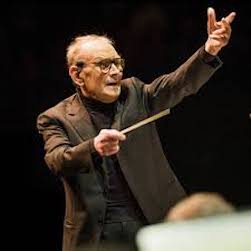
The New York Times reports from Naples, Italy that “Ennio Morricone is getting a posthumous opera premiere, correcting a decades-old snub that dismissed him as a mere ‘film composer.’” Read the article by Elisabetta Povoledo here.
TODAY’S ALMANAC:
by Jarrett Hoffman
On this date in 1938, violinist Joseph Szigeti, conductor Dimitri Mitropoulos, and The Cleveland Orchestra gave the first performance of Ernest Bloch’s Violin Concerto.
Bloch had been appointed the first Musical Director of the Cleveland Institute of Music upon its opening in 1920, at its original location of 3146 Euclid Avenue. (The school’s mission as proclaimed by Bloch: “Musical education, in addition to the thorough study of technique, ought above all else, to develop qualities of appreciation, judgment and taste, and to stimulate understanding and love of music.”)
 He served in that post until 1925 before moving on to San Francisco Conservatory (which still holds a copy of his “death mask” as prepared by his daughter and her husband — not creepy at all). But he spent most of the 1930s in his native Switzerland, and only returned to the U.S. in the late ‘30s following the rise of anti-Semitism in Germany and Italy.
Many of Bloch’s works draw on his Jewish heritage, including his famous cello concerto Schelomo: Rhapsodie Hébraïque. And while the composer noted the influence of American Indian songs on the central melodies and motives of the Violin Concerto, he also said that the work portrays “the complex, glowing, agitated soul that I feel vibrating through the Bible.”
Listen here to a live recording from a year after the premiere, featuring Joseph Szigeti himself with the Royal Concertgebouw Orchestra under Willem Mengelberg.
This date in music history includes anniversaries for a handful of important works.
Dvořák’s “New World” Symphony was premiered on December 15, 1893 by the New York Philharmonic at Carnegie Hall. (“A capacity crowd queued outside the Hall in the pouring rain to get a first listen,” according to an article from the venue.) Click here to listen to a recording by George Szell and The Cleveland Orchestra.
On that note, Ernest Bloch’s Violin Concerto was first performed on this date in 1938 by Dimitri Mitropoulos and — yes, The Cleveland Orchestra, with Joseph Szigeti as soloist. Listen here to a live recording from a year after the premiere, featuring Szigeti himself with the Royal Concertgebouw Orchestra under Willem Mengelberg.
And three thousand miles away, on that very same day in 1938, Silvestre Revueltas’ Sensemayá was receiving its first performance, with the composer leading a pick-up orchestra at the Palacio de Bellas Artes in Mexico City. Click here to listen to a recording by that city’s oldest symphony orchestra: the Orquesta Filarmónica de la UNAM.
