

by Daniel Hathaway
 HAPPENING TODAY: Happy Valentine’s Day, that feast day in the early Christian calendar that originally celebrated two martyrs, but through mysterious processes like the medieval tradition of courtly love, has transmogrified into a festival celebrating human love and passion — and has become a boon for the greeting card, chocolate, and flower industry. Eric Charnofsky promises some Valentine’s Day surprises on today’s Not Your Grandmother’s Classical Music. Click here to listen to the WRUW internet feed.
Sweetest Day, a related celebration that casts a wider net and has probably become a boon for dentists, was established in 1922 in Cleveland. That’s when a dozen candy companies conspired “to make the day a little sweeter for some of the city’s most vulnerable people” by distributing some 20,000 boxes of candy “to newsboys, orphans, old folks, and the poor.”
NEWS BRIEFS:
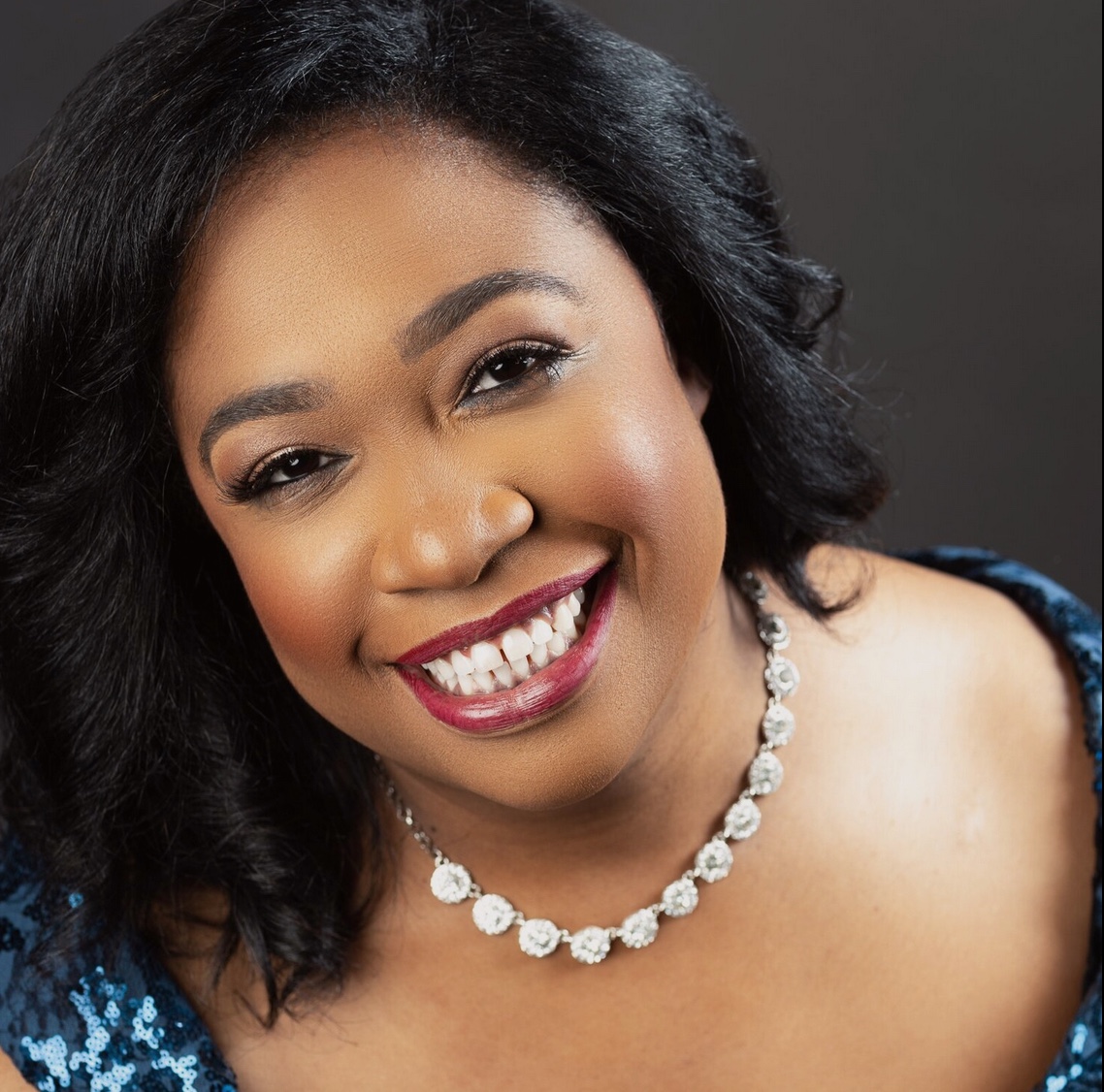
Pianist Michelle Cann (pictured), a graduate of the Cleveland Institute of Music, who will open the Arts Renaissance Tremont season on Sunday with the Cavani Quartet, has received the Andrew Wolf Chamber Music Award from Philadelphia’s Curtis Institute, where she also studied and now teaches.
Two other recent honors included the 2021 Florence Price Award for championing that composer’s work, and the 2022 Sphinx Medal of Excellence, which recognizes extraordinary Black and Latinx musicians. Cann also recently released a CD with the Catalyst Quartet on the Azica label, that features previously unrecorded chamber works by Price.
CONCERTS NOT TO BE MISSED:
A first time ever collaboration between the Cleveland Chamber Music Society and ChamberFest Cleveland will bring CFC’s three artistic directors (Franklin Cohen, Diana Cohen, and Roman Rabinovich) together with the Dover Quartet for a program of Mozart, Ravel, and Chausson on Tuesday, April 5 at the Maltz Performing Arts Center. Details and tickets here.
And today, Jeannette Sorrell’s birthday, is a good time to remind our readers that her own version of Handel’s oratorio, Israel in Egypt, which reduces the piece down to two hours from the original three, and concentrates its drama, begins a four-performance run this Thursday by Apollo’s Fire and Apollo’s Singers. We gave the 2017 program a rave review and can’t think of a better preview:
Alternating between the podium and the harpsichord, Sorrell led a highly nuanced performance of Israel in Egypt, seemingly every detail of its execution engraved in her score along with the notes. That approach might be regarded by some listeners as overly fussy, but Sorrell’s attention to tiny matters results in readings that are unanimous in phrasing, dynamics, and musical rhetoric — and well-calculated in dramatic impact. The large audience on Saturday responded with ardent applause.
Click here for details.
TODAY’S ALMANAC:
Valentine’s Day deserves a celebratory playlist, and the classical repertory is rich with possibilities. We like the one proposed by The Guardian’s Tom Service a decade ago. Click here.
If you take my playlist as the starting point, you will wrest some small vestige of emotional truth in a day of cheapened sentimental trinketry and secondhand musical cliches of lurved-up hormones. Simply press play on the following, and let the real love and musical emotional therapy flow.
Or go for broke. Celebrate conductor Gustav Mahler’s first appearance in the U.S. on this date in 1911, when he conducted the New York Philharmonic in works by British composers Elgar and Stanford and American composers Chadwick, Hadley, Loeffler, and MacDowell (see the program here). But for Valentine’s Day, listen to one of his own memorable pieces, the Adagietto from his Fifth Symphony, a love song to his wife, Alma, which took on extra romantic meaning when Visconti used it in the soundtrack for his film Death in Venice.
Or plunge even deeper into the cauldron of romantic love with the “Prelude and ‘Liebestod’” from Richard Wagner’s Tristan und Isolde, performed here by Franz Welser-Möst and The Cleveland Orchestra. The Deutsche Grammophon recording also serves as a memorial to engineer Michael Bishop and editor Thomas C. Moore.
If that’s a bit too rich, try some pieces by Catalan classical guitar composer Fernando Sor, born on this date in 1778. Listen here to Ricardo Gallén playing Sor’s Grande Sonate, Op. 22 in a live recording from Moscow’s Tchaikovsky Hall. One of the great romantic instruments.
