


by Daniel Hathaway
TODAY’S ALMANAC:
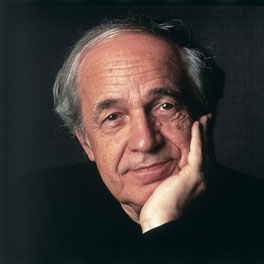 Pierre Boulez, who died on this date in 2016, is considered one of the most — if not the most — important figures in classical music from the latter half of the 20th century. That reputation derives from all aspects of his work: composer, conductor, writer, and administrator.
Contained under that large umbrella is a decades-long relationship with The Cleveland Orchestra: his American professional debut at Severance Hall in 1965 led to more than 220 concerts with the Orchestra. He became its first principal guest conductor in 1969, served as musical advisor for two seasons after the death of George Szell in 1970, and made many recordings with the Orchestra, including five that received Grammy Awards.
Longtime principal keyboardist Joela Jones memorably described his personality in an interview in 2015 with Mike Telin, as the Orchestra prepared to celebrate Boulez’s 90th birthday: “…to me it’s amazing that somebody who is so great, so brilliant, and so gifted, could also be so humble and modest. He just makes you feel so comfortable, like you are his equal, which of course you’re not. And, if you have enough intelligence you know that.”
In a second interview with Telin, when Jones was making her final appearance with the Orchestra as principal keyboardist, she commented on another important aspect of who Boulez was: a champion of contemporary music. “He did not want music to become a museum of old composers, and a lot of music has forged ahead because of his forceful personality.”
To celebrate Boulez on this occasion, we’ll suggest a piece that comes with its own ties to this date in history. That would be his Second Piano Sonata, a favorite of Italian pianist Maurizio Pollini, who recorded the work in the ‘70s for Deutsche Grammophon.
Tom Service describes it well in an essay for The Guardian. “…I remember putting on the Boulez for the first time and experiencing a visceral shock that music — and the piano — could make sounds as violent, as volcanic, as this…In the sonata’s four movements, you hear the music tearing at the seams of classical and serial structure, as the 23-year-old Boulez tries to find a language that will exorcise the ghosts of classical music, from Bach to Schoenberg.”
Listen to that recording here.
