

by Daniel Hathaway
 TODAY’S EVENTS:
No live performances to raise up today, but Eric Charnofsky will host an homage to Ukraine on his WRUW radio show Not Your Grandmother’s Classical Music from 2 pm to 4 pm, and at 7:30 pm, Les Délices will revisit works by women composers across the centuries in “Women’s Herstory,” the latest episode in its SalonEra series. Details in our Concert Listings.
TODAY’S ALMANAC:
English composer Henry Purcell may have been born on this date in 1659 (records are sketchy, to say the least), and in his brief 36-year career distinguished himself in a large body of music written both for church and theater after the restoration of the monarchy.
One of Purcell’s most popular works is his Dido and Aeneas, with a libretto by Nahum Tate based on Book IV of Virgil’s Aeneid.
Details of its first performance are as murky as those of the composer’s birth, but we do know that the piece was performed at Josias Priest’s girls’ school in London before the end of 1689. Is it an opera? Is it a masque? It’s safe to call it a theater piece and any further label you’d like to put on it pretty much depends on who’s performing it.
Dido retains its charms whether it’s produced by a professional organization or by amateurs, with whom the score is extremely popular. Important dramaturgical questions are posed — if not settled — by editor Curtis Price in the notes to his Norton Critical Score (example: “Was Aeneas a complete booby?”)
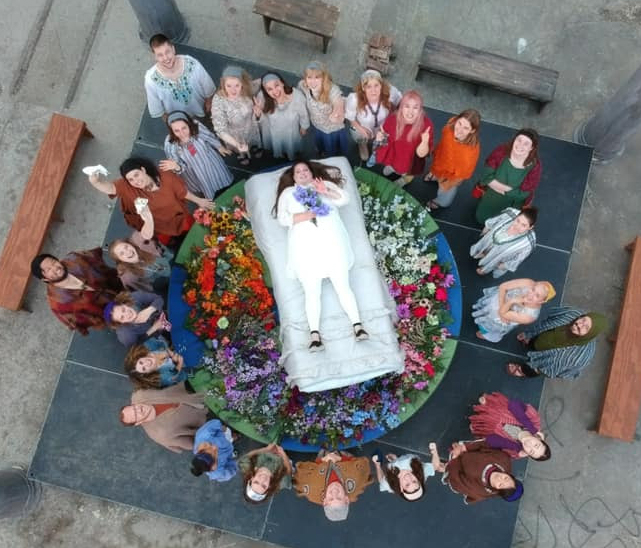
The Cleveland Institute of Music will screen a film version of the work on March 18 at 7:30 pm in Mixon Hall. The production, featuring the CIM Orchestra led by Harry Davidson, and filmed with COVID-19 protocols in place, was created in the former Westinghouse factory in Ohio City (photo above). In a press release, CIM dean and opera director Dean Southern said, “It was a big project, and I think it taught our students a lot.”
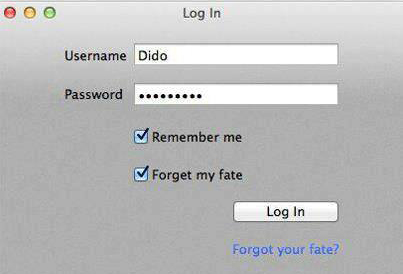
Dido’s final ground-bass aria, “When I am laid in earth,” is among the unforgettable moments in the score. Those who know it and are computer-savvy will appreciate this joke:
And on this date in 1875, French composer Maurice Ravel was born in Ciboure. As a tribute, revisit our preview of The Cleveland Orchestra’s 2015 performances of the complete score of his Daphnes et Chloé.
Ravel’s “symphonie choréographique” is most often presented today as an orchestral work and usually in the guise of the two suites the composer later extracted from the full score. But when Franz Welser-Möst and The Cleveland Orchestra return to the Severance Hall stage this Thursday with the Cleveland Orchestra Chorus for three weekend concerts, patrons can look forward to hearing Daphnis et Chloé in all its 55-minute-long sonic splendor.
And the superb performance of Walter Piston’s Prelude and Allegro presented last Saturday evening by organist Jonathan Moyer and BlueWater Chamber Orchestra under Daniel Meyer at the Church of the Covenant, makes me eager to listen to more of that composer’s works, written while Piston was teaching at Harvard for 34 years. On today’s date in 1958, Piston’s Viola Concerto was premiered at Carnegie Hall by Joseph DePasquale and the Boston Symphony under Charles Munch. Read a review here and click on this link to watch a 2011 performance by Anibal Dos Santos and the Bogota Philharmonic Orchestra led by Marcello Panni.
