



by Daniel Hathaway
NEWS DIGEST:
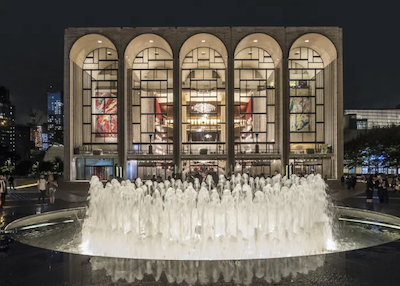 Douglas McLennan, formerly an arts columnist and arts reporter with the Seattle Post-Intelligencer and the Seattle Weekly, has begun summing up the latest news in his daily ArtsJournal Newsletter. A lot is happening all at once, and here’s what he has to say today:
“The Met Opera is the largest performing arts company in the country, and it is quietly desperate — box-office receipts down $20 million from a decade ago, deficits mounting, and no obvious fix in sight (The New York Times). The Boston Symphony, meanwhile, just fired its music director, and the postmortem is not gentle: Andris Nelsons is being held up as the cautionary symbol of the “overstretched, overtired, overindulged modern music director” (The New York Times). Big institutions, big problems.
“The Toronto Film Critics Association is effectively in freefall after an Indigenous filmmaker’s pro-Palestine acceptance speech was cut from a broadcast. She returned her trophy, the president resigned, and 16 members have quit — with more weighing it (The Hollywood Reporter). The Voice of America got better news: a federal judge ruled Kari Lake’s appointment invalid, potentially reinstating more than 1,000 journalists and restoring broadcasts to China, Russia, and Iran (The New York Times).
“And then there’s Timothée Chalamet, who declared that nobody cares about opera and ballet. Opera and ballet companies responded by posting sold-out notices and offering discount ticket codes in his name (NBC). Somebody cares.”
TODAY’S ALMANAC:
British-American composer Anna Clyne was born in London on this date in 1980.
 New York Times critic Corinna da Fonseca-Wollheim chose her short piece, “Lavender Rain” from Clyne’s seven-movement work, The Violin, as her contribution to the article Five Minutes That Will Make You Love Classical Music in September 2018. Fonseca-Wollheim writes,
The first notes of “Lavender Rain” form a simple scale, but one that moves as haltingly as someone warily placing one foot in front of the other in pitch darkness. There’s a second voice here, trailing the first like a shadow. Then the sound grows, divided as if by a prism into many lines, and the music embarks on a reluctant, ineffably tender descent. Anna Clyne wrote “Lavender Rain” as she was grieving for her mother. In its somber beauty — somehow both weightless and heavy-hearted — it’s part of a long tradition of classical music inspired by loss.
Her double violin concerto Prince of Clouds, jointly commissioned by the Chicago Symphony, the IRIS Orchestra, the L.A. Chamber Orchestra, and the Curtis Institute, and composed for Jennifer Koh and Jaime Laredo, was nominated for a Pulitzer Prize in 2015. Listen to them perform it here with the Curtis 20/21 Ensemble, conducted by Vinay Parameswaren.
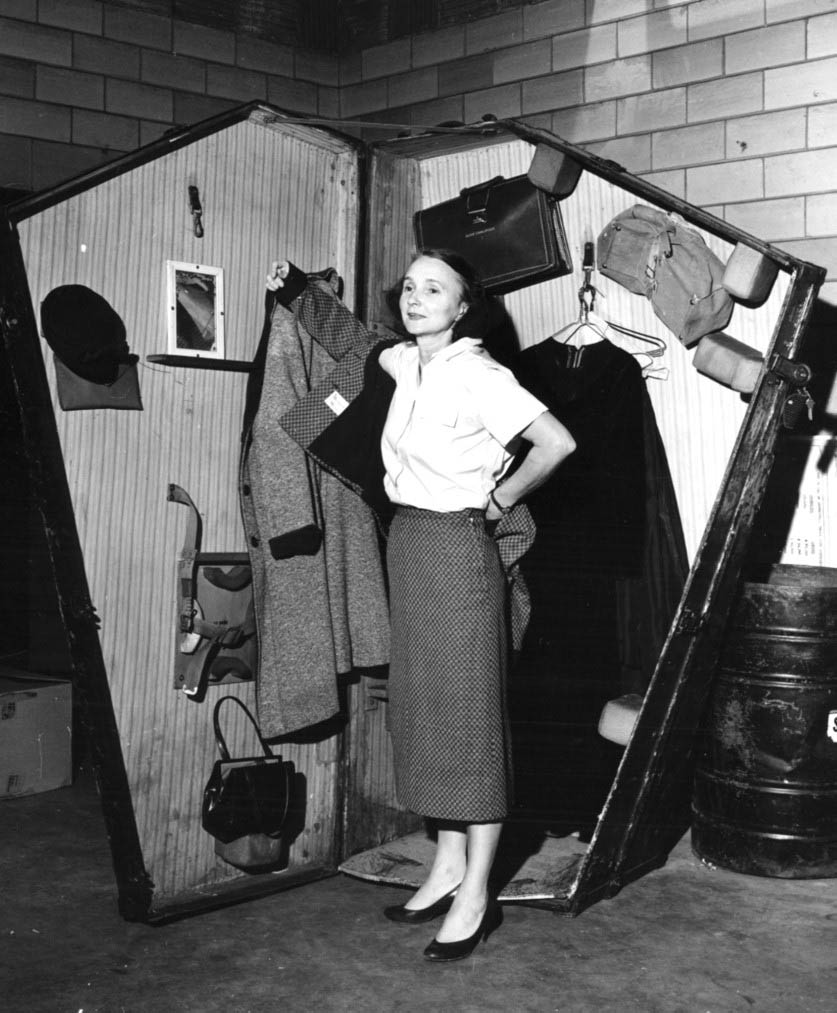 In addition to their increasing importance as composers, women have incrementally moved into all areas of classical music making — at least in recent years. Ironically, although The Cleveland Orchestra was started by Adella Prentiss Hughes — recently honored by the Orchestra in naming its digital streaming platform “Adella” — it took a long time for women to join the roster of musicians.
The first, principal harp Alice Chalifoux, appointed in 1931 by Nikolai Sokoloff, was the only female member of the ensemble for the next dozen years. She feistily held her own in that men’s club until her retirement in 1974, as Donald Rosenberg noted in an obituary on the occasion of her death in 2008 at the age of 100.
