


by Daniel Hathaway
IN THIS EDITION:
 . Sphinx Virtuosi visit CIM, Charnofsky interviews bassist Ruth Cavano
. Anniversaries, some tragic, and invitations to explore some overlooked chamber music
TODAY’S EVENTS:
2:00 pm – Not Your Grandmother’s Classical Music, Eric Charnofksy hosts a new episode that includes. Michael Nyman’s Where the Bee Dances for soprano saxophone and chamber orchestra, Sara Feigin’s Variations for piano, Ivor Gurney’s Five Elizabethan Songs, Joseph Martin Kraus’s Riksdags March for orchestra, plus a special interview with prize-winning CWRU double bass student Ruth Cavano, discussing her upcoming recital on campus and playing a sampling of her repertoire by J.S. Bach and Andrés Martín. Join the broadcast on WRUW.
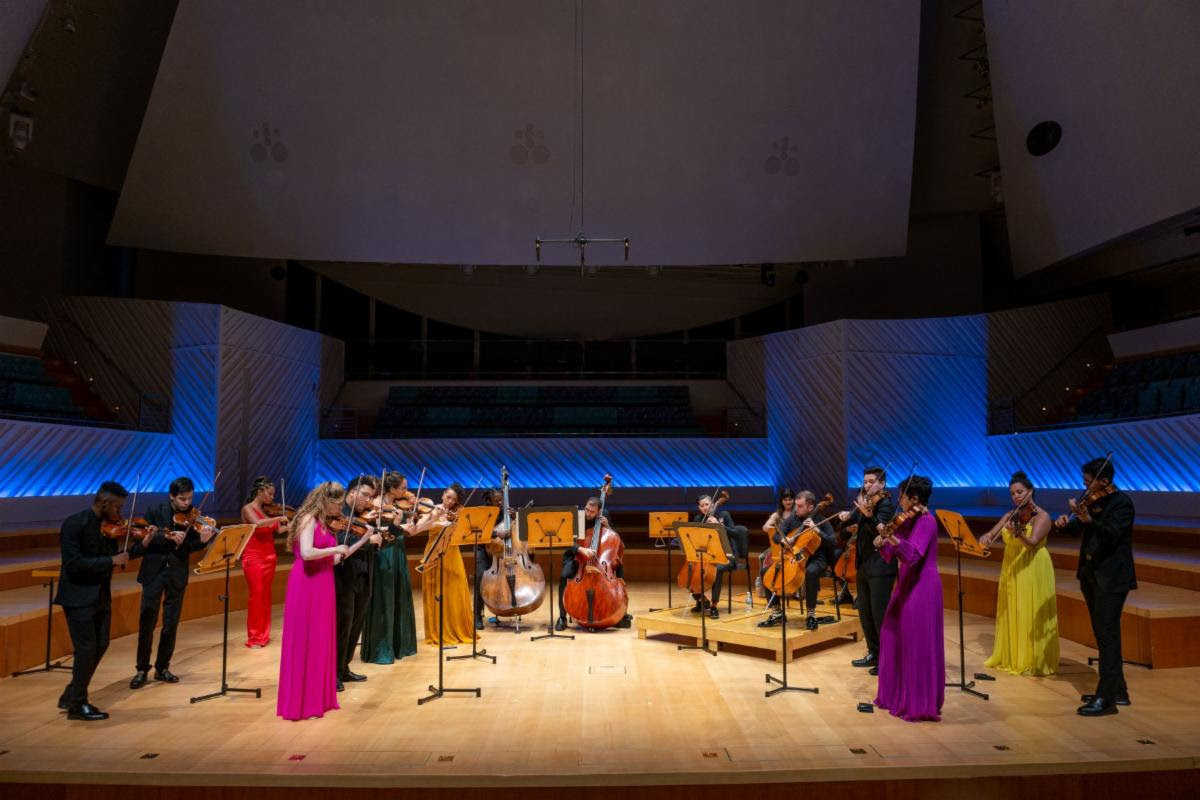
7:30 pm – CIM welcomes Sphinx Virtuosi, featuring Tommy Mesa, cello & Hannah Whitc, violin, in the program “Songs for our Times,” featuring Jessie Montgomery’s Strum, & Divided for Solo Cello & Orchestra,Michael Dudley’s Prayer for our Times, Valerie Coleman’s Tracing Visions, Carlos Simon’s Between Worlds, Heitor Villa-Lobos’ Bachianas Brasileiras No. 9, Ricardo Herz’s Sísifo na Cidade Grande & Ludwig van Beethoven’s Violin Sonata No. 9 in a, arr. Rubén Rngel. Kulas Hall, Cleveland Institute of Music, 11021 East Boulevard, Cleveland. Free but seating passes required.
TODAY’S ALMANAC:
On October 17, 1849 Frederic Chopin died in Paris. Having planned ahead, his coffin was sprinkled with earth he had brought from Poland before his remains were interred at Père Lachaise Cemetery, where you can visit his grave (along with such partners in death as Oscar Wilde, Jim Morrison, and Édith Piaf.)
On this date in 1943, Naumburg prize winning violinist, violist conductor and soprano Susan Davenny Wyner was born in New Haven. She made her Met Opera debut — her only performance in that house — in October of 1981 as Woglinde in Wagner’s Das Rheingold, and later settled in Ohio to lead the Warren Philharmonic and Opera Western Reserve.
An shockingly, a trio of promising composers — Victor Ulmann, Pavel Haas, and Hans Krasa — was anihilated on this date in 1944 by the Nazis in the gas chambers of Auchwitz.
In a happier event, British composer Herbert Howells was born on this date in 1892 in Lydney, Gloucestershire. Howells’ reputation is based on his large output of Anglican church music — ecstatic and elegiac works that celebrate particular cathedrals and choirs, many of which commemorate Howells’ son Michael, who died of polio at the age of nine. Howells’ Magnificat and Nunc Dimittis for London’s St. Paul’s Cathedral is a good example of his lofty tone and special harmonic language: this performance by St. Paul’s Choir in Christopher Wren’s monumental building is led by Barry Rose, with Christopher Dearnley at the organ.
But this would also be a good opportunity to take a dip into Howells’ catalogue of chamber music. Follow along with the score of his Piano Quartet in a minor here.
Pavel Haas’ String Quartet No. 2, “From the Monkey Mountains” was performed by the ensemble that bears his name on the Cleveland Chamber Music Society series on April 17, 2012. Listen to their recording here. His Wind Quintet has been featured locally on concerts by the Berlin Philharmonic Wind Quintet (CCMS series), CIM faculty and students (“Violins of Hope” series), and CityMusic Cleveland (“The Composers of Theresienstadt,” including Viktor Ullmann’s Quartet No. 3).
