


by Daniel Hathaway
TODAY’S ALMANAC:
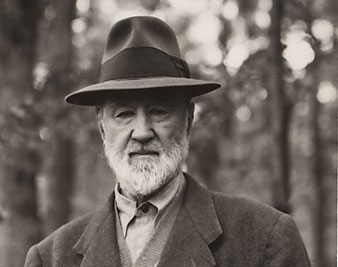 American experimental composer Charles Ives, whose day job was serving as executive of several insurance companies in New York City, was born on October 20, 1875 in Danbury, Connecticut.
Regarded as an American Original, early on Ives was influenced by the whole panoply of 19th century music he encountered as a young man as well as such sonic experiences as hearing bands playing simultaneously in small-town parades.
Having formally studied with Horatio Parker at Yale, Ives later went off on his own, experimenting with polytonality and polyrhythm, microtones, tone clusters, and improvisatory elements. Somewhat mysteriously, he stopped composing in the late 1920s, well before his death in 1954.
An hour-long documentary by Anne-Kathrin Peitz, The Unanswered Ives: Portrait of a composer, Wall Street giant and pioneer of sound, is available for subscribers on Medici-TV.
Listen to a performance of Ives’ First Violin Sonata by Stefan Jackiw and Jeremy Denk here, and of his Fourth Sonata by Jinjoo Cho and Shuai Wang here.
And watch a full-length concert of Ives’ hymns, songs, and violin sonatas at the 2014 Ojai Festival, performed by pianist Jeremy Denk, violinist Jennifer Frautschi, and the male vocal ensemble Hudson Shad.
Ives’ orchestral experiments are especially interesting. Click here to listen to Pierre Boulez lead The Cleveland Orchestra in Three Places in New England in 1970
And experience one of Ives’ experiments in bitonality: his setting of Psalm 67 in which the upper voices sing in the key of g minor, and the lower in the key of C Major. San Francisco Choral Artists perform at St. Luke’s Church.
Finally, one of Ives’ most amusing pieces is his Variations on ‘America’ for organ, written when he was only 16. Oberlin graduate Joseph Ripka plays it here on the Visser & Associates organ at All Saint’s Episcopal Church in Phoenix. E. Power Biggs is rumored to have once programmed it on a patriotic program at Princeton. The organizers were not amused.
HAPPENING TODAY:
Nothing on the local scene today, but it’s the third and final day of the Chopin International Piano Competition in Warsaw, and you can join millions of viewers who are following the contest online via the competition’s English language website. Here’s today’s schedule — keep in mind that Warsaw time is six hours later than EDT.
Joshua Barone has written about how to follow the Chopin for the New York Times. Click here to read “How to watch…”
