


by Daniel Hathaway
HAPPENING TODAY:
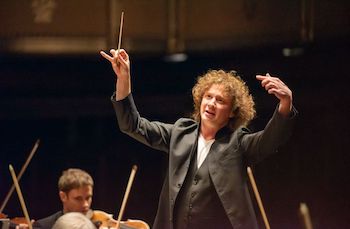 Tonight at 7:30 in Mandel Concert Hall at Severance, Finnish conductor Santtu-Matias Rouvali (pictured), and cellist Sol Gabetta will join The Cleveland Orchestra in Dmitri Shostakovich’s Cello Concerto No. 2 and Franz Schubert’s Symphony No. 9.
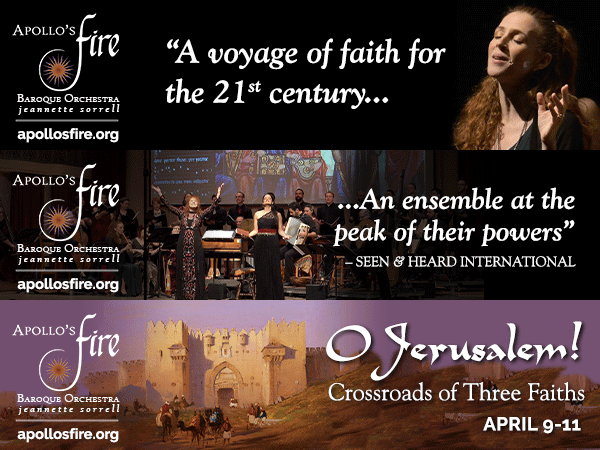
At the same hour at The Bath Church in Akron, Apollo’s Fire will field an ensemble of 26 artists from Jewish, Palestinian, Muslim, and Christian traditions to present the first performance of an updated version of its program O Jerusalem! Crossroads of Three Faiths.
And in Oberlin’s Finney Chapel tonight at 7:30, Raphael Jiménez will lead the Oberlin Orchestra with violist William Mathangani in Béla Bartók’s Viola Concerto and Dmitri Shostakovich’s Symphony No. 10.
For details of these and other classical events, visit the ClevelandClassical.com Concert Listings.
TODAY’S ALMANAC:
Three memorable dates in Black American classical music history appear on today’s calendar: the birth of composer Florence Beatrice Price in 1887, the birth of bass and actor Paul Robeson in 1898, and Marian Anderson’s 1939 concert at the Lincoln Memorial, sponsored by First Lady Eleanor Roosevelt, that drew a crowd of 75,000.
The performance protested the decision of the Daughters of the American Revolution to prevent the contralto from performing at the DAR’s Constitution Hall in Washington, D.C.
Having been neglected for decades, the music of Florence Price is now appearing on concert programs everywhere. We devoted much of the Diary on June 3, 2020 to Price on the anniversary of her death, and Lilyana D’Amato wrote about her in our Legacy of Black Musicians series on July 29, 2020. As more and more of her music is being re-engraved and re-issued, programmers will want to keep up with the progress of that project by visiting the Wisemusic catalog here.
Robeson had an eventful career that included venturing into the troubled political waters of mid-20th century America, where he fought against facism but got close enough to the communist party to be investigated by the House Un-American Activities Committee. His life is summarized in the documentary Here I Stand, and a sample of his vocal artistry is available in this 1936, second version of Old Man River (note both versions of the lyrics in the notes).
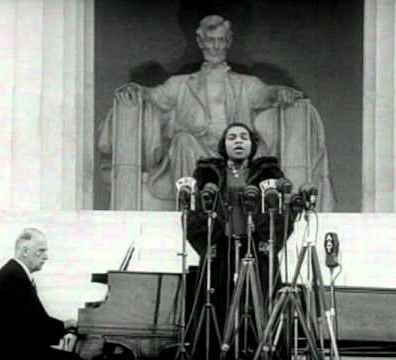 And Marian Anderson, the first Black singer to perform at the Metropolitan Opera, thrilled a huge audience on Easter Day, April 9, 1939 with this performance, accompanied by Finnish pianist Kosti Vehanen. The occasion is treated at somewhat greater length in this short documentary, and the press had much to say about the incident.
The Philadelphia Tribune wrote, “A group of tottering old ladies, who don’t know the difference between patriotism and putridism, have compelled the gracious First Lady to apologize for their national rudeness.” The Richmond Times-Dispatch wrote, “In these days of racial intolerance so crudely expressed in the Third Reich, an action such as the D.A.R.’s ban … seems all the more deplorable.” — Wikipedia article on Marian Anderson
