



by Daniel Hathaway
JUNETEENTH TOPICS:
 Here’s a selection of resources for marking Juneteenth — June 19, the oldest nationally celebrated commemoration of the ending of slavery in the United States.
San Francisco Classical Voice editor Michael Zwiebach recommends a list of streaming events to mark the day.
The Harvard Gazette asked faculty members to discuss the books they recommend for those who want to expand their understanding of systemic racism, white privilege, and the long legacies of slavery and white supremacy in American history. View the reading list here.
And on the same campus, the Radcliffe Institute, the anchor institution for Harvard and the Legacy of Slavery, asked members of the presidential committee guiding the initiative to reflect on the significance of Juneteenth. Read “Greeting Juneteenth with Remembrance, Resolve, and Hope” here.
In Thursday’s Diary, we noted that The Music Critics Association of North America has named Jeanine Tesori’s and Tazewell Thompson’s Blue, premiered last summer at the Glimmerglass Festival, as Best New Opera of 2019. As a follow up, read a New York Times article by Thompson where he discusses “My journey to writing an opera about police violence.”
In its Music by African American Composers archive, the Detroit Symphony includes two works by Oberlin grad Nkeiru Okoye from a March 7, 2020 concert led by Thomas Wilkins — the last DSO performance before the pandemic shutdown. Black Bottom, which received its premiere on that concert, “tells the stories of Detroit’s Black Bottom and Paradise Valley neighborhoods — hubs of African-American community, culture, and prosperity that flourished in the early 20th century. When the city of Detroit razed the neighborhoods in the 1960s, thousands of people were displaced and decades of history was erased.” Voices Shouting Out (2002) was written in response to 9/11, but the composer describes it as “ a march to acknowledge those fighting on behalf of our safety, and yet a sparkling celebration of life for those who continue living.”
At 1:00 pm today, the Oberlin College Black Musicians Guild will host a Zoom webinar, “Black Voices in the Conservatory” in which current and past students discuss the experiences of black musicians at Oberlin and in the wider musical world. Click here to join, and use the password 686639.
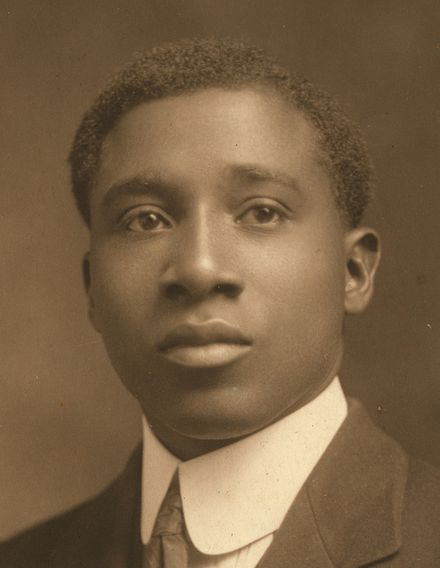
Speaking of Oberlin, one of the Conservatory’s most distinguished graduates received his bachelor’s degree in composition and piano in 1907. African Canadian composer R. Nathaniel Dett (pictured above) has many compositions to his credit, but one of his most celebrated — though it’s infrequently performed — is the 1937 oratorio The Ordering of Moses, premiered that year at Cincinnati’s May Festival with a chorus of 350 singers and the Cincinnati Symphony, led by Eugene Goosens. A more recent performance at the same festival was led by James Conlon. Listen here.
