

by Daniel Hathaway
HAPPENING TODAY:
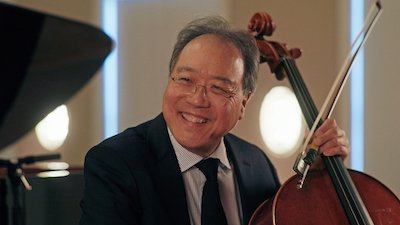 Tonight at 7:30 The Cleveland Orchestra presents An Evening with Yo-Yo Ma, featuring the renowned cellist in Antonîn Dvořák’s Concerto in a program that includes Johann Strauss, Jr.’s Overture to Die Fledermaus, Wolfgang Amadé Mozart’s Overture to Don Giovanni, and Dvořák’s Carnival Overture. James Feddeck is on the podium at Severance Music Center.
And tonight at 8 pm, Oberlin Opera Theater begins a four-performance run of Joseph Bologne, Chevalier de Saint-George’s L’amant anonyme in Hall Auditorium, directed by Fenlon Lamb, and conducted by Kelly Kuo. Premiered in 1780, this two-act opéra comique (run time: 90 minutes, no intermission) is the only Bologne opera to survive to the present day.
TODAY’S ALMANAC:
by Jarrett Hoffman
This date in music history has brought with it the deaths of German composer and organist Heinrich Schütz (1672 in Dresden), Russian composer Pyotr Ilyich Tchaikovsky (1893 in St. Petersburg), and French composer Edgar Varèse (1965 in New York), as well as the births of Belgian instrument inventor Adolphe Sax (pictured, 1814 in Dinant) and American composer and conductor John Philip Sousa (1854 in the nation’s capital).
Today, we’ll focus on Adolphe Sax, the creator of the saxophone (patented in 1846), but also of several lesser-known valved brass instruments: the saxhorn (a predecessor of both the flugelhorn and the euphonium) and the short-lived saxotromba and saxtuba.
The saxophone is an entire family of nine instruments, ranging from subcontrabass up to sopranissimo — some of those invented by Sax, some designed but never built by him, and some developed by others in the years since then. The most common are the alto, tenor, baritone, and soprano, comprising the typical instrumentation for the saxophone quartet. To honor that other birthday boy, listen to Gregory Ridlington’s sax quartet arrangement of Sousa’s Stars and Stripes Forever here, played by members of “The President’s Own” Marine Band.
Hector Berlioz was a friend of Sax’s and an early supporter of the saxophone. In 1844, for a concert of his own music, Berlioz made an arrangement probably of his Chant sacré for a sextet of the inventor’s instruments, including saxophone. Click here to listen to the Saxback Ensemble play Guillaume Guillon’s arrangement of that work for an instrumentation with likely some similarity to the one heard in 1844: two clarinets (soprano and bass), three saxophones (alto, tenor, and baritone), and euphonium.
Saxophone fans can thank their lucky stars that the instrument even exists. As a 1972 article in Time Magazine read:
As a boy in early 19th century Belgium, Adolphe Sax was struck on the head by a brick. The accident-prone lad also swallowed a needle, fell down a flight of stairs, toppled onto a burning stove, and accidentally drank some sulfuric acid. When he grew up, he invented the saxophone.
