



by Jarrett Hoffman
 IN THIS EDITION:
•Today: organ at the Covenant (Steven Plank) and with the CIM Orchestra (Daniel Colanger), Cleveland Orchestra tells a story of immigration, and an advance screening of CHEVALIER
•Announcements: Contemporary Youth Orchestra auditions and Oberlin Trumpet Workshop application deadline
•Almanac: the late Harrison Birtwistle and The Minotaur
HAPPENING TODAY:
At 12:00 pm as part of the Tuesday Noon Organ Plus series at Church of the Covenant, Steven Plank will take to the Newberry Organ to play music by Heinrich Scheidemann, William Byrd, Thomas Tomkins, Henry Purcell, Dietrich Buxtehude, and Jan Pieterzoon Sweelinck. Program details and the livestream link can be found here. A freewill offering will be taken up.
Organ will also be featured when conductor Carlos Kalmar and the CIM Orchestra take the stage at Kulas Hall at 7:30 pm. That program includes Beethoven’s Symphony No. 1, Bizet’s Carmen Suites Nos. 1 & 2, and Joseph Jongen’s Symphonie Concertante featuring organist Daniel Colanger as soloist. It’s free but reservations are required.
Also at 7:30, assistant conductor Daniel Reith and The Cleveland Orchestra will present Peter Boyer’s Ellis Island: The Dream of America. Combining music, narration, and historic images, the multimedia work also features seven actors portraying seven immigrants from seven countries. The concert takes place at Severance Music Center and lasts one hour with no intermission. Reserve your free tickets here, and read a preview article by Mike Telin here.
And at 7:00 pm at Cinemark At Valley View and XD, you can catch an advance screening of CHEVALIER, the upcoming film about violinist-composer Joseph Bologne, Chevalier de Saint-Georges that releases in theaters on April 21. Download a free Admit Two pass here.
ANNOUNCEMENTS:
The Contemporary Youth Orchestra will be having auditions on April 21 at Tri-C Eastern Campus, with auditions continuing on May 5 and May 19. Reserve a spot here.
And the final application deadline of April 25 is approaching for the Oberlin Trumpet Workshop. Aimed at students ages 15 and up, the workshop runs from June 25-30 and will be led by Roy Poper and Arto Hoornweg. More information here.
TODAY’S ALMANAC:
Birthdays to celebrate on April 18 in music history include those of British conductor Leopold Stokowski (born in 1882), Hungarian-American composer Miklós Rózsa (1907), and American tenor George Shirley (1934). And among those who have passed away on this date are Italian composer Ottorino Respighi (1936), American composer Julia Smith (1989) — and one important musician who died just last year.
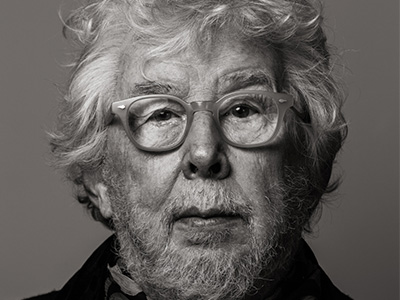 That would be British composer Harrison Birtwistle, who died on April 18, 2022 in Mere, Wiltshire at the age of 87 following a stroke he suffered the previous year.
His “uncompromising modernism,” as The Guardian put it in his obituary, is evident throughout his output, from his operas to his orchestral works, his chamber music, and his vocal music. But it is his operas — often based on myth and folklore — that have had the most enduring impact.
Among those is The Minotaur, which in 2019 was ranked third by The Guardian in a list of the best pieces of the 21st century. As Andrew Clements wrote in that article, “…the eruptions of orchestral violence are offset by music of lyrical beauty and pungent transparency” — fitting qualities to match this story.
The opera tells of the Minotaur — that Greek mythological figure who is part man, part bull, and unable to speak — from the Innocents who are sacrificed to him, to the Keres who feed on the dead, to his dreams in which he acquires the ability to speak, to his death at the hands of Theseus, ending ultimately with a Ker feeding on the Minotaur himself.
The Keres — those nightmarish “death spirits” — can be seen, and heard, in this excerpt from a production at London’s Royal Opera House. “Bloodshed fetches us, slaughter fetches us,” they shout out rhythmically, in fragments, before the voice of soprano Amanda Echalaz enters the scene. Watch here.