


by Daniel Hathaway
HAPPENING TODAY:
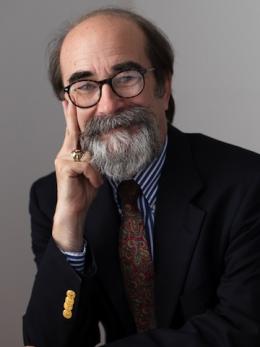 12 Noon – Tuesdays at the Covenant: organist Steven Plank (pictured) plays Gaspard Corrette’s movements from Messe du 8e Ton, Jan Pieterzoon Sweelinck’s Fantasia cromatica & Four variations on “Onder een Linde groen,” & Jan Bender’s Six Variations on a Theme by Hugo Distler, “Dedicated to Dr. Kurt von Schuschnigg, who spoiled Hitler’s victorious entrance at Vienna.” Church of the Covenant, University Circle.
7:30 pm – Mao Fujita in Recital. The Japanese pianist plays works by Beethoven, Brahms, Mendelssohn, Berg, and Wagner. Mandel Concert Hall at Severance Music Center.
7:30 pm – CIM Insiders. Andrew Hosler, saxophone, Daniel Pereira, cello, Eric Charnofsky, piano, and Dylan Findley, electronics. Music by Pierre Boulez, Sami Seif, Jennifer Conner, Jerod Impichchaachaaha’ Tate, and John Mackey. Mixon Hall, 11021 East Blvd., Cleveland.
ANNOUNCEMENTS;
Cleveland Chamber Music Society will sponsor an Art of Ensemble Chamber Music workshop led by Mary K. Robinson on February 22 at 3 pm at Disciples Church in Cleveland Heights.
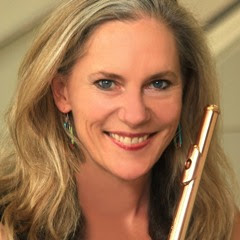 “Ever wondered how chamber ensembles stay in sync without a conductor?
It looks like mind-reading, but it’s actually a secret language of breath, eye contact, and ‘Radical Listening.’
“On Sunday, we’re pulling back the curtain for The Art of Ensemble. This isn’t a concert — it’s a backstage pass into the psychology and mechanics of chamber music. We’re breaking down exactly how musicians navigate a complex score with no one “in charge,” turning a group of individuals into a single, powerful voice.
“Whether you’re an experienced musician or simply curious about the art of music-making, this workshop offers insight, laughter, and connection. Admission is free. Click here to register.
TODAY’S ALMANAC:
by Jarrett Hoffman
Leaving little time for rehearsals after finishing a piece of music is a classic move throughout the history of composers. But for some reason it doesn’t always turn out well.
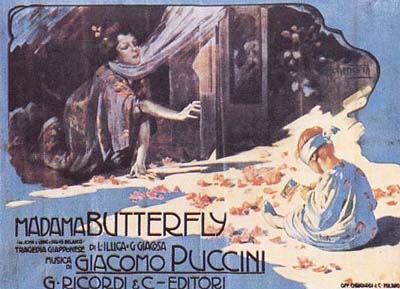 Such was the misfortune of Giacomo Puccini with Madama Butterfly, which premiered in its original version on this date in 1904 at La Scala in Milan. (Below: the original poster by Adolfo Hohenstein.)
The cast wasn’t an issue. Among its star-laden talent, the role of Cio-Cio san was sung by soprano Rosina Storchio, a fixture at La Scala who also performed in notable premieres by Leoncavallo and Mascagni. B.F. Pinkerton was portrayed by tenor Giovanni Zenatello, who would go on to sing the title role in Verdi’s Otello over 300 times. And taking the role of Sharpless was baritone Giuseppe De Luca, who would also create the title role in Gianni Schicchi at the Met a decade later.
When it came to the audience’s reaction at the premiere, the good news is that there was no throwing of fruits or other objects. Instead, those in attendance settled for politely hissing, jeering, and yelling at the stage. (It’s worth noting that, according to BBC Music Magazine, many of the composer’s detractors were present that opening night, “determined to turn the premiere into the wrong kind of spectacle.”) Puccini withdrew the opera after one night.
Not only was the opera under-rehearsed, but critics also felt that its second act (out of two in this original form) dragged. Undeterred, Puccini set about making revisions, which included dividing the second half into two parts, forming Act III. And when Madama Butterfly relaunched in Brescia three months later, it was an immediate success.
A happy ending for Puccini and the opera world…if not for the characters themselves.
