

by Daniel Hathaway
 TODAY’S ALMANAC — MORE WOMEN IN MUSIC:
British-American composer Anna Clyne was born in London on this date in 1980, which suggests a jumping off place for more thoughts about women in music (see earlier Diary entries for March 1 & 8).
New York Times critic Corinna da Fonseca-Wollheim chose her short piece, “Lavender Rain” from Clyne’s seven-movement work, The Violin, as her contribution to the article Five Minutes That Will Make You Love Classical Music in September 2018. Fonseca-Wollheim writes,
The first notes of “Lavender Rain” form a simple scale, but one that moves as haltingly as someone warily placing one foot in front of the other in pitch darkness. There’s a second voice here, trailing the first like a shadow. Then the sound grows, divided as if by a prism into many lines, and the music embarks on a reluctant, ineffably tender descent. Anna Clyne wrote “Lavender Rain” as she was grieving for her mother. In its somber beauty — somehow both weightless and heavy-hearted — it’s part of a long tradition of classical music inspired by loss.
Her double violin concerto Prince of Clouds, jointly commissioned by the Chicago Symphony, the IRIS Orchestra, the L.A. Chamber Orchestra, and the Curtis Institute, and composed for Jennifer Koh and Jaime Laredo, was nominated for a Pulitzer Prize in 2015. Listen to them perform it here with the Curtis 20/21 Ensemble, conducted by Vinay Parameswaren.
In addition to their increasing importance as composers, women have incrementally moved into all areas of classical music making — at least in recent years. Ironically, although The Cleveland Orchestra was started by Adella Prentiss Hughes — recently honored by the Orchestra in naming its digital streaming platform “Adella” — it took a long time for women to join the roster of musicians.
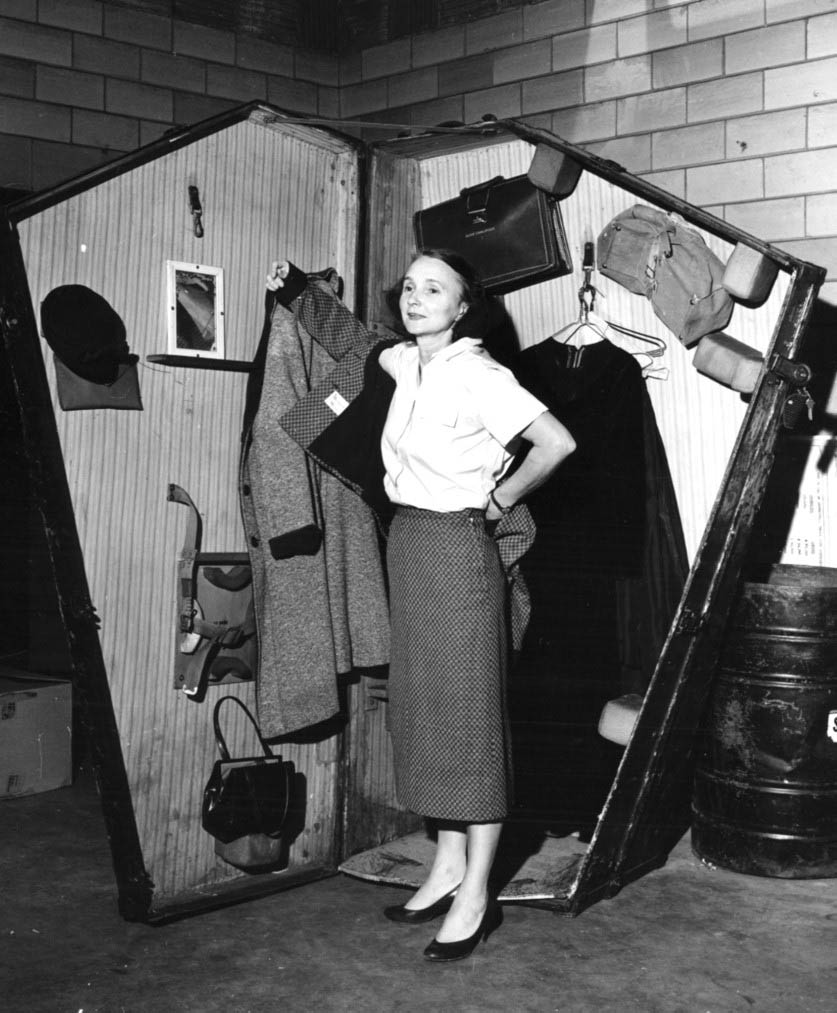 The first, principal harp Alice Chalifoux, appointed in 1931 by Nikolai Sokoloff, was the only female member of the ensemble for the next dozen years. She feistily held her own in that men’s club until her retirement in 1974, as Donald Rosenberg noted in an obituary on the occasion of her death in 2008 at the age of 100.
MARKING ONE YEAR OF CANCELLATIONS:
Without many of the usual markers, it’s been difficult to track the passage of time during the pandemic, but thinking back to one year ago today, March 9, 2020 represented the beginning of a flood of cancellations that has profoundly affected the performing arts.
That was the day that The Cleveland Orchestra announced the cancellation of its European and Middle Eastern tour. By my accounting, during the next week, 35 Northeast Ohio organizations cancelled or postponed their seasons, or took their events online.
Now that several vaccines are scheduled to become widely available, some organizations are taking cautious steps to present in-person performances again. Apollo’s Fire is selling seats for its Tapestry programs later this month, and Tuesday Musical will welcome reduced audiences of subscribers to a solo recital by Emanuel Ax in Akron’s E.J. Thomas Hall.
The Cleveland Orchestra’s experience over the past twelve months in trying to make future plans suggests that we’re still in for a period of uncertainty — a step forward is frequently followed by a step back. The tour cancellation on March 9 came one day after the announcement of the Blossom and Summers at Severance seasons. Then on March 12, the weekend concerts for March 12-14 were cancelled. On March 24, the projected April and May performances came off the calendar.
On April 5, the Orchestra published details of its 103rd season, followed on May 8 by news of the shuttering of the Blossom and Summers at Severance concerts. On November 18, the Christmas concerts got the axe. On December 10, January and February events were postponed, followed on February 3 by the cancellation of the March-June performances.
Meanwhile, the Orchestra set up the In Focus series to be streamed every two weeks on the Adella platform, and added a number of smaller initiatives to keep some music flowing from Severance Hall.
It’s not an easy time to be running a large performing arts organization. We earnestly hope that conditions will improve in the next few months and that the Orchestra’s generous patrons will continue their patient support until in-person audiences are once again possible. It’s been a long year, and it’s not over yet.
